What 'automated' actually means for social posting
When people search for the best automated social media posting app, they usually mean a tool that removes manual, repetitive steps: writing captions from scratch, resizing images for different networks, and remembering when to publish. But automation in this category rarely means fully unattended posting. It means shifting effort from production to review, so a small team can support more brands and more networks without a proportional increase in headcount.
This distinction matters because it changes what you should evaluate. Instead of asking whether an app can post automatically, ask what work it removes before the review step, and what still requires a human decision. Tools that skip the review step entirely tend to create more cleanup work later, particularly for agencies managing several brand voices at once.
Brand context as the foundation of good output
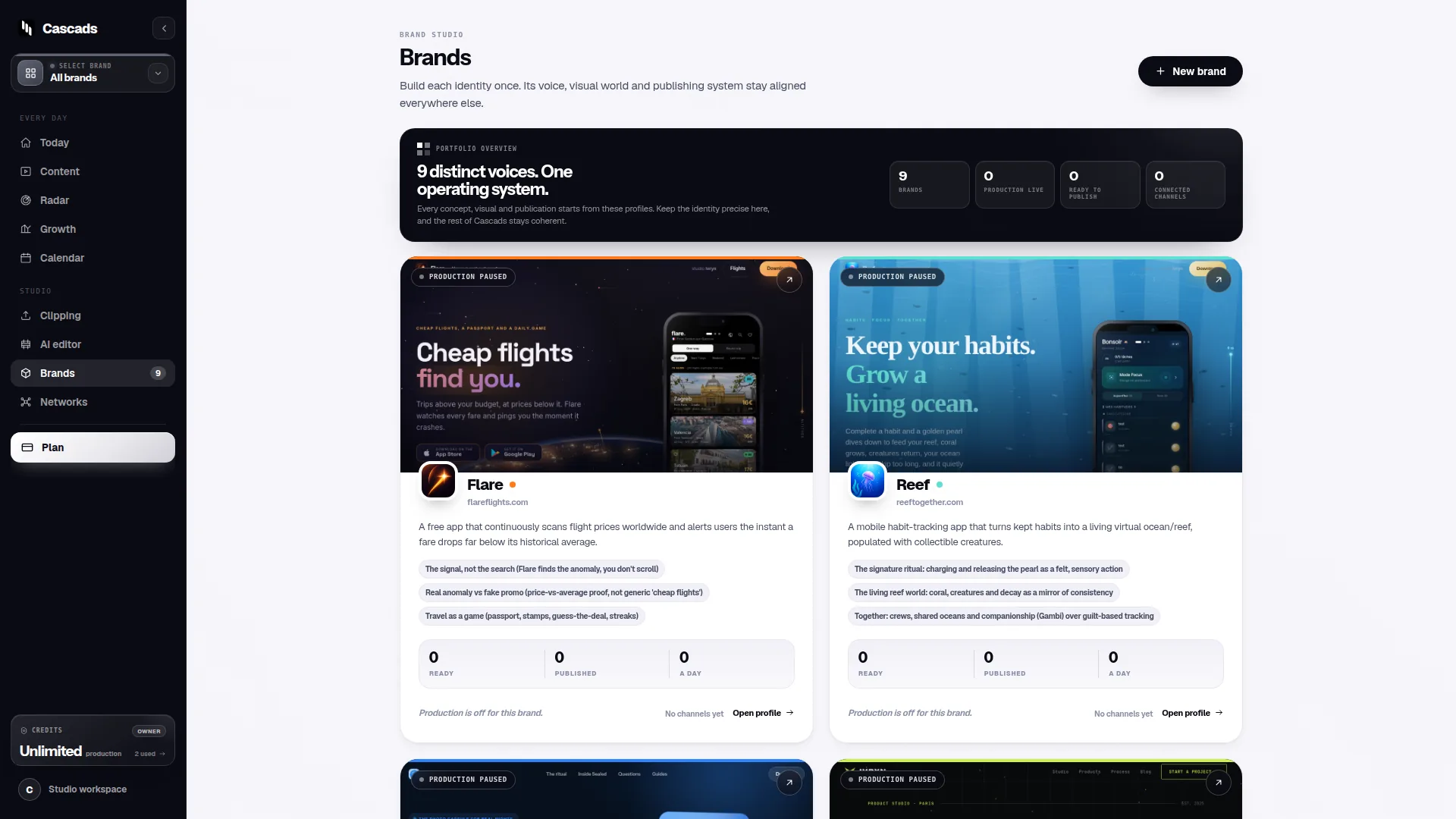
A posting app is only as useful as the context it has about each brand it serves. Apps that let you define a reusable brand profile - tone, visual style, key messages, target audience - tend to produce content that needs less rewriting than tools that treat every request as generic. For agencies juggling multiple clients, this is often the difference between a tool that saves time and one that just moves the editing burden around.
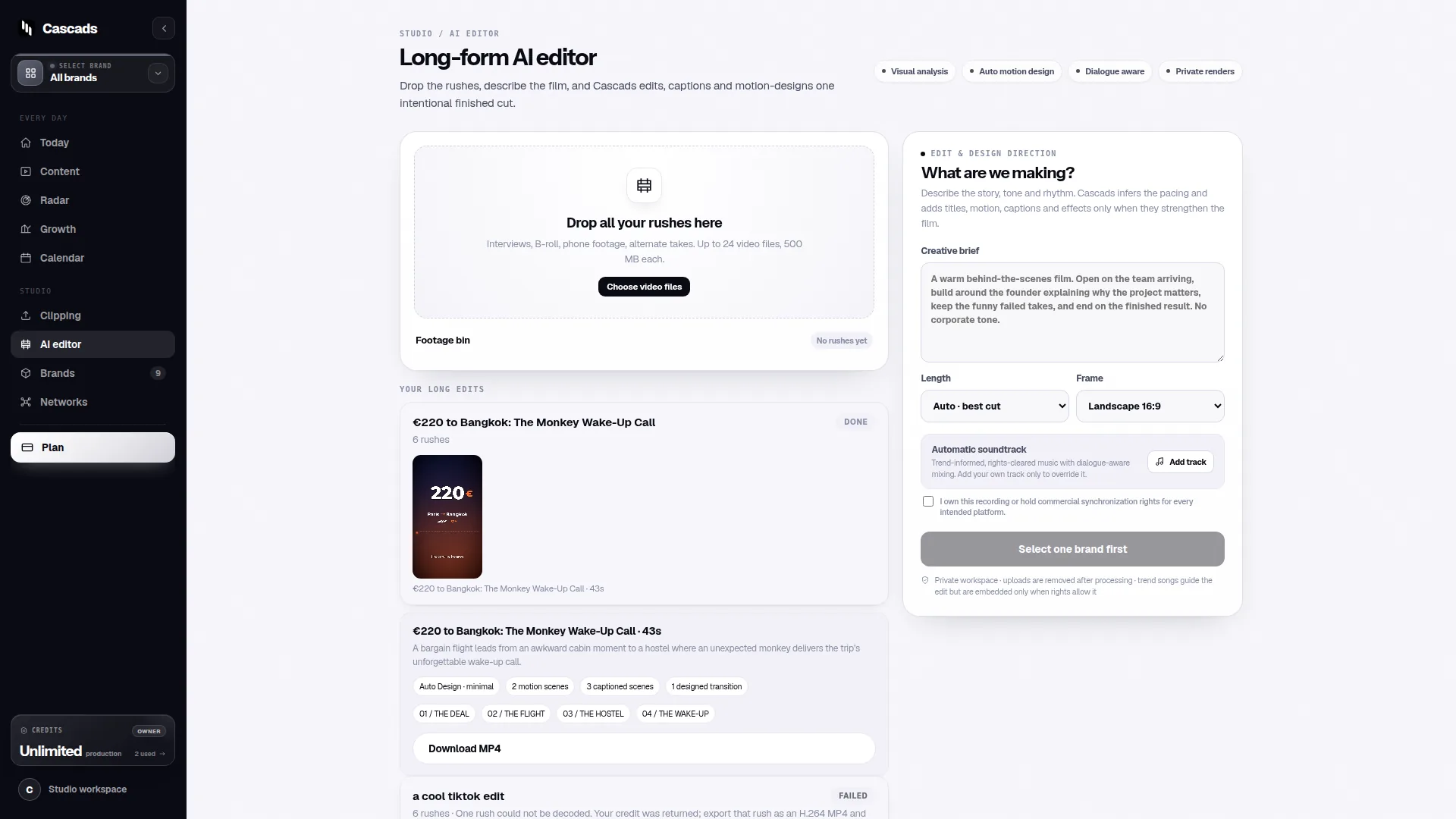
Cascads, an IVRYN product built for social content production and scheduling, approaches this by letting teams set up a profile per brand once and reuse it across generated posts, videos and carousels. That reduces repetitive briefing, though the output still reflects the quality of the profile itself: a thin or outdated brand profile will produce thin or outdated content, automated or not.
- Does the tool let you store brand voice, audience and visual guidelines once per brand?
- Can that profile be updated as the brand evolves, without rebuilding from scratch?
- Does the same profile drive content across formats, or does each format need separate setup?
Multi-format production and why it's harder than it looks
Best automated social media posting app searches often assume one app can handle text posts, vertical video and carousels equally well. In practice, each format has different production and technical requirements. A caption generator that works well for text posts may not translate into a coherent vertical video script, and carousel content needs its own pacing and visual sequencing.
This is a genuine capability gap between tools, not just a feature checklist item. When comparing options, look specifically at whether multi-format output comes from the same underlying brand context, or whether you're effectively using three disconnected tools bundled under one interface. The former tends to produce more consistent brand presence; the latter often just relocates inconsistency.
Human review is not optional, and that's a feature, not a flaw
Any credible evaluation of an automated posting app should factor in that generated marketing output needs human review before it goes live, regardless of how good the automation is. This isn't a limitation unique to one tool - it reflects the reality that automated content can misjudge tone, context or timing in ways only a person will catch.
A useful signal when comparing apps is how well they support that review step rather than how hard they try to avoid it. Cascads' published guidance on approval workflow, for example, focuses on making review a deliberate stage in the process rather than an afterthought - which is a more realistic design goal for teams that can't afford a public misstep than a promise of hands-off publishing.
Worked example: imagine a three-person agency running content for six brands across four networks. If the app fully automates review, misjudged content might go live before anyone with local knowledge of a brand catches a problem - a wrong reference, an off-tone joke, a claim the client hasn't approved. If review is a built-in stage before publishing, the same team can distribute review across the week, catching more with less last-minute pressure. This is illustrative, not a reported outcome from any specific deployment.
Format-aware publishing and platform limits you can't automate away
Even after content is approved, whether it actually publishes automatically depends on factors outside any app's control: which network you're posting to, what media format is involved, what permissions your account has, and whether the platform's own approval processes allow it. This is one of the most commonly underestimated parts of evaluating a posting tool.
Cascads' published integration checklist is a useful reference here specifically because it frames publishing as conditional rather than guaranteed - a pattern worth checking for in any tool you evaluate, since vendors sometimes imply universal auto-publishing that platform rules simply don't allow.
Practical checklist for evaluating this before you commit to a tool:
- Confirm which networks support direct auto-publishing versus requiring manual posting for that account type.
- Check whether video and carousel formats have the same publishing permissions as text posts on each network.
- Verify what happens when a platform rejects or delays a scheduled post - does the app flag it for a human, or fail silently?
- Ask whether account-level permissions (e.g., business vs. personal accounts) affect what the app can post automatically.
A simple decision aid for comparing apps
Rather than ranking apps by marketing claims, it helps to score candidates against the four principles above for your actual mix of brands and networks. Below is a worked hypothetical scoring approach, not a report on any specific tool's real performance.
Example scorecard (fill in per candidate app): Brand context reuse (does it store and reuse a profile per brand - yes/partial/no), Multi-format coherence (does video/carousel/text share the same brand context - yes/partial/no), Review workflow (is there a distinct approval stage before publishing - yes/no), Format-aware publishing (does it clearly state which networks/formats support direct publishing - yes/no). A tool that scores well on brand reuse and review but poorly on format-aware transparency is still a risk, because you'll discover publishing limits only after committing time to content that can't go live as planned.
Frequently asked questions
Can an automated social posting app publish to any network without manual steps?
No. Direct publishing depends on the specific network, the media format involved, the account's permissions, and the platform's own approval processes, so some content may still require manual posting even with an automated tool.
Does automation remove the need for human review of generated posts?
No. Generated marketing content, including text posts, videos and carousels, should go through human review before publication regardless of how the content was produced, since automated tools can misjudge tone, context or brand fit.
What should a brand profile in a posting app actually include?
A useful brand profile typically captures tone, visual style, key messaging and target audience so it can be reused consistently across formats and posts, reducing the need to re-brief the tool for every piece of content.
Sources and further reading
These resources provide the wider reference frame. Product statements on this page are limited to the public information provided by Cascads.