What people actually mean by social media management in hindi
Someone searching for social media management in hindi is usually looking for one of two things: a Hindi-language explanation of what social media management involves, or tools and workflows that support Hindi-language content specifically. Both are reasonable starting points, but they lead to different research paths. If the goal is understanding the discipline itself - planning, producing, scheduling and publishing content across networks - the language of the explanation matters less than the accuracy of the underlying workflow it describes.
If the goal is producing and publishing content in Hindi for an audience, the more useful question is not 'which tool has a Hindi interface' but 'which parts of my workflow need to work correctly regardless of language.' Text posts, captions, video scripts and carousel copy in Hindi still have to pass through the same production, review and publishing steps as content in any other language. The language is a property of the content, not a separate category of software feature.
Brand context still has to exist before content does
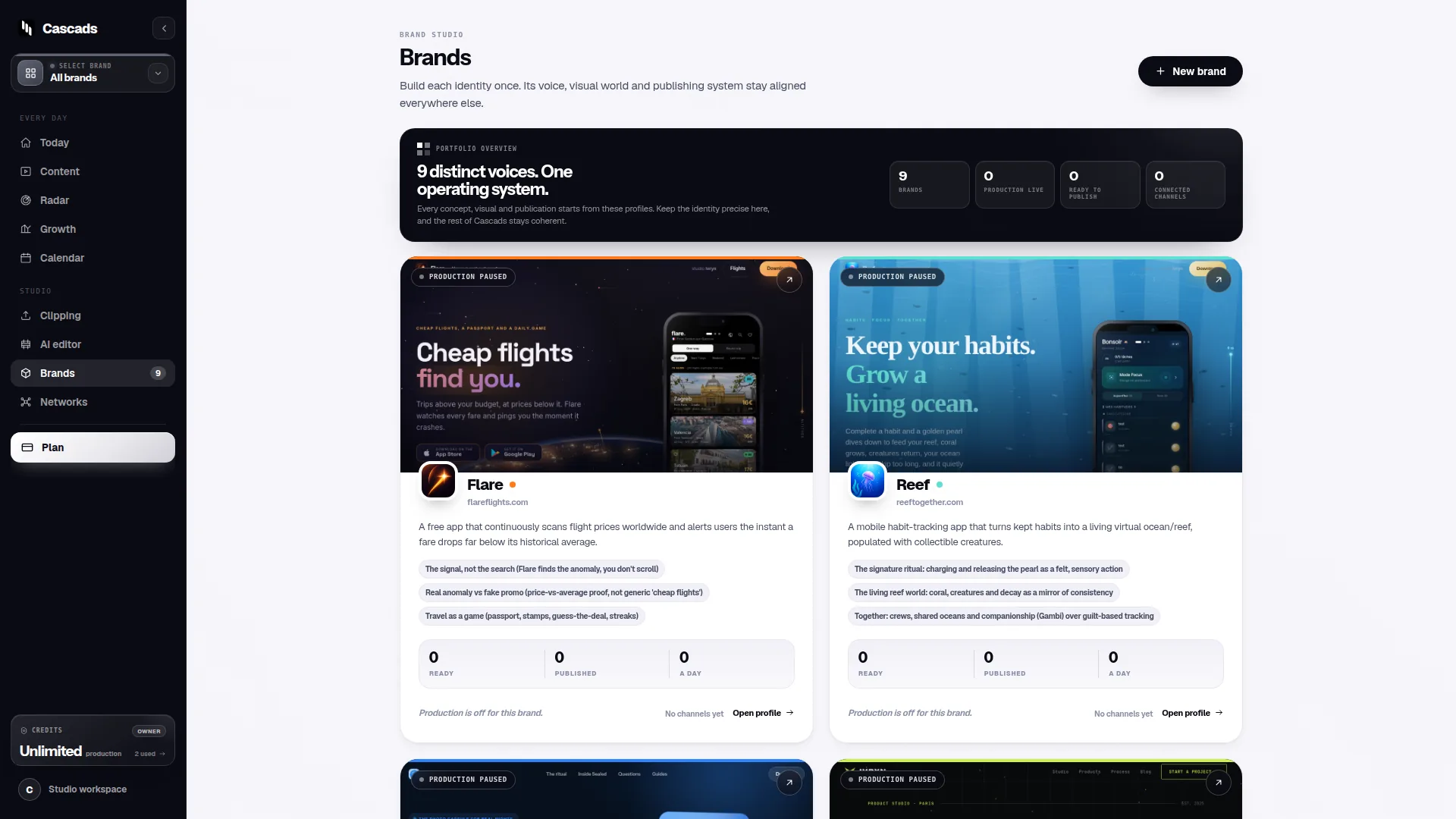
Small teams and agencies managing several brands often lose consistency not because writing in Hindi is harder, but because each brand's voice, audience and visual identity live in someone's memory rather than in a shared reference. A tool like Cascads addresses this by keeping a reusable brand profile that generation draws from, rather than starting from a blank prompt each time.
This matters specifically for multilingual or Hindi-first content because tone, formality and cultural register are harder to get right without a stable reference point. A brand profile does not replace judgment about language and audience, but it gives generated drafts a consistent starting point that a human reviewer can then check for accuracy and appropriateness before anything goes out.
Multi-format production: text, video and carousels
Social content rarely lives as a single format anymore. A campaign might need a short text post, a vertical video script, and a carousel breaking down the same idea into slides - all potentially in Hindi, all needing to say the same thing without contradicting each other. Producing these separately, by hand, for multiple brands is where most of the time in social content work actually goes.
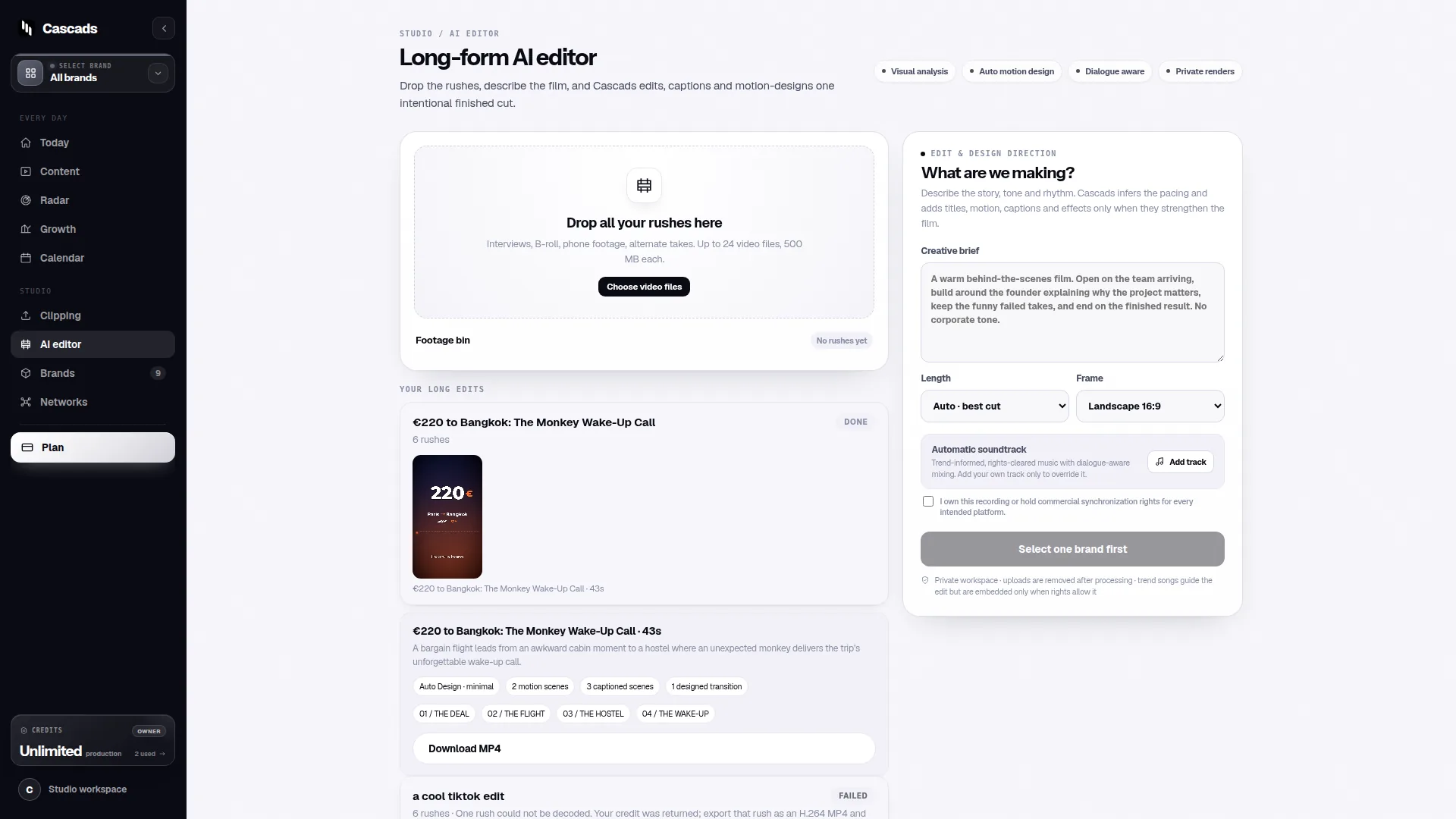
Cascads generates these formats - text posts, vertical videos and carousels - from the same brand profile, which reduces the duplicated effort of re-explaining context for each format. That said, generation across formats does not remove the need to check that a translation or Hindi phrasing that works in a short caption still reads naturally in a longer video script or a multi-slide carousel; format changes often expose small wording issues that a single-format review would miss.
Human review is not optional, especially across languages
Generated marketing output, in any language, remains subject to human review before publication. This is a stricter requirement in practice for Hindi content aimed at a Hindi-reading audience, because subtle errors in tone, grammar or word choice are more visible to native speakers than they are to whoever set up the workflow. A generation tool can produce a fluent-looking draft that still contains a phrasing choice a native speaker would flag immediately.
A practical review step for Hindi output should check three things separately: factual accuracy of the claims being made, correctness and naturalness of the Hindi itself, and consistency with the brand's established voice. Treating these as one review pass often means one of the three gets skipped under time pressure.
Format-aware publishing limits that apply regardless of language
Even after content is written and approved, whether it actually publishes directly depends on the network, the media format, the account's permissions, and external platform approval. This is true for Hindi content exactly as it is for content in any other language - a platform's video length limits, carousel image specifications or posting permissions don't change based on the language of the caption.
Teams sometimes assume that because a piece of content is correctly written and approved internally, it will publish without friction. In practice, direct publishing failures are more often caused by format mismatches, expired account tokens or platform-side approval delays than by anything wrong with the content itself. Building a habit of checking publishing status after scheduling, rather than assuming success, catches this early.
A worked example: scheduling a Hindi carousel for two brands
Example only, not a real case: an agency manages two brands, each with a separate Instagram account, and wants to publish the same product update as a Hindi-language carousel on both. The team first confirms each brand's profile is current - tone, product names, any phrasing the brand avoids - since outdated profile details would surface in every generated draft.
They generate the carousel copy for both brands from their respective profiles, then route both drafts through a review step that checks Hindi phrasing separately from brand voice. One draft needs a wording adjustment because a term reads as overly formal for that brand's usual tone; the other passes as-is. After approval, they schedule both carousels, but confirm beforehand that each Instagram account has the necessary permissions granted, since a carousel format issue or a permissions gap on one account could block publishing even after the content itself is fully approved.
This kind of dry run - checking profile accuracy, running language-specific review, and confirming permissions before scheduling - is a reasonable template for any multi-brand, multi-language publishing task, not just Hindi carousels specifically.
How Cascads fits, and where its boundaries are
Cascads is built by IVRYN for social content production and scheduling, using brand profiles to generate posts, videos and carousels. It's a reasonable fit for teams whose main bottleneck is repetitive production work across brands and formats, including when that content is written in Hindi.
It is not a substitute for a Hindi-speaking reviewer's judgment, nor does it guarantee that direct publishing will succeed - that outcome still depends on the network, the format, account permissions and the platform's own approval process. Teams evaluating any social content tool for Hindi-language work should treat generation as a starting point and review plus publishing verification as the steps that actually determine whether content reaches an audience correctly.
Frequently asked questions
Does using a tool with Hindi support guarantee correct Hindi grammar and tone in generated posts?
No. Generated content, including Hindi-language content, should always go through human review before publication, since automated generation can produce fluent-looking text that still contains tone or phrasing issues a native speaker would catch.
Why might an approved Hindi post still fail to publish directly?
Direct publishing depends on factors separate from content quality, including the network's rules, the media format used, the account's granted permissions, and the platform's own approval process. Any of these can block publishing even after content is fully approved internally.
What is the benefit of a reusable brand profile for multilingual social content?
A brand profile keeps voice, audience and product details consistent across drafts, which helps generated content in any language start from an accurate baseline. It doesn't replace review, but it reduces the chance of contradictory or outdated details appearing in generated drafts.
Sources and further reading
These resources provide the wider reference frame. Product statements on this page are limited to the public information provided by Cascads.