Direct answer
The usual short form is SMM, for social media manager or social media marketing, depending on the context. Job posts also use SMM manager, community manager and content manager. The role covers planning, producing, scheduling, publishing and measuring social content for one or several brands.
What people mean by social media manager short form
When people search for social media manager short form, they're usually asking one of two things: what the common abbreviation for the role is (often written as SMM, distinct from the marketing discipline of the same initials), or what a condensed, practical version of the job actually involves day to day. Both readings matter for small teams and agencies, because the answer changes how you staff the work and which tools you lean on.
In practice, the 'short form' of the social media manager role usually means fewer dedicated specialists doing more of the pipeline themselves: writing captions, briefing or assembling video, building carousels, scheduling across networks, and tracking what got approved and when. That compression is common in small teams and agencies handling several brands at once, where one person may touch every format for a given client in a single sitting.
Understanding this distinction early avoids a common mistake: assuming a shortened title means a shortened workload. Usually it's the opposite - the person carries more format and platform variety, which is exactly where tooling and process choices start to matter.
Brand context as the foundation of the workflow
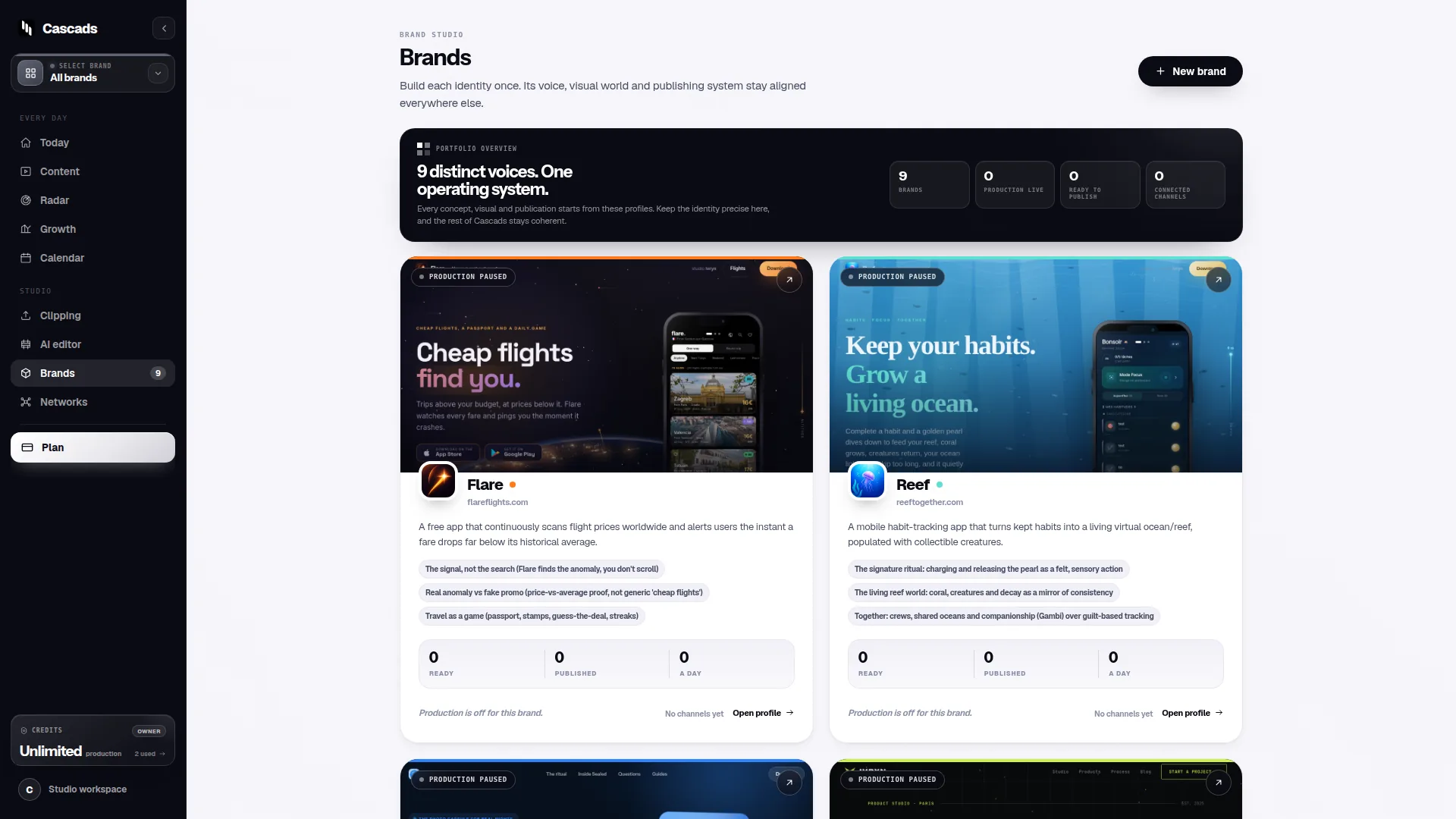
Any condensed social media manager function still needs a stable reference point for each brand it serves: voice, visual style, past approved examples, and platform-specific constraints. Without that context living somewhere reusable, a short-form manager ends up re-explaining brand basics every time they draft something new, which erodes the time savings the compressed role was supposed to create.
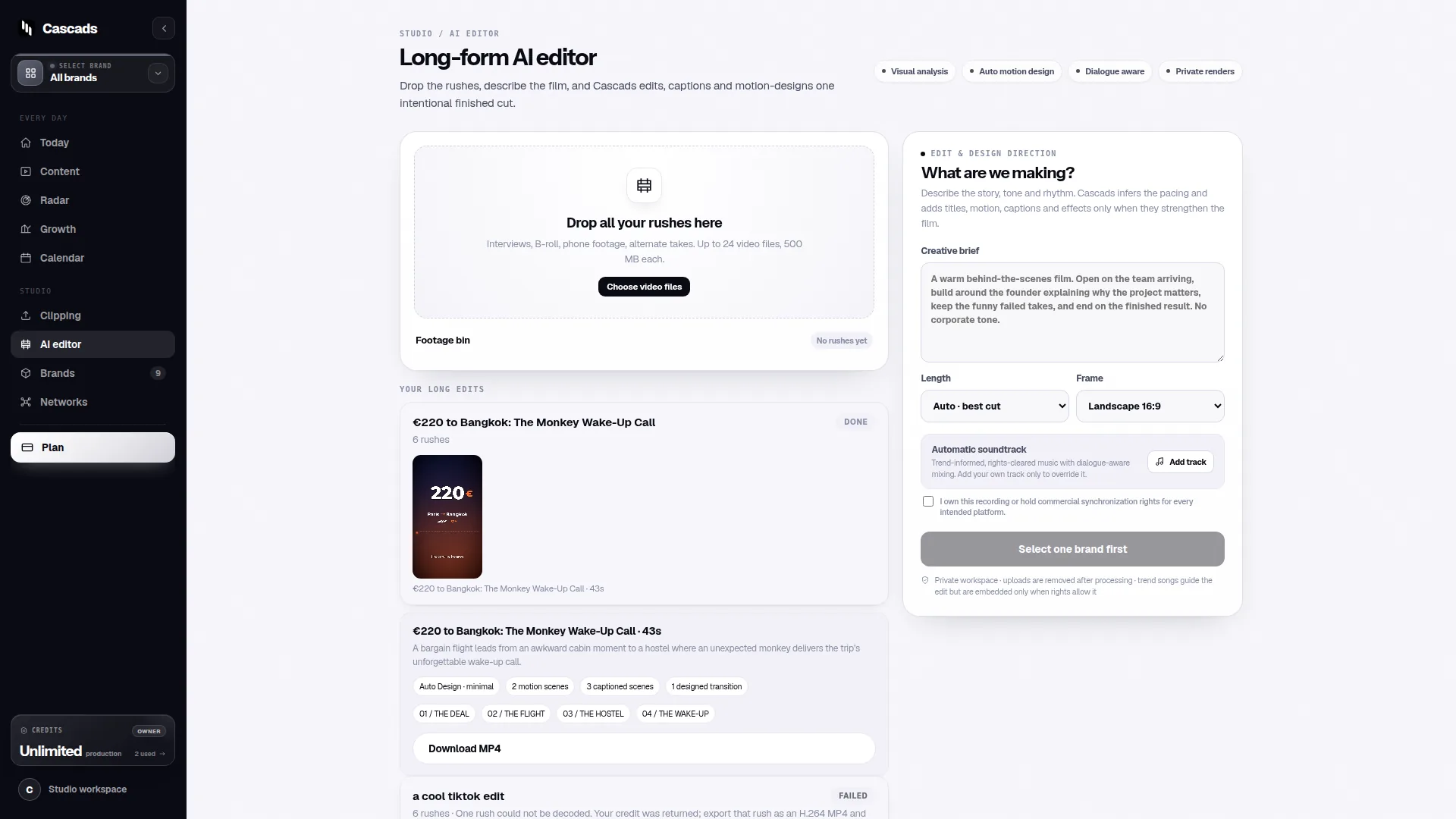
This is one of the areas where a platform like Cascads is relevant to mention: it is built around a reusable brand profile that content generation draws from, so a manager working across several accounts isn't reconstructing tone and guardrails from scratch each time. That's a narrow, product-grounded point rather than a claim about how much time it saves - the actual gain depends on how well the profile is maintained and how disciplined the team is about updating it.
The practical takeaway is that brand context is infrastructure, not a nice-to-have. Teams evaluating any tool or workflow for a short-form social media role should ask where brand memory lives and how easy it is to keep current across multiple clients.
Multi-format production changes the math
A social media manager short form role rarely covers a single content type. Text posts, vertical video, and carousels each have different production steps, different review needs, and different platform quirks. Treating them as one undifferentiated 'content' bucket is a common way small teams underestimate the workload behind a compressed title.
Generating drafts across these formats from a shared brand profile, which is the kind of production model Cascads is built around, can reduce some of the repetitive setup work. But format-aware production doesn't remove the need to check each piece against the target network's actual requirements - aspect ratio limits, caption length, carousel slide counts, and so on - because those specifications vary by platform and change over time.
For a short-form manager juggling several brands, the practical skill is less about mastering any one format and more about maintaining a repeatable checklist that catches format mismatches before they become publishing failures.
Human review is not optional, no matter how short the title
Whatever the role's title or size, generated marketing content - whether drafted by a person, a template, or a tool - needs a human review step before it goes live. This is true for Cascads output specifically and for any automated or semi-automated production pipeline in general; compression of the role doesn't compress this responsibility.
A social media approval workflow that fits a short-form role usually needs to be lightweight but not absent: a single reviewer checking brand accuracy, factual claims, and platform fit before scheduling, rather than a multi-stage sign-off chain that no small team has the headcount to run.
Skipping this step to save time is a false economy. A single unreviewed post with a factual error or an off-brand claim, published to several networks at once through scheduling automation, can cost far more time to correct than the review would have taken.
Worked example: a two-person agency team handling three brands
Consider a hypothetical: a two-person agency team is responsible for three client brands, each posting text updates, one short vertical video, and one carousel per week. This is a realistic shape for a 'short form' social media manager setup - no dedicated writer, videographer, or scheduler, just two people covering the whole pipeline.
In this scenario, each brand needs its own reference profile so drafts start from the right voice and constraints rather than a blank page. The two team members might split review duties so no one approves their own draft unchecked, and they'd want a shared calendar view showing what's pending approval, what's scheduled, and what depends on external platform review before it can go live - since actual publication is also gated by the target network's own approval and permission requirements, not just internal sign-off.
This example is illustrative, not a case study of any actual team or outcome. The point is to show how brand context, format variety, and review responsibility interact in a small operation, not to claim a specific time saved or result achieved.
Publishing limits that a short-form role still has to respect
Even a highly efficient, compressed social media manager function doesn't get to skip the external realities of publishing. Direct publishing to a network depends on that network's own rules, the media format being posted, the account's granted permissions, and the platform's approval of the connection - factors that sit outside any single team's control and can change without notice.
This matters practically because a short-form manager working quickly across multiple brands and platforms is more exposed to these gaps if they aren't checked systematically. A publishing integration checklist is one useful way to keep track of which accounts, formats, and permissions are actually confirmed versus assumed, rather than discovering a gap at the moment a post is due to go live.
Building a habit of verifying platform-specific requirements before scheduling, rather than after a failed publish, is one of the more transferable disciplines a compressed social media role can adopt regardless of which tools it uses.
Putting it together for social media manager short form
Bringing this back to the original question: a social media manager short form is less about the abbreviation and more about a role that has been compressed to cover multiple formats and brands with fewer dedicated hands. That compression makes brand context, review discipline, and format awareness more important, not less, because there's less redundancy to catch mistakes.
Cascads fits into this picture as a tool for producing text posts, videos, and carousels from a brand profile and scheduling them, which can support a short-form role's workload - but it doesn't remove the need for human review or the dependency on each platform's own publishing rules. Those two limits apply regardless of which production tool a team uses.
Anyone evaluating how to run a short-form social media manager setup should treat brand context maintenance, a lightweight but real review step, and a platform requirements checklist as the three non-negotiables, then choose tooling that supports rather than substitutes for them.
Frequently asked questions
Does social media manager short form mean the job is less demanding?
Not necessarily. It usually means the same range of responsibilities - writing, video, carousels, scheduling, and review - handled by fewer people, which often makes brand context and process discipline more important rather than less.
Can a small team publish directly to every social network without extra steps?
No. Direct publishing depends on the specific network's rules, the media format involved, the account's granted permissions, and that platform's own approval, so some manual steps or platform-specific checks are usually still needed.
Is generated social content ready to publish without a human checking it first?
No. Generated marketing content, regardless of the tool used to produce it, should go through a human review step before publication to catch brand, factual, or format issues.
Sources and further reading
These resources provide the wider reference frame. Product statements on this page are limited to the public information provided by Cascads.