What is social media scheduling, in plain terms
What is social media scheduling? At its core, it is the practice of preparing social posts in advance and setting a future time for them to go out, rather than composing and publishing each one manually in the moment. For a small team or agency juggling several brands, this means a batch of content can be written, reviewed, and queued once, then released over days or weeks without someone sitting at a keyboard at the exact posting time.
The mechanics look simple from the outside: pick a piece of content, pick a time, pick a destination account. But the practical value comes from what scheduling replaces. Instead of a person remembering to post at 9am on a Tuesday for one brand and 2pm on a Thursday for another, a queue holds that responsibility. This matters more as the number of brands and accounts grows, since manual posting scales badly with headcount that isn't growing at the same rate.
It's worth separating scheduling from the broader idea of a social content workflow. Scheduling is the delivery mechanism. The workflow around it - who writes the content, who approves it, what format it takes for each network - is a separate set of decisions that determines whether the scheduled post is actually ready to go out unattended.
Why teams managing multiple brands rely on it
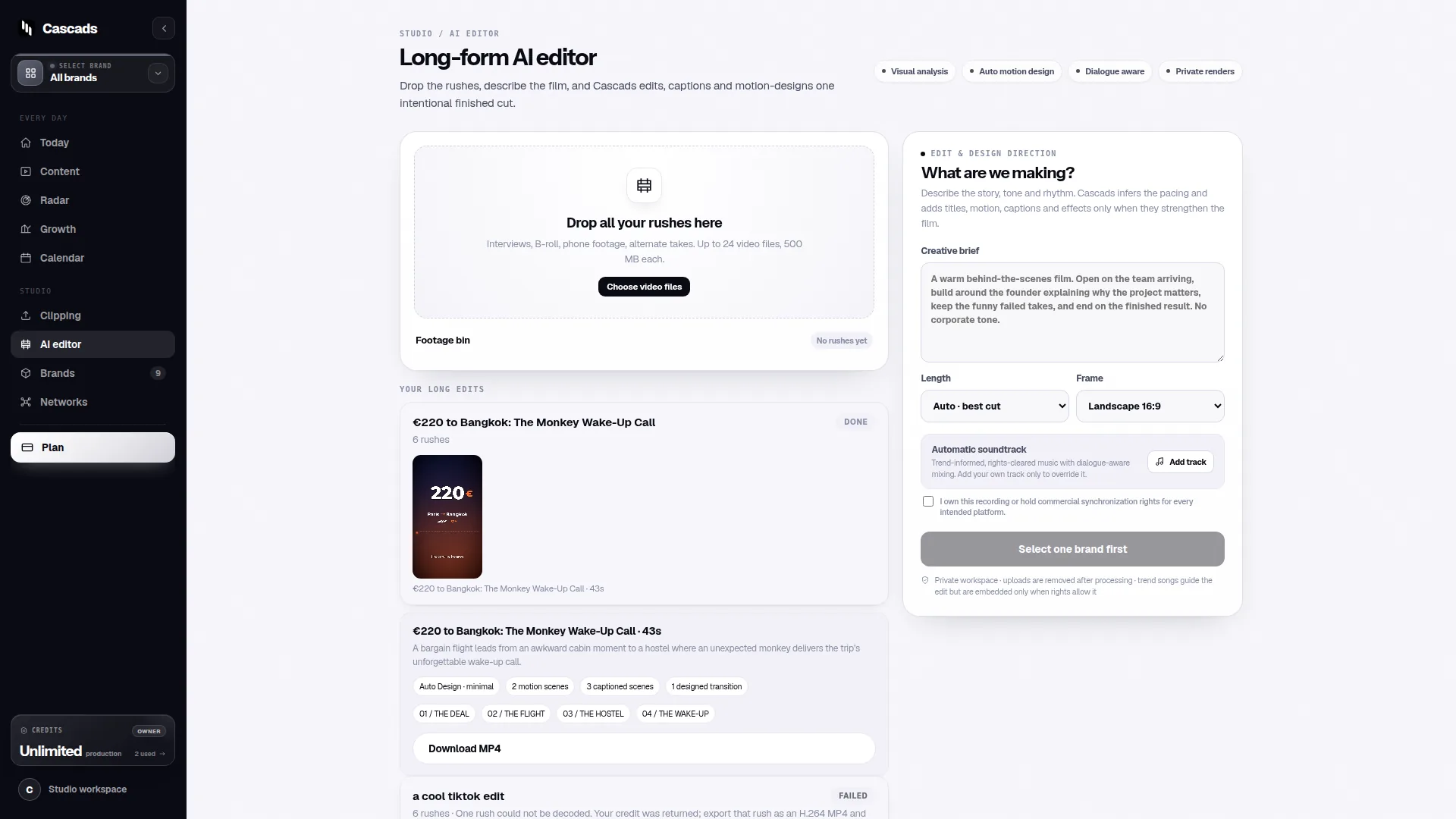
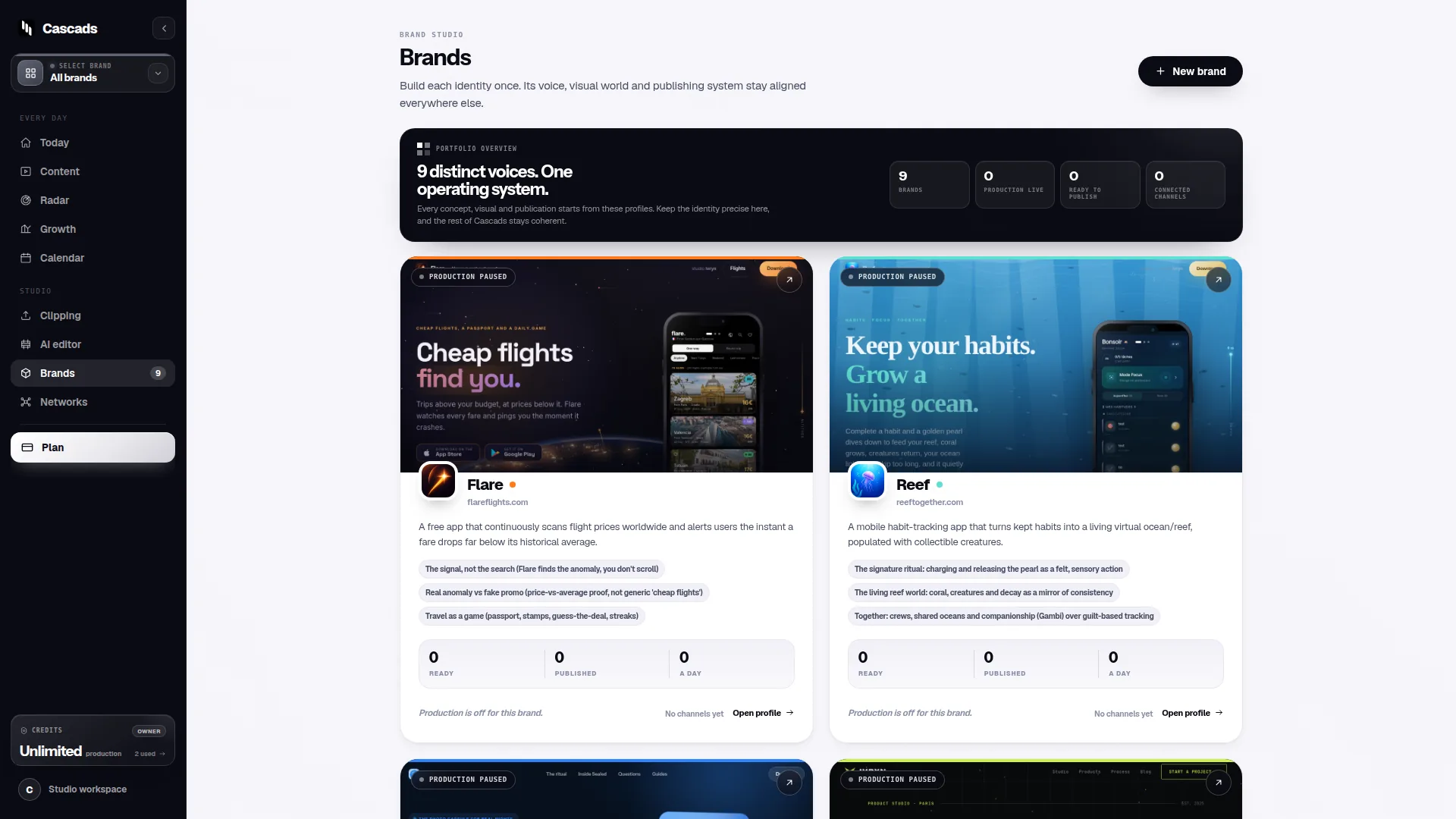
Agencies and small in-house teams typically aren't managing one social presence, they're managing several, each with its own voice, cadence and audience. Scheduling tools that let you work from a reusable brand profile - a defined tone, visual style and set of reference material - make it faster to produce content that stays consistent for a given brand without re-explaining that brand's context every time. Cascads, an IVRYN product built for this kind of multi-brand social production, generates text posts, vertical videos and carousels from that kind of profile, so the format changes but the underlying brand grounding doesn't have to be rebuilt each time.
This is a genuine efficiency gain, but it's not the same as full automation. Reusing a brand profile speeds up drafting and formatting; it doesn't remove the need for someone to look at each output before it's queued. Treat scheduling as a way to compress the time between having good content and having it live, not as a way to skip the step of deciding what's actually good enough to publish.
Human review still has a job to do
A recurring assumption people bring to scheduling tools, especially ones that generate draft content, is that once something is in the queue, the work is done. That's not a safe assumption. Generated marketing output - whatever tool produced it - is reasonably treated as a draft, not a finished asset, until a person has checked it against the brand's actual standards, current events, and plain accuracy.
This matters more, not less, when scheduling is involved, because the gap between drafting and publishing is exactly when a scheduled post can go stale. A post written two weeks ago about a promotion, an event, or even a general observation can become inaccurate or badly timed by the time it fires. A review step close to the actual publish time - or at minimum a habit of periodically re-checking the queue - catches this in a way that a one-time approval at creation time does not.
A practical approach for small teams is to build review into the calendar itself: a short recurring slot to skim what's about to go out in the next few days, not just what was just created. This is less about mistrust of any particular tool and more about the basic fact that scheduled content sits in a queue for a while, and the world doesn't pause while it waits.
Format matters as much as timing
Scheduling is often described purely in terms of when a post appears, but what gets posted matters just as much. A text post, a vertical video and a carousel are not interchangeable, and each network has its own expectations for aspect ratio, length and structure. A scheduling setup that only handles text well isn't solving the actual problem for a team that needs to keep video and carousel content moving too.
This is one reason multi-format generation is a meaningfully different capability from simple text scheduling. Being able to produce a vertical video and a carousel from the same brand profile as a text post means the queue can carry variety without each format requiring a separate, manual production process. That said, format readiness is necessary but not sufficient - a video that's technically correct for a platform's dimensions can still miss the mark editorially, which loops back to why a review step matters regardless of format.
It's also worth noting that not every format is equally easy to schedule for direct, unattended publishing. Some networks handle certain media types more predictably through automated posting than others, which brings up the next point.
What determines whether a post actually publishes automatically
This is the detail that catches people off guard: scheduling a post and having it actually go live without manual intervention are not always the same guarantee. Whether direct publishing works depends on the network in question, the media format of the post, the permissions granted to the connected account, and whether the platform's own approval or verification processes are satisfied. These are external conditions, not properties of the scheduling tool itself, and they can change as platforms update their policies.
In practice, this means a well-designed scheduling workflow includes a fallback path - a way to be notified if a post fails to publish automatically, and a straightforward way to post it manually if needed. Teams that assume a scheduled post is guaranteed to appear on time, every time, on every network, are setting themselves up for an occasional unpleasant surprise, usually right when a client or stakeholder is watching.
Before relying on scheduling for anything time-sensitive, it's worth confirming account permissions are current and that the specific format you're posting is one the network reliably accepts through automated tools. Cascads' own guidance on publishing integration checks is aimed at exactly this kind of pre-flight verification, since it's a step that's easy to skip until something breaks.
A worked example: setting up a week for two brands
Consider a small agency managing two brands, each posting three times a week across text, one video and one carousel slot. Here is one way to walk through the setup, offered as an illustrative example rather than a prescribed method.
First, the team drafts content for both brands from each brand's profile, producing the mix of formats needed for the week. Second, someone other than the drafter reviews each piece against brand tone and current context - checking, for instance, whether anything references a promotion or date that might shift. Third, the team confirms that the accounts involved still have the necessary permissions connected and that the video and carousel formats are supported for automated posting on the target networks, rather than assuming last month's setup still holds. Fourth, the posts go into the schedule at times chosen for each brand's audience. Fifth, a short recurring check near each post's live date confirms nothing needs pulling or editing before it fires.
This sequence isn't unique to any one tool, but it illustrates the general shape: draft, review, verify platform readiness, schedule, and re-check. Skipping the middle two steps is where scheduling workflows tend to go wrong, not the scheduling mechanism itself.
- Draft content per brand from a reusable profile
- Have a second person review for accuracy and tone before queuing
- Confirm account permissions and format support for each target network
- Set posting times per brand's audience
- Re-check the queue close to each post's live date, not just at creation
Frequently asked questions
Is social media scheduling the same as full automation of a brand's social presence?
No. Scheduling automates the timing of when a prepared post goes out, but it does not remove the need for someone to review the content beforehand or confirm that a given post will actually publish successfully on a given network. Treat it as a delivery mechanism within a workflow, not a replacement for that workflow.
Why might a scheduled post fail to publish automatically?
Automatic publishing depends on factors outside the scheduling tool itself, including the specific network's rules, the media format of the post, whether the connected account has the right permissions, and whether the platform's own approval processes are satisfied. Any of these can prevent automatic posting, so it's worth having a way to notice failures and post manually as a fallback.
Do generated social posts still need human review before they're scheduled?
Yes. Generated marketing content, regardless of the tool that produced it, should be reviewed by a person before publication, and ideally reviewed again shortly before it actually goes live, since scheduled content can sit in a queue long enough to become outdated or inaccurate.
Sources and further reading
These resources provide the wider reference frame. Product statements on this page are limited to the public information provided by Cascads.