What social media scheduling platforms actually do
Social media scheduling platforms sit between content creation and publication. Their core job is to let a team prepare posts once and queue them across networks and accounts, rather than logging into each app individually. For small teams and agencies handling several brands at once, that queueing function is what makes consistent posting cadence realistic without a full-time person on each channel.
It helps to separate what these tools reliably do from what depends on outside factors. Scheduling, drafting, and organizing content by brand or campaign are functions the platform controls directly. Whether a post actually goes live automatically, however, depends on the target network, the media format involved, the permissions granted on the connected account, and approval from the platform itself. A tool can queue a video perfectly and still have that video blocked or delayed by the network's own review process.
- Scheduling and drafting: fully controlled by the platform
- Cross-brand organization: fully controlled by the platform
- Automatic publishing: partly controlled, subject to network and account rules
- Final approval before a post goes live: external, not guaranteed by any tool
Why brand context matters before you schedule anything
A recurring failure point for teams managing multiple brands is treating scheduling as a single generic queue. Voice, visual style, and posting cadence differ by brand, and a scheduling tool that doesn't let you maintain separate, reusable context for each one forces someone to re-explain those distinctions every time content is prepared. That re-explanation is where errors creep in, especially under deadline pressure.
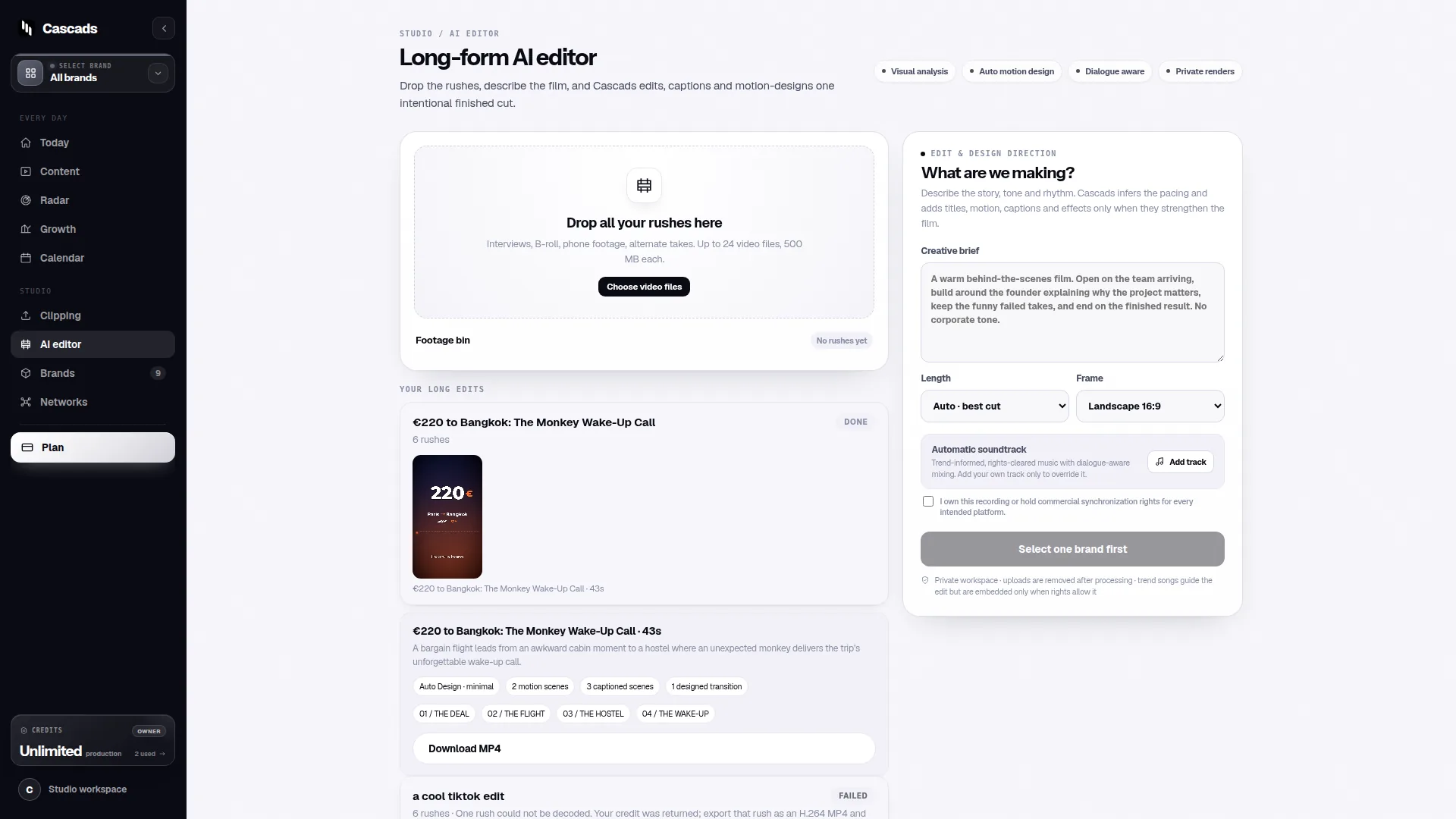
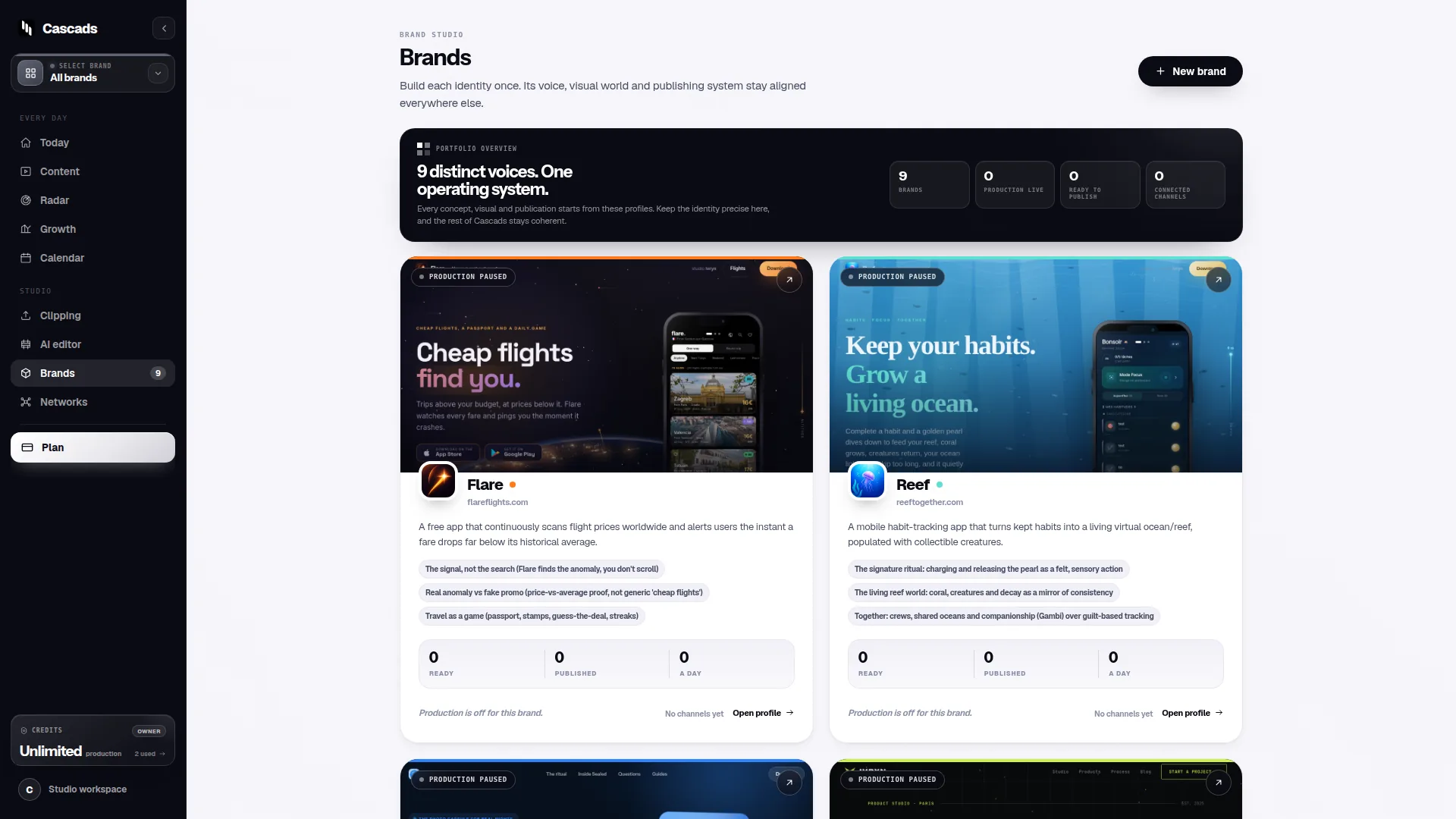
Cascads, an IVRYN product built for social content production and scheduling, approaches this by keeping a reusable profile per brand that informs the text posts, vertical videos, and carousels it generates. The practical benefit for a reader evaluating platforms isn't the specific mechanism, but the underlying principle: a platform that keeps brand context persistent and separate reduces the manual correction work a small team has to do before anything is scheduled.
Multi-format production and its publishing constraints
Modern social content spans text posts, vertical video, carousels, and static images, and each format carries different technical requirements per network. A carousel built for one platform's aspect ratio and slide count won't necessarily translate to another without adjustment. A vertical video that meets one network's length limits may need trimming for another. Any scheduling platform's ability to produce or handle multiple formats has to be evaluated against these per-network realities, not treated as a single universal capability.
This is also where 'automatic publishing' claims deserve scrutiny. Even when a platform can generate a given format, whether it can push that format live without manual intervention depends on the specific network's API support for that format, the connected account's permission level, and whether the platform has been approved by the network for that kind of automated posting. None of these three conditions is guaranteed to hold for every format and every network at once, and they can change over time as networks update their policies.
For teams weighing platforms, a useful question is not 'can it publish automatically?' in the abstract, but 'for which formats, on which networks, under which account types does automatic publishing actually work today?' That framing avoids assuming a capability that may only apply to a subset of use cases.
Human review as a structural requirement, not a nice-to-have
Regardless of how capable a scheduling platform's generation or automation features are, generated marketing content should go through human review before it publishes. This isn't a limitation specific to any one tool; it reflects the reality that automated content generation can miss context, tone mismatches, or factual errors that a human editor would catch. Building a review step into the workflow protects a brand's reputation more reliably than trusting automation output directly.
A practical approval workflow typically involves a defined checkpoint between content generation and scheduling confirmation, where someone with brand authority signs off before a post enters the publishing queue. Teams managing several brands or clients often need this checkpoint to be per-brand as well, since the person qualified to approve one brand's content isn't necessarily the right reviewer for another's.
When evaluating a platform, it's worth checking whether this review step is a built-in part of the workflow or something the team has to bolt on externally. A platform that treats review as an afterthought puts more operational burden on the team to catch issues before they go live.
A worked example: choosing a workflow for a five-brand agency
Consider a hypothetical small agency managing five client brands across three networks, aiming to publish a mix of text posts, short vertical videos, and carousels weekly. This is an illustrative scenario, not a documented outcome or case study, but it demonstrates how the principles above apply in combination.
The agency would first need each brand's voice and visual identity kept separate and reusable, so content prepared for one client doesn't drift into another's tone. Next, they'd need to confirm, network by network, which formats can actually be scheduled for automatic publishing versus which require manual posting because of account permission tiers or platform approval status. Finally, they'd need an approval checkpoint assigned per brand, so the right person signs off before anything reaches a live queue.
In this scenario, the deciding factor for choosing a platform wouldn't be the number of features listed on a pricing page, but whether these three elements - brand separation, format-aware publishing rules, and per-brand review - are structurally supported rather than left to manual workarounds.
A short decision checklist
Before committing to a social media scheduling platform, it helps to work through a small set of concrete questions rather than relying on a features list alone. The following checklist is meant as a starting point for evaluation, not a guarantee of any particular outcome.
- Does the platform keep brand context (voice, style, cadence) separate and reusable across multiple brands or clients?
- For each network you use, which formats support automatic publishing today, and which require manual posting?
- Is there a built-in human approval step before content is scheduled or published, and can it be assigned per brand?
- How does the platform behave when a network changes its API or approval rules for automated posting?
- Does the tool's format support (text, video, carousel) match the formats your audience actually engages with on each network?
Frequently asked questions
Can social media scheduling platforms guarantee automatic publishing on every network?
No. Automatic publishing depends on the specific network's technical support for that content type, the permission level of the connected account, and the network's own approval of the platform for automated posting. These conditions vary by network and format and can change over time, so no platform can guarantee automatic publishing everywhere.
Why does human review still matter if a platform can generate content automatically?
Automated generation can miss tone mismatches, context errors, or brand inconsistencies that a human reviewer would catch. Keeping a review checkpoint before publication reduces the risk of a mistaken or off-brand post going live, regardless of how capable the generation tool is.
What is Cascads and how does it relate to scheduling multiple brands?
Cascads is an IVRYN product for social content production and scheduling. It generates text posts, vertical videos, and carousels from a reusable profile kept for each brand, though direct publishing still depends on the network, format, account permissions, and platform approval, and generated content is meant to go through human review before publication.
Sources and further reading
These resources provide the wider reference frame. Product statements on this page are limited to the public information provided by Cascads.