Why people search for social media management quotes
When someone types 'social media management quotes' into a search bar, they are rarely looking for inspirational sayings about marketing. Most are trying to price out a service, compare vendors, or figure out what a fair scope of work looks like for managing accounts across several networks. The phrase is ambiguous enough that it can mean either literal price quotes from agencies and freelancers, or short pull-quotes used as content on social posts themselves.
This article treats the practical reading: what should shape a quote or budget conversation for social media management, and what limits should any buyer understand before committing. The honest answer is that a quote is only useful if it reflects the actual workload, which depends heavily on how many brands, formats, and networks are involved, and how much human oversight is built into the process.
What actually drives the scope behind a quote
A meaningful quote for social media management is not a single number attached to a vague promise of 'posting content.' It reflects a combination of variables: how many brand identities need distinct voice and visual treatment, how many content formats are required (short text posts, vertical video, carousels), and how many networks the work needs to reach.
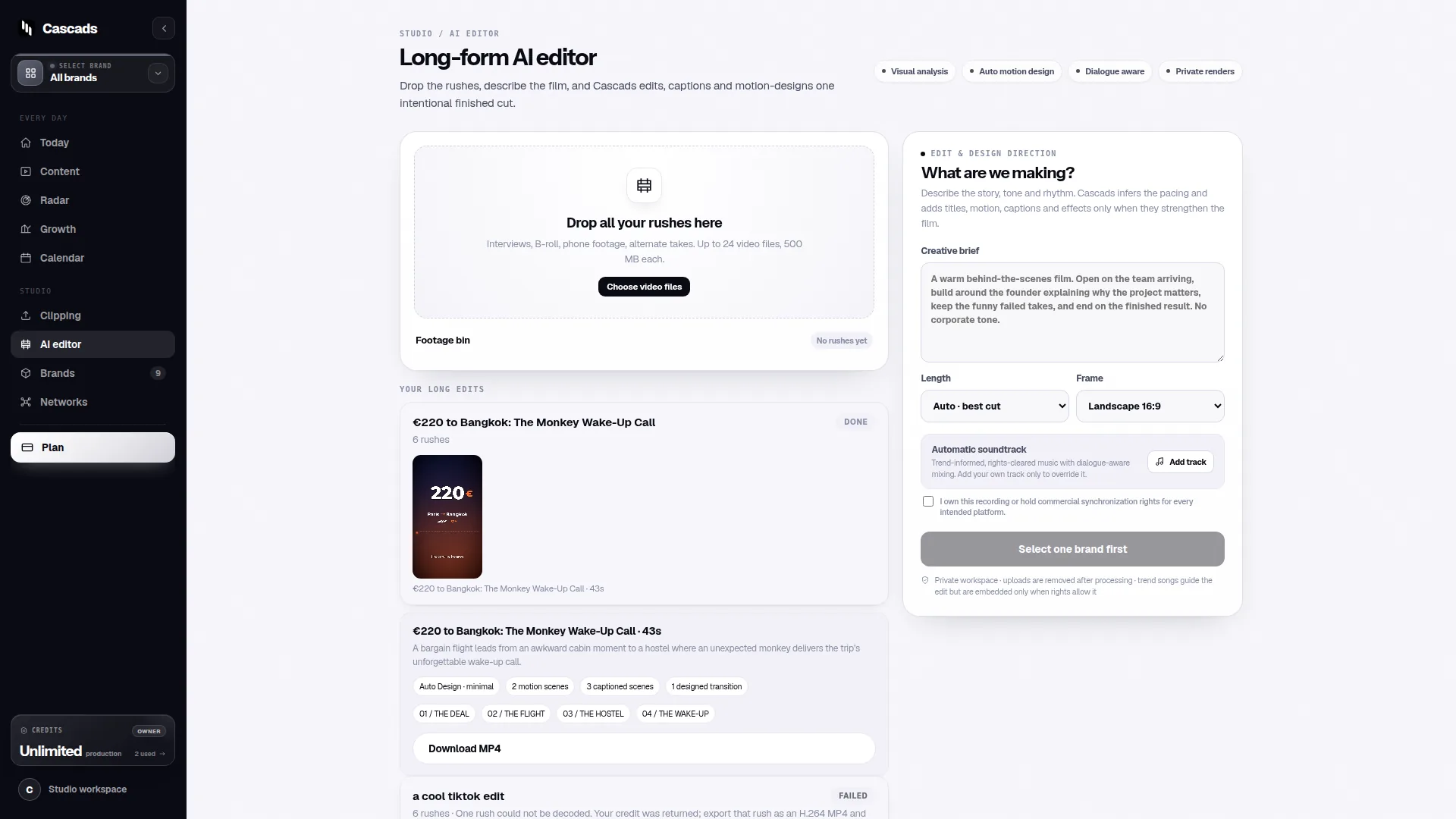
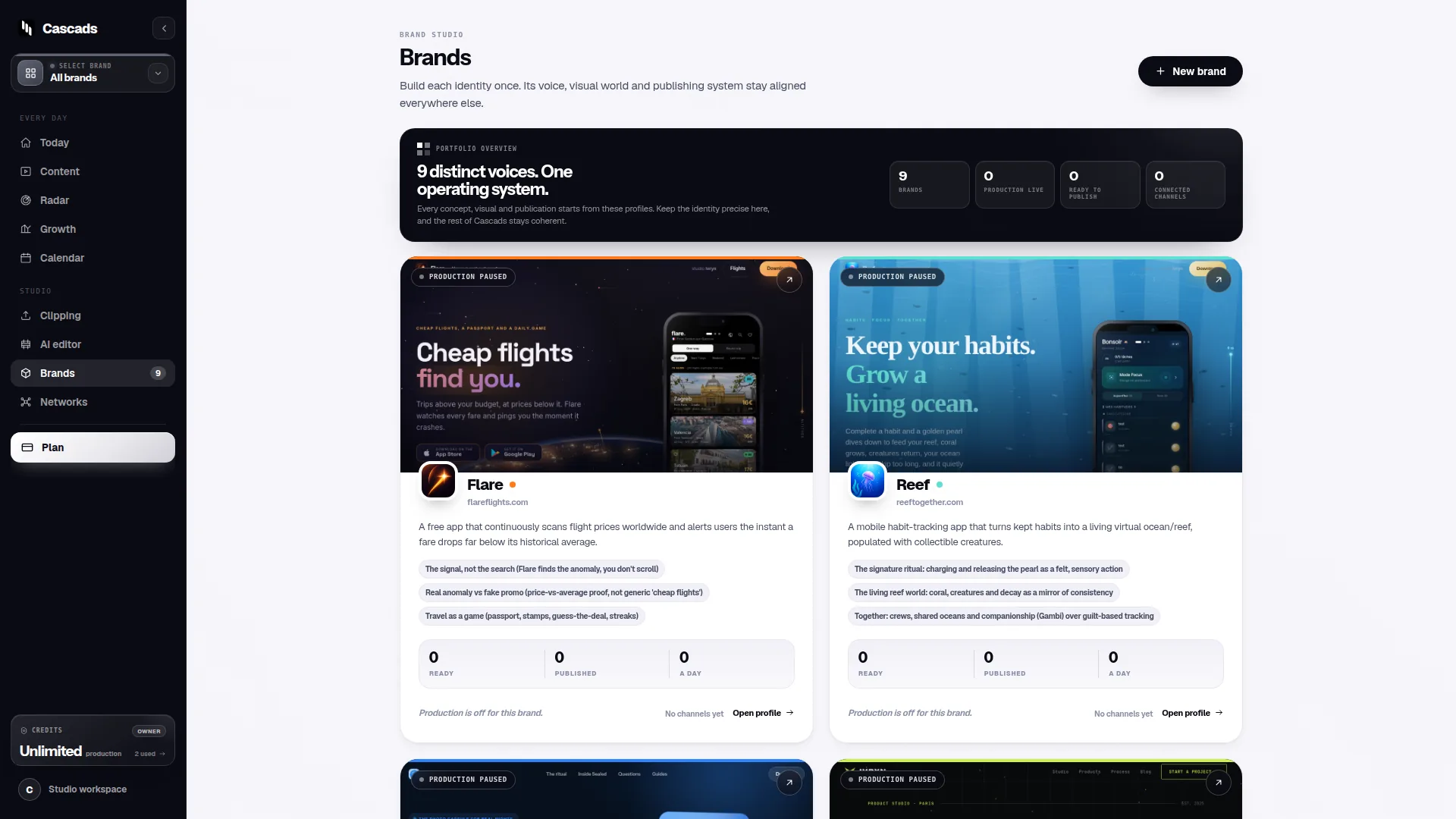
Tools that support a reusable brand profile can reduce the repetitive setup cost of producing content for multiple accounts, since the same brand context can inform text posts, video, and carousel formats without redoing creative direction each time. Cascads, for example, is built around this idea: it generates text posts, vertical videos, and carousels from a profile defined once per brand, which is relevant context when evaluating why some quotes scale better across multiple brands than others.
None of this changes the fact that a quote is an estimate of labor and tooling, not a guarantee of results. Anyone requesting or giving a quote should be explicit about which formats and networks are included, since 'social media management' can mean anything from light scheduling to full creative production.
Human review belongs in every quote, not as an afterthought
A recurring gap in informal quotes is the absence of review time. Whether content is drafted by a person, an agency, or generated with the help of software, output intended for a brand's public accounts should go through a human check before it is published. This is true regardless of how content is produced, and it should be priced and scheduled as part of the work, not treated as optional polish.
Generated marketing output, including anything produced with the assistance of tools like Cascads, remains subject to human review before publication. That is a deliberate constraint rather than a limitation to work around: review time protects against tone mismatches, factual errors, or content that technically fits a format but doesn't fit the brand.
A quote that omits review time is likely underpricing the actual effort involved, and a workflow that skips review is taking on avoidable risk. Approval workflows, where drafts move through a defined check before going live, are one practical way to make this step visible and accountable rather than ad hoc.
- Ask whether the quote includes drafting, review, and final approval, or drafting only
- Confirm who is responsible for catching errors before a post goes live
- Treat review time as billable work, not free overhead
Format-aware publishing changes what a quote should cover
Not every network accepts every format the same way, and this has direct budget implications. A quote built around 'daily posts' without specifying format and network can understate the work involved, because vertical video, carousels, and plain text posts each carry different production and publishing considerations.
Direct publishing itself is not universally available or identical across platforms: it depends on the network in question, the media format being sent, the account's granted permissions, and approval from the external platform. A quote should account for the possibility that some content may need manual posting or additional setup on certain networks, rather than assuming push-button publishing works uniformly everywhere.
A publishing integration checklist is a useful reference point here, since it walks through the kind of format and permission variables that determine whether direct publishing is realistic for a given account, rather than leaving that as an unstated assumption in a quote.
A worked example: comparing two quotes for a three-brand agency
Example only, not a real case: imagine a small agency managing three client brands, each needing a mix of text posts, short vertical videos, and carousels across two networks per brand. Quote A charges a flat per-post rate with no mention of review or per-brand setup. Quote B breaks out brand profile setup, format-specific production time, a review step before anything is scheduled, and a note that some networks may require manual publishing due to permission or approval limits.
On paper, Quote A might look cheaper per post. But if it excludes review time and format-specific production, the buyer may end up paying extra later for corrections, delays, or manual workarounds when a network doesn't support automated publishing for a given format. Quote B's structure, while more detailed, gives a clearer picture of what is actually being paid for and where the risks sit.
This is not a recommendation to always choose the more detailed-looking quote, since detail alone doesn't guarantee quality. The point is that a quote worth comparing should let a buyer see brand setup, format handling, review, and publishing limits as separate line items, so tradeoffs are visible instead of hidden inside a single flat rate.
A short checklist before accepting any social media management quote
Before signing off on a quote, it helps to separate the questions about scope from the questions about process. Scope questions cover what is being produced and for how many brands and networks. Process questions cover who reviews content, how errors get caught, and what happens when a network doesn't support automated publishing for a given format.
Buyers evaluating tools rather than freelancers or agencies should apply the same logic: a reusable brand profile that feeds multiple formats can make a quote more consistent across brands, but it does not remove the need for human review or eliminate platform-specific publishing constraints.
- List every brand, format, and network the quote is meant to cover
- Confirm a human review step exists before anything is published
- Ask what happens on networks or formats where direct publishing isn't supported
- Clarify whether pricing changes as the number of brands or formats grows
Frequently asked questions
Should a social media management quote include human review time?
Yes. Any workflow producing content for public brand accounts, whether human-drafted or software-assisted, should include a review step before publication, and that time should be reflected in the quote rather than treated as free.
Why do some quotes vary so much for what sounds like the same service?
Quotes vary because 'social media management' can mean very different scopes: the number of brands involved, the mix of formats like text, video, and carousels, and how many networks are covered all change the actual workload behind the price.
Does a lower quote mean faster or automatic publishing to every platform?
Not necessarily. Direct publishing depends on the specific network, the media format, the account's permissions, and approval from the platform itself, so even automated tools may require manual steps on some accounts regardless of price.
Sources and further reading
These resources provide the wider reference frame. Product statements on this page are limited to the public information provided by Cascads.