What social media management means before you act
A social media management guide should help a team make dependable operating decisions, not merely fill a posting calendar. For small teams and agencies, the work usually combines brand direction, content creation, review, scheduling, publishing and follow-up across several accounts. The important question is not simply whether a post can be made quickly; it is whether the right version reaches the right channel with appropriate approval.
Start by defining the unit of work. A single campaign idea may become a text post, a vertical video and a carousel, but these are not interchangeable files with different dimensions. Each format carries different editing, review and publishing needs. Treating them as separate deliverables connected by one approved message gives teams more control than copying a caption and hoping it fits everywhere.
This guide is deliberately bounded. Social networks, permissions, connected accounts, media requirements and each platform’s approval process can affect whether a scheduled item can be published directly. A responsible workflow therefore includes a fallback: someone can verify and complete publication manually when the connection or format does not permit an automatic route.
- Define the brand, campaign purpose, audience and owner before production begins.
- Plan each intended format as its own deliverable, even when it starts from the same idea.
- Record the intended network and publishing route early, rather than discovering constraints at the deadline.
Build brand context into the workflow
Brand context is the information that lets a team turn a broad topic into recognisable, appropriate communication. It can include positioning, audience priorities, tone, recurring themes, visual conventions, prohibited claims and approval rules. Without this shared context, multi-brand work often becomes a series of one-off interpretations that are hard to compare or review.
For agencies, context should be reusable but not assumed to be permanent. Maintain a clear profile for every brand, then update it when messaging, campaign boundaries or stakeholders change. The profile should guide production; it should not replace a reviewer’s judgment when a post addresses a sensitive subject, a time-specific promotion or an unfamiliar platform convention.
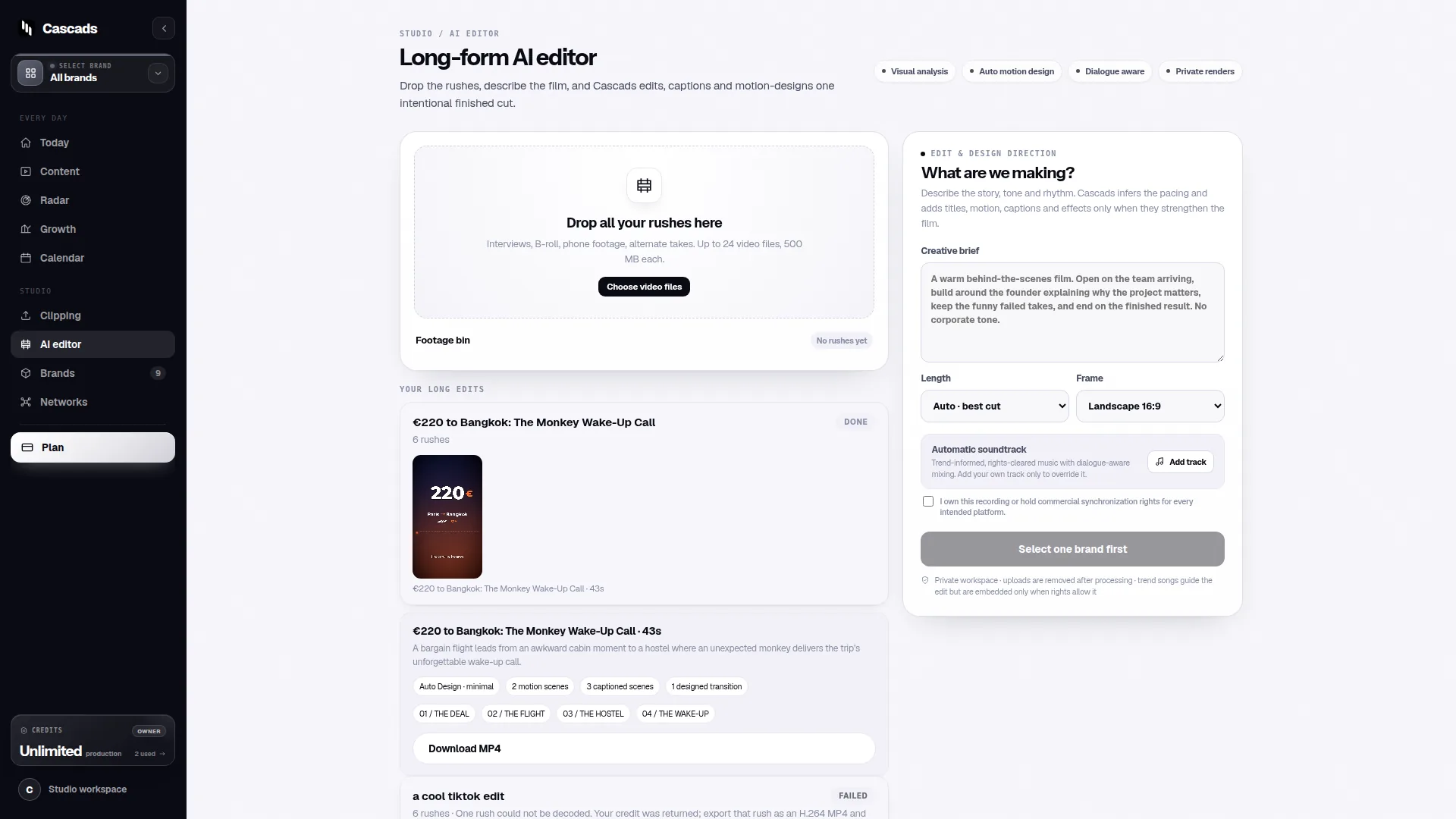
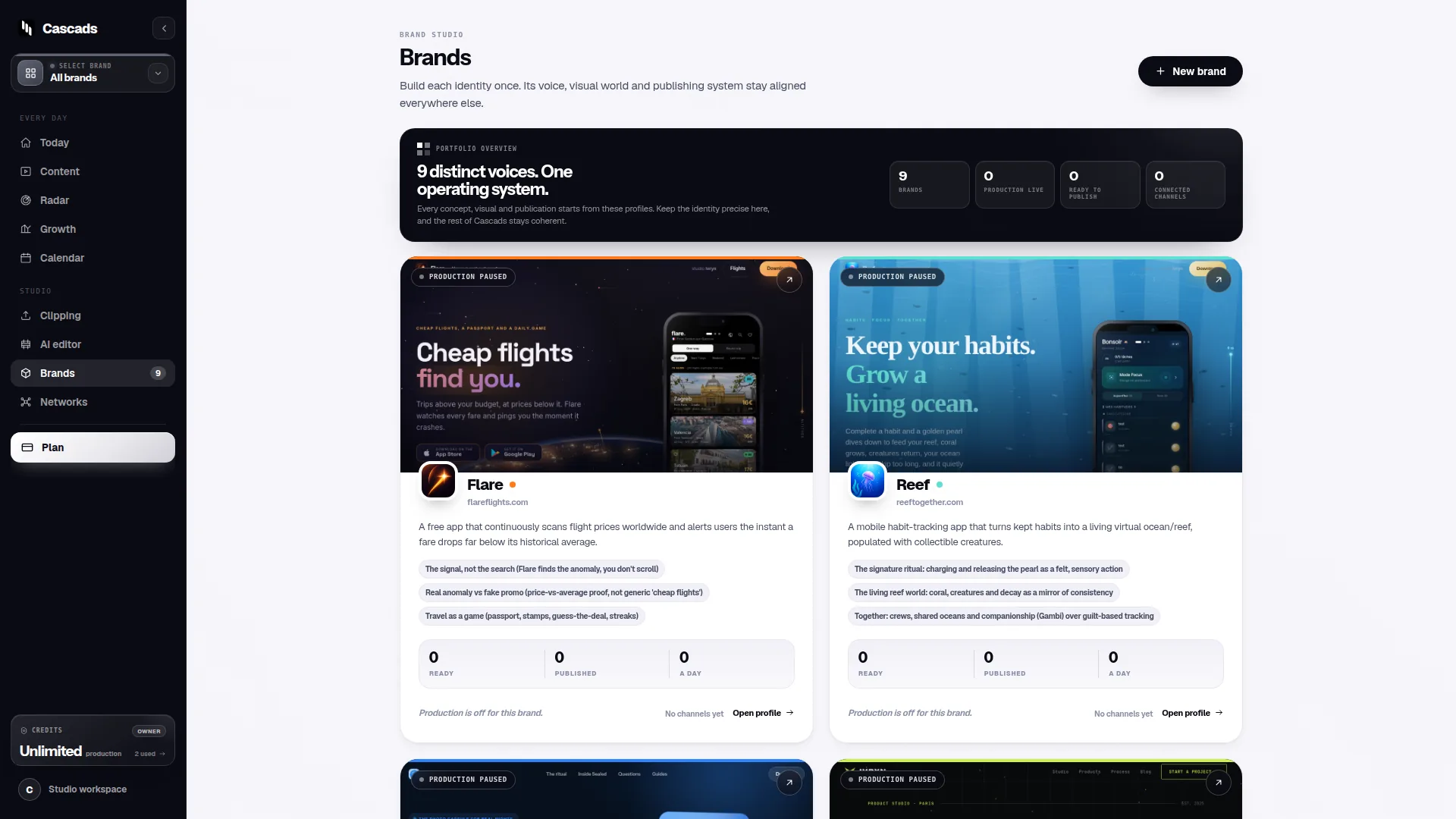
Cascads is an IVRYN product designed for producing and scheduling social content. Its public product context is relevant here because it supports creating text posts, vertical videos and carousels from a saved profile for each brand. That can reduce repetitive briefing, but the profile still needs an accountable owner and an active review process.
- Assign one person to maintain each brand profile.
- Write down non-negotiables: claims that require approval, tone boundaries and restricted topics.
- Include campaign-specific exceptions in the brief instead of silently changing the core brand context.
Social media management guide: choose formats before scheduling
Format-aware publishing begins before the schedule is set. Decide what the audience needs from the message, then select the format that best carries it. A short text post may be useful for a concise update, a vertical video may suit a visual demonstration, and a carousel may help sequence an explanation. The decision should follow the communication task, not a rule that every idea must appear everywhere.
When adapting one campaign across networks, preserve the central message while allowing the execution to change. Captions, pacing, calls to action, assets and accessibility considerations may need separate checks. This makes the work more deliberate, but it also avoids a common failure mode: an approved concept becoming an unreviewed variation once it is resized, recut or reposted.
Before promising a direct publishing path, check the destination network, account access, media type and current platform requirements. The publishing integration checklist is useful as a practical reminder that a connection alone does not settle all publishing conditions. Keep the checklist close to production so that a constraint changes the plan early rather than creating a last-minute exception.
- For every asset, note: format, destination network, account, publisher, reviewer and fallback action.
- Check whether the media file and account permissions match the intended publication route.
- Use a manual publishing handoff when direct publication is unavailable or awaiting external approval.
Make human review a real decision point
Human review should be a decision point, not a ceremonial final click. The reviewer needs enough context to assess the message, creative asset, destination, timing and intended publishing method. If only the caption is reviewed, the team may miss a mismatch between the approved wording and the actual video, carousel order or platform-specific version.
A useful approval workflow distinguishes between content changes and publication changes. Content approval answers whether the message and assets are suitable. Publication readiness answers whether the correct account, format, permissions and scheduling details are in place. Combining these questions can work for a small team, but naming them separately helps prevent an approved draft from being mistaken for a ready-to-publish item.
The approval workflow source supports a structured approach to ownership and review. Apply it proportionately: low-risk routine content may need one designated reviewer, while material involving partner commitments, regulated subjects or unusual claims may require an additional stakeholder. The point is clarity about who can approve what, not adding unnecessary delay.
- Set a status that clearly distinguishes draft, in review, changes requested, approved and publication-ready.
- Require reviewers to approve the final format-specific version, not just the source idea.
- Keep a named publisher responsible for checking publication status and exceptions.
Example: a practical decision aid for a three-brand agency
Example: An agency is preparing one product-update campaign for three client brands. Each brand has a different tone and audience, and each campaign needs a text post, a vertical video and a carousel. The agency first confirms the message boundaries inside each brand profile, then assigns an owner and reviewer for every brand-format combination.
Next, the team uses this decision aid. If the message can be understood in one concise statement, draft a text post. If it benefits from demonstration or movement, prepare a vertical video. If it needs a sequence of points or images, prepare a carousel. For each selected format, verify the target account, applicable permissions, media requirements and whether the network supports the intended direct publishing route.
The reviewer then sees the final asset, caption, chosen network and publishing plan. If the item is approved but its connection cannot publish that format directly, the agency does not treat this as a content failure. It marks the item as approved for manual publication, gives a named person the handoff instructions and records completion after publication. This preserves the approval decision while acknowledging platform constraints.
- Decision aid: Is the brand context current? Is the format appropriate to the message? Has the final version been approved? Can this account and format follow the intended publishing route? If not, who will publish manually?
Set limits and measure operational learning
The limits of social media management are worth stating plainly. A scheduling workflow cannot guarantee that an external platform will accept, distribute or display content in a particular way. Network rules, account permissions, connected integrations and media specifications can all change the available publishing path. Build a process that can absorb these conditions instead of presenting automation as certainty.
Likewise, generated marketing material is not a substitute for editorial responsibility. Teams should review generated text and creative output before it is released, especially when adapting content across brands or formats. Review is where a team checks accuracy, context, tone, claims, accessibility and whether the final asset still matches the approved intent.
Use operational learning rather than unsupported performance claims. After a publishing cycle, note where work slowed down: missing brand inputs, late format changes, unclear approval ownership, account-access issues or publication exceptions. These observations can improve the next workflow without implying that any tool, platform or process guarantees a particular result.
- Review exceptions after each campaign and update the checklist or brand profile where needed.
- Keep evidence of approval and publication handoffs in the team’s normal working system.
- Reconfirm account access and publication assumptions when teams, formats or networks change.
Frequently asked questions
What is the first step in social media management?
Start by defining the brand context, campaign purpose, target network, required formats and accountable owner. This gives content creation and review a shared basis before scheduling begins.
Can social media content always be published directly from a scheduling workflow?
No. Direct publication can depend on the social network, the media format, account permissions and approval by the external platform. A manual publishing fallback should be part of the plan.
Why is human review necessary for generated social content?
Human review checks that generated material is accurate, appropriate for the brand and suitable for the final format and destination before it is published. It remains necessary even when production and scheduling are streamlined.
Sources and further reading
These resources provide the wider reference frame. Product statements on this page are limited to the public information provided by Cascads.