The current Cascads publishing matrix
| Network | Automatic in Cascads | Prepared as a reminder | Setup condition |
|---|---|---|---|
| Telegram | Text, video and image albums | Other unsupported formats | Bot token and destination chat or channel |
| X | Text posts | Cascads video and carousel output | Developer application with user write credentials |
| Threads | Text and image carousels | Video in the current Cascads adapter | Threads user ID and authorised token |
| Text and multi-image posts | Video in the current Cascads adapter | Member permission and access token | |
| Text posts to a Page | Cascads video and carousel output | Page ID and Page access token | |
| Image carousels | Video in the current Cascads adapter | Professional account and content publishing permission | |
| TikTok | None until the Cascads app is audited for direct posting | Prepared video and caption | Platform app review is required for public direct posting |
| YouTube | None until the Cascads project completes the required verification | Prepared video, title and caption | Verified API project for public uploads |
Why capability belongs to a format, not a network
Social APIs do not expose one universal “publish” switch. Text, images, albums and video often travel through different endpoints. They can require different scopes and different media-transfer methods. Cascads therefore checks the content kind before attempting publication. A network connection that accepts text is not presented as proof that it can accept the generated video beside it.
This matters for safety as well as accuracy. If the adapter does not support a combination, Cascads returns a clear unsupported state and keeps the item available for manual completion. It does not mark a reminder as published. Failed API attempts also remain failures rather than becoming silent successes.
Text is usually the simplest path
Cascads sends text directly to X, Threads, LinkedIn, Facebook Pages and Telegram when the appropriate account is connected. Each service still has its own authentication model. X creates a post on behalf of an authenticated user through its create-post endpoint. LinkedIn requires a member or organisation permission. Facebook publishing targets a Page rather than a personal profile in the current Cascads setup.
Character handling is platform-specific. Cascads prepares a shorter universal text post, then the adapter applies the network boundary it supports. A caption that fits LinkedIn may still be inappropriate for X, so review remains part of the workflow even when the API call is automatic.
Image publishing needs either bytes or a temporary URL
Telegram and LinkedIn accept uploaded image data in the Cascads flow. Threads and Instagram fetch images from URLs, so Cascads issues signed media links that expire after one hour and permit only the requested file. This avoids turning private workspace assets into a permanent public directory just to satisfy an API transfer requirement.
The platform also determines the group size. Telegram documents media groups of two to ten items. Cascads limits the corresponding album before sending it. For LinkedIn, Cascads produces a multi-image post rather than claiming that the organic carousel ad format is available. The distinction is visible in the implementation and in this guide because product language should match what the API actually creates.
Video access often adds review requirements
TikTok provides a Content Posting API, but its documentation says unaudited clients are restricted to private visibility and that the publishing scope requires approval. YouTube also provides a video upload endpoint, while uploads from unverified API projects are restricted to private viewing. Until those external approvals are complete for Cascads, the honest product behaviour is a reminder with the video and text ready.
A reminder is not a failed automation. It is the correct handoff for a format the current integration cannot publish publicly. The user sees what requires action, downloads the prepared media and opens the destination network. This preserves the schedule without pretending the platform granted access it has not granted.
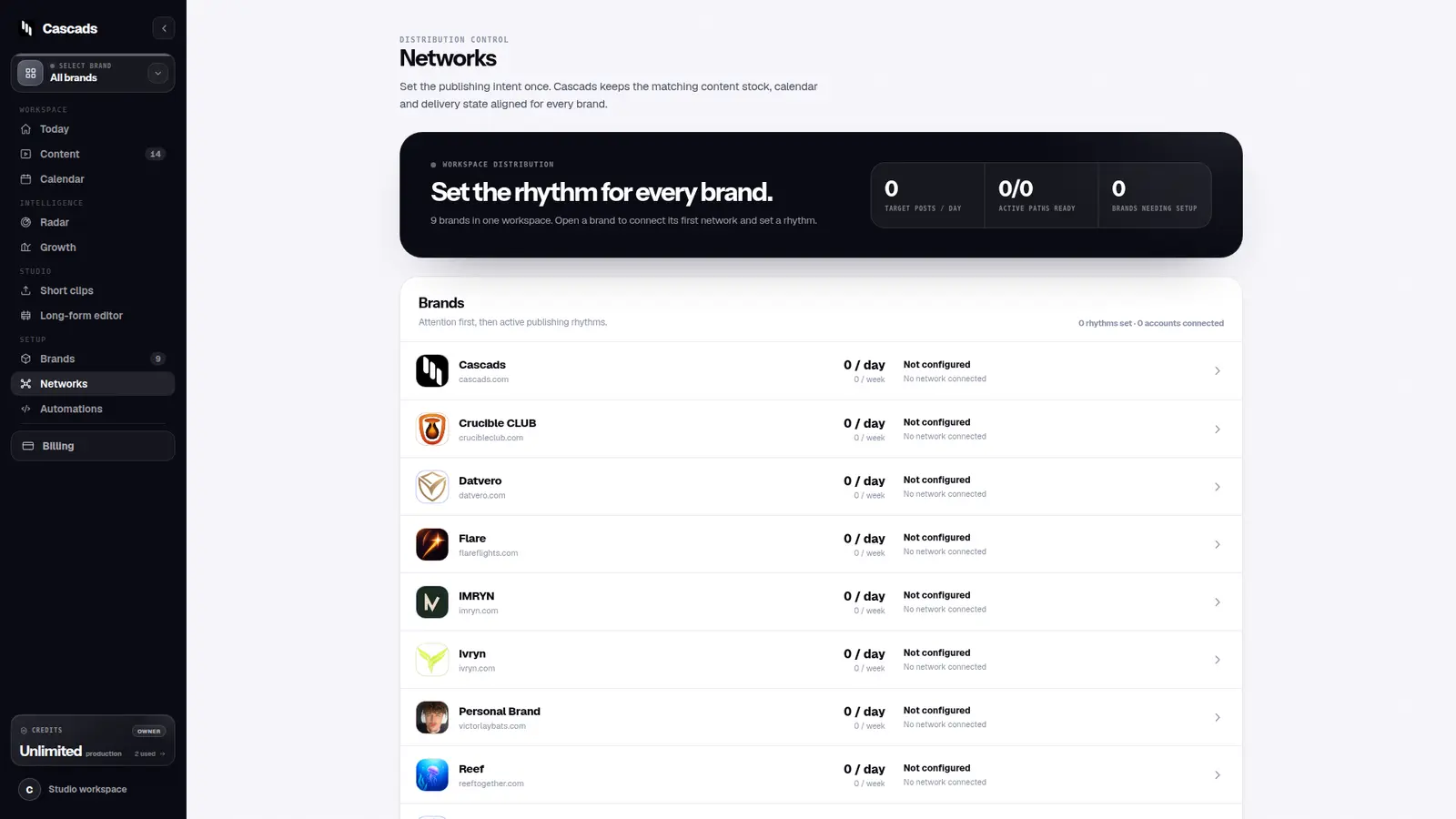
What to verify before enabling autopilot
- Confirm the connected identity belongs to the intended brand.
- Publish one low-risk test for each content format, not just each network.
- Check the post on the destination service rather than trusting only the API response.
- Keep tokens scoped to the minimum permissions required and rotate them when compromised.
- Review platform documentation when a previously working format begins to fail.
Frequently asked questions
Does Cascads automatically publish every social media format?
No. Automatic publishing depends on the network, account permissions, application approval and media format. Unsupported combinations remain scheduled reminders with the caption and media prepared.
Why can a text post be automatic while a video is manual?
Platforms expose different endpoints and permissions for text, images and video. A valid connection for one format does not automatically grant access to another.
Can platform support change?
Yes. Platform APIs, permissions and review requirements change. Cascads checks capability by format and updates its adapters rather than treating a network as universally automatic.