Direct answer
A seven-day social workflow assigns each item a brief, brand, owner, current version, review state, destination and delivery evidence. The schedule can move, but unsupported formats, stale approvals and sensitive events should pause automatic delivery until a person decides.
Before day one: set a weekly constraint
Choose one audience, one business objective and one offer or idea the week should support. Then choose a small format mix. For example: three text posts, two vertical videos and one carousel. The point of the constraint is to make review possible. A large pile of unreviewed content is inventory, not a plan.
Write down claims that need a source and topics that should not be used. If the week responds to a time-sensitive event, record when the information was checked. This keeps a generated idea from turning into a stale factual statement several days later.
Day one: refresh the brand profile
Open the brand context before generating anything. Check the audience, tone, website, offer and visual direction. Remove obsolete language. If several brands share a workspace, verify that each has its own profile and destination accounts. Cross-brand mistakes are more damaging than a weak caption because they can publish the right content under the wrong identity.
In Cascads, the profile is reusable input for the generation step. Treat it as an editable source, not a one-time onboarding form. A five-minute correction here can prevent the same error across every item in the batch.
Day two: build a reviewable inventory
Generate a small batch across the selected formats. Keep each caption attached to its media and brand. Do not schedule yet. First ask whether the inventory gives the week enough variation: educational, product-focused, conversational or proof-oriented, depending on the brand and available evidence.
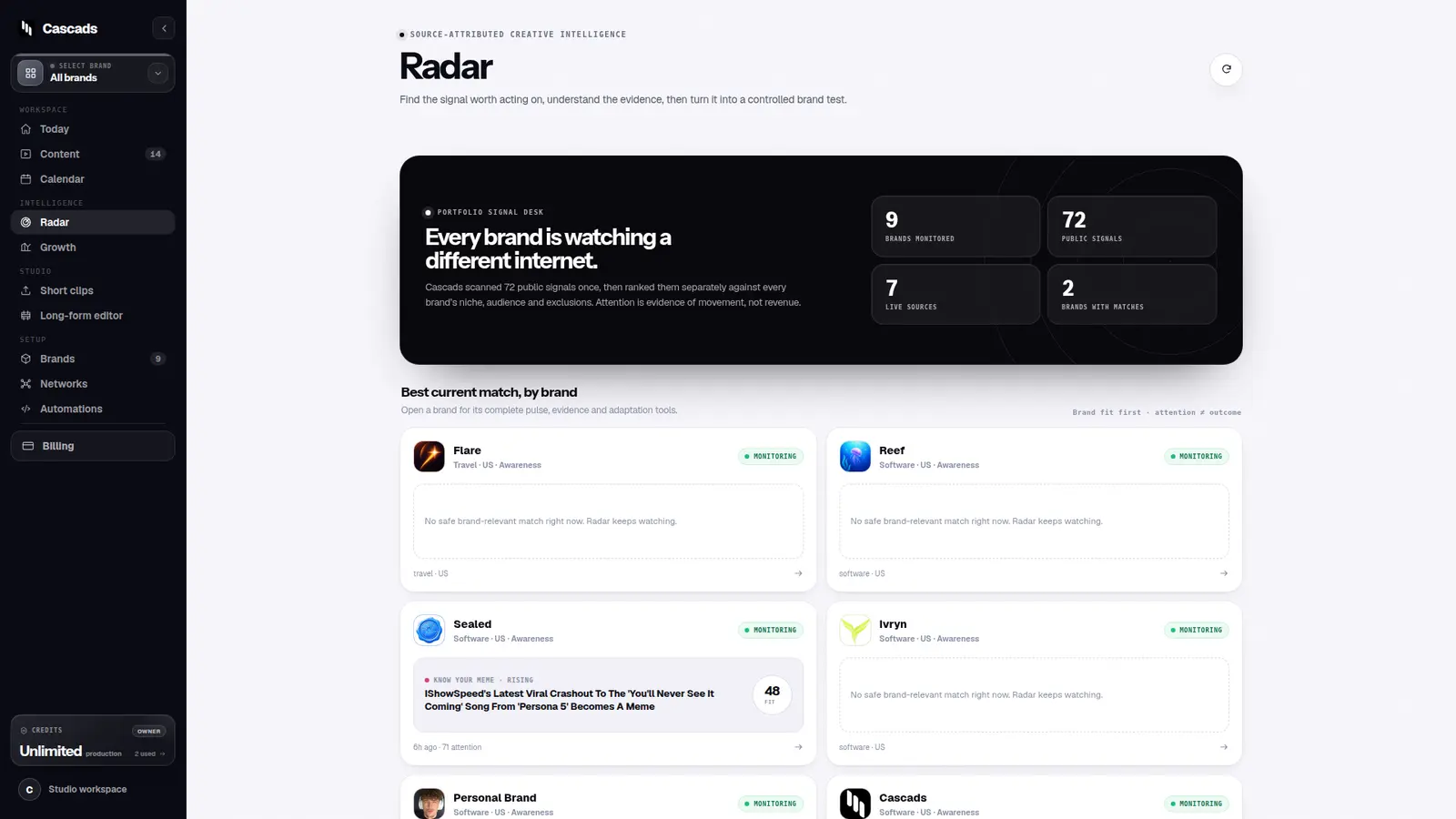
Trend references can provide a format or pacing cue, but they should not override the subject. A popular sound or structure is useful only if the message still makes sense to the intended audience. Cascads surfaces current references beside the content inventory so the choice can be reviewed rather than silently embedded.
Day three: perform the human review
Review facts first, then brand fit, then presentation. This order avoids polishing an unsupported claim. For each item:
- Open the linked source for any factual or time-sensitive statement.
- Read the caption without the visual and inspect the visual without the caption; both should still be coherent.
- Confirm the call to action leads to a real, relevant page.
- Check names, prices, dates and availability close to publication.
- Remove a post rather than filling a slot with a weak item.
Cascads allows captions to be edited while keeping the associated asset in the content record. Approval remains a human decision. Automation shortens assembly and delivery; it does not transfer accountability to the software.
Day four: map each post to a delivery mode
For every destination, record whether the selected format can publish automatically with the current credentials. Do not make this decision at the network level alone. Text may be automatic while video remains manual on the same service.
Use Cascads's automatic path only after a real test post reaches the correct account. Keep unsupported combinations as reminders. The Cascads publishing matrix explains the current adapters and external approval conditions.
Day five: schedule the seven-day window
Place approved items into per-network slots. Avoid publishing identical copy everywhere at the same minute. Adapt the opening line and call to action where the audience context differs, and leave at least one flexible slot for a new announcement or a failed item that needs to move.
Cascads can fill available slots from reviewed inventory while preserving the brand and network relationship. The monthly plan quotas count generated and scheduled work separately, so the calendar should reflect what the team intends to use, not every item the generator produced.
Days six and seven: operate the daily list
Open one control surface each day. Complete reminder-based uploads, inspect automatic results and resolve failures. A successful API response is useful evidence, but the destination post remains the final check. If a token expires or a permission changes, pause that connection rather than repeatedly attempting the same failed publication.
At the end of the week, record only actionable learning: which format was difficult to review, which account setup caused friction, which reusable brand input was missing and which delivery mode changed. Do not convert one week of results into a universal performance claim.
The weekly checklist
- One clear weekly objective and audience.
- Current brand profile and source links.
- A small mixed-format inventory.
- Human approval recorded before scheduling.
- Automatic versus reminder delivery confirmed by format.
- Seven days scheduled with one flexible slot.
- Daily failure and action check.
Sources and further reading
These resources provide the wider reference frame. Product statements on this page are limited to the public information provided by Cascads.