Why the pricing model isn't the real question
When people search for a social media scheduler lifetime deal, they are usually trying to solve a budgeting problem: pay once, avoid a recurring subscription, and stop worrying about the tool's cost as the team grows. That's a reasonable instinct for a small team or agency managing several brands, but the pricing structure of a scheduler doesn't change what the tool can actually do once it's connected to real social accounts.
A scheduler, lifetime-priced or not, still has to work within the rules set by each social network. Those rules govern what formats can be published directly, what needs manual posting, and what permissions an account must have. None of that is negotiable through a payment plan. So the more useful question behind 'lifetime deal' searches is usually: what will this tool let me do reliably, and what will still require human effort regardless of price?
This article focuses on that second question, because it's the one that determines whether a lifetime deal (or any pricing model) actually saves a team time.
What 'lifetime' typically does and doesn't cover
A lifetime deal generally refers to access to the software itself, not to guarantees about specific platform integrations staying available forever. Social networks change their APIs, approval requirements, and publishing permissions on their own schedules, and those changes are outside any scheduling tool's control. A one-time purchase doesn't insulate a team from having to adapt when a platform updates its publishing rules.
It's also worth being cautious about treating any current pricing, feature list, or availability claim from a specific vendor as a permanent fact. Software offers change, deals expire or get restructured, and feature sets evolve. If you're comparing options, treat vendor marketing pages as a snapshot in time rather than a fixed specification, and re-verify before committing budget.
None of this means lifetime pricing is a bad option. It just means the decision should be based on what the tool does for content production and publishing workflow, not solely on the payment structure.
The production side: brand context and multi-format output
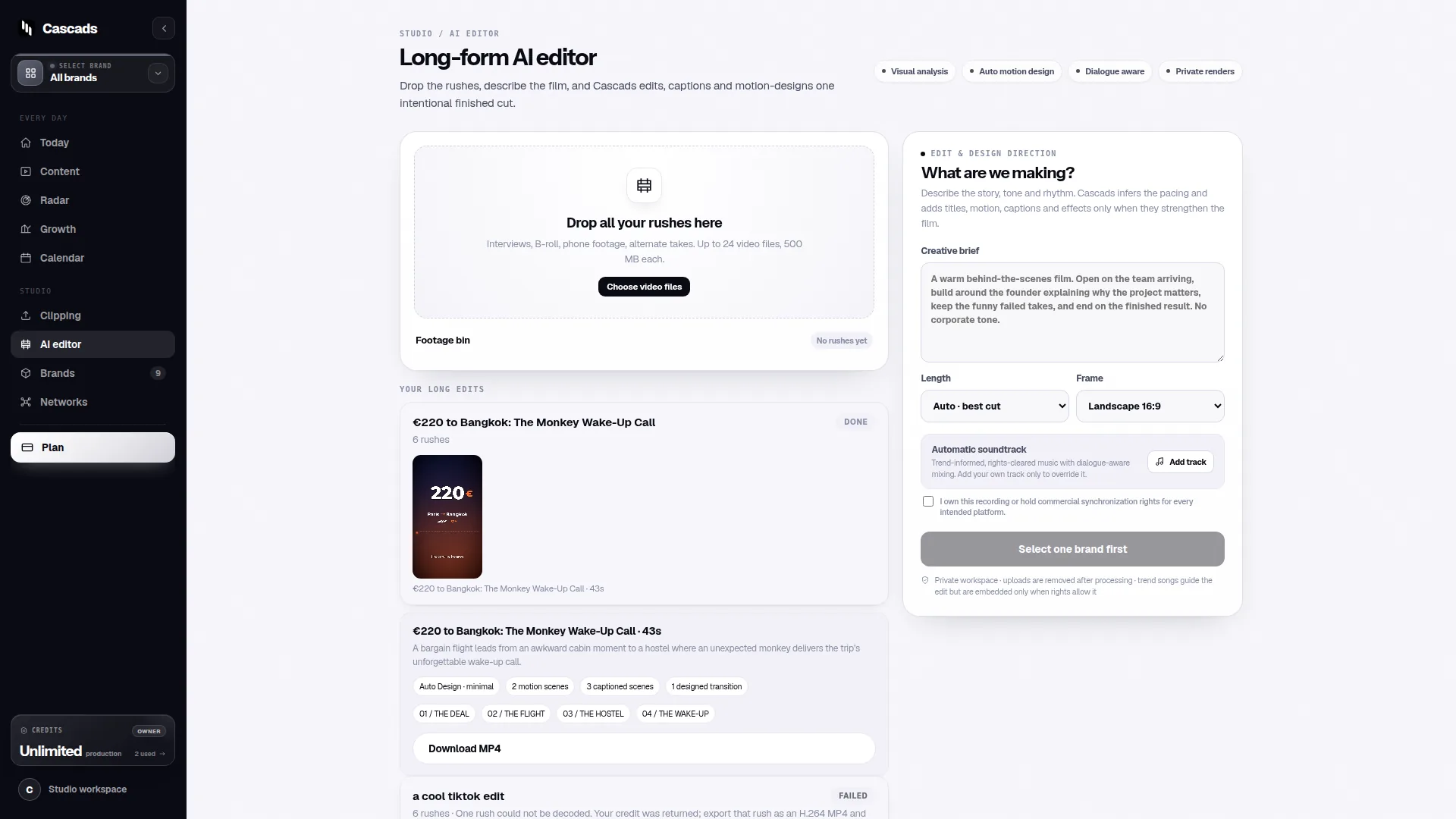
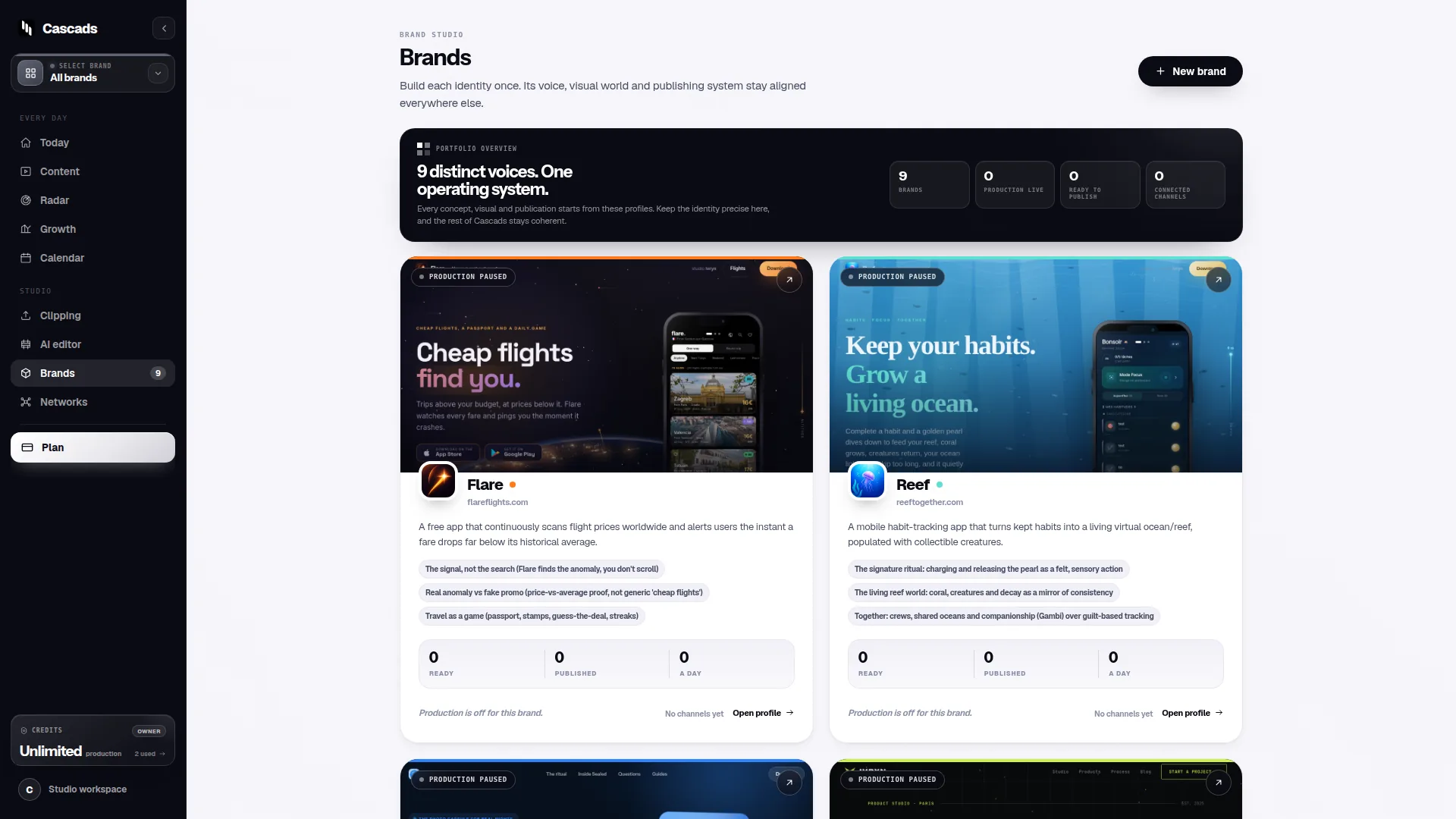
For teams juggling multiple brands, one of the more practical things to evaluate is whether a tool can hold a reusable profile per brand, so that content generation reflects each brand's voice, format needs, and history without starting from scratch every time. Cascads, for example, is built around this idea: it generates text posts, vertical videos, and carousels from a reusable brand profile, which is meant to reduce the setup work involved in producing content across several accounts.
That kind of brand-context setup matters more for agencies and multi-brand teams than for a single-account user, because the alternative is manually re-explaining tone, audience, and formatting preferences every time new content is needed. A scheduler that only handles calendar and publishing, without any content-generation or brand-context layer, still requires that production work to happen somewhere else.
When evaluating any scheduler, lifetime-priced or subscription-based, it's worth asking directly whether brand context is something the tool manages, or something your team will need to maintain separately in briefs and templates.
Format-aware publishing: the limit most deals don't mention
Direct publishing support varies by network, by media format, by the connected account's permissions, and by the platform's own approval processes. A vertical video, a carousel, and a plain text post do not have the same publishing path on every network, and a tool that can generate all three doesn't automatically mean all three can be posted directly everywhere the team operates.
This is the kind of detail that's easy to overlook when comparing pricing plans, because it sits below the surface of a features list. A more useful evaluation step is to check, network by network, which formats support direct publishing versus which ones will require manual posting or additional account permissions.
Cascads' own guidance on this, in its social media publishing integration checklist, walks through exactly this kind of format-by-network verification before relying on automated publishing for a given account.
In practice, this means a lifetime deal's value depends heavily on whether the formats your brands actually use are ones the platforms will let the tool publish directly, not just whether the tool can generate them.
- Confirm which formats (text, vertical video, carousel) each connected network supports for direct publishing
- Check whether account permissions or business verification are required for that format
- Note which formats will still need manual posting regardless of the tool used
Human review stays part of the workflow either way
No pricing model removes the need for human review before content goes live. Generated marketing output, whatever tool produces it, benefits from a review step where someone checks tone, accuracy, and appropriateness for the specific platform and moment. This is especially relevant for teams managing several brands at once, where a mistake on one account can be more visible or more damaging than a delay.
Cascads' approval workflow guide describes how a review step can be built into a scheduling process so that generated content is checked before publishing rather than after. That kind of structure is useful regardless of whether the underlying tool is priced as a subscription or a lifetime deal, because the review requirement doesn't come from pricing, it comes from the fact that this content represents the brand publicly.
Teams evaluating a lifetime deal should ask whether the tool supports an approval step at all, and if so, whether it fits their existing review process or requires building one from scratch.
A worked example: evaluating a hypothetical lifetime offer
Here's a hypothetical example to illustrate how these factors interact. Imagine a small agency managing five brand accounts across three networks, considering a lifetime deal for a scheduler advertised as supporting 'unlimited posts and all major platforms.'
Before committing, the agency could walk through a short checklist: Does the tool support a reusable profile per brand, or will each brand need to be reconfigured from scratch? For each of the three networks, which formats (text, vertical video, carousel) actually support direct publishing today, based on that network's current rules, not just the vendor's marketing copy? Does the tool include or support an approval step before content is published, and does that fit how the agency currently reviews client content? And finally, is the 'lifetime' pricing tied only to software access, with the understanding that platform-side integration changes may still require configuration work over time?
Running through those four questions doesn't tell the agency which specific product to buy, but it reframes the decision away from 'is this a good price' and toward 'will this actually reduce the manual work involved in producing and publishing content across five brands.' That's a more durable basis for the decision than the pricing label alone.
Where this leaves the search for a lifetime deal
A social media scheduler lifetime deal can be a reasonable way to manage software costs for a small team or agency, but the pricing model is a separate question from whether the tool fits the actual production and publishing workflow. Brand context, multi-format production, human review, and format-aware publishing limits apply the same way whether the tool is billed once or every month.
Cascads operates in this space as an IVRYN product focused on social content production and scheduling, built around reusable brand profiles and multi-format generation, with publishing still bounded by each network's own rules and by a human review step. That context doesn't answer which specific lifetime offer is worth buying, but it's a useful frame for evaluating any option against the questions that actually determine whether the tool saves time.
Frequently asked questions
Does a lifetime deal mean a social media scheduler will always support every platform's publishing rules?
No. Lifetime pricing covers access to the software, not guarantees about platform integrations, since social networks can change their APIs, permissions, and approval requirements independently of any vendor's pricing plan.
Can a scheduler publish vertical videos and carousels directly on every network?
Direct publishing support depends on the specific network, the media format, the connected account's permissions, and that platform's approval process, so it varies by network and should be checked individually rather than assumed from a general features list.
Is human review still needed if the content is generated automatically?
Yes. Generated marketing content typically benefits from a review step before publication, regardless of the tool or pricing model, since it represents the brand publicly and automated generation doesn't remove the value of a manual check.
Sources and further reading
These resources provide the wider reference frame. Product statements on this page are limited to the public information provided by Cascads.