What is social media automation, in practice
What is social media automation? At its core, it means using software to handle the repetitive mechanics of running social accounts: drafting posts from a set of brand inputs, resizing or reformatting content for different networks, queuing items for future dates, and pushing approved content live without someone manually copying and pasting into each platform's interface. The word 'automation' covers a wide range of maturity, from simple scheduling calendars to systems that generate draft copy and visuals from a reusable brand profile.
The important distinction for a small team or agency is between automating production and automating judgment. Automation is well suited to generating first-draft variations, formatting a single idea into a text post, a vertical video, and a carousel, and holding those drafts in a queue. It is not well suited to deciding, unsupervised, that a specific draft is on-brand, factually accurate, and appropriate to publish at a given moment. Most practical social media automation setups keep those two layers separate, even when the tooling makes them feel seamless.
Where brand context fits into automated production
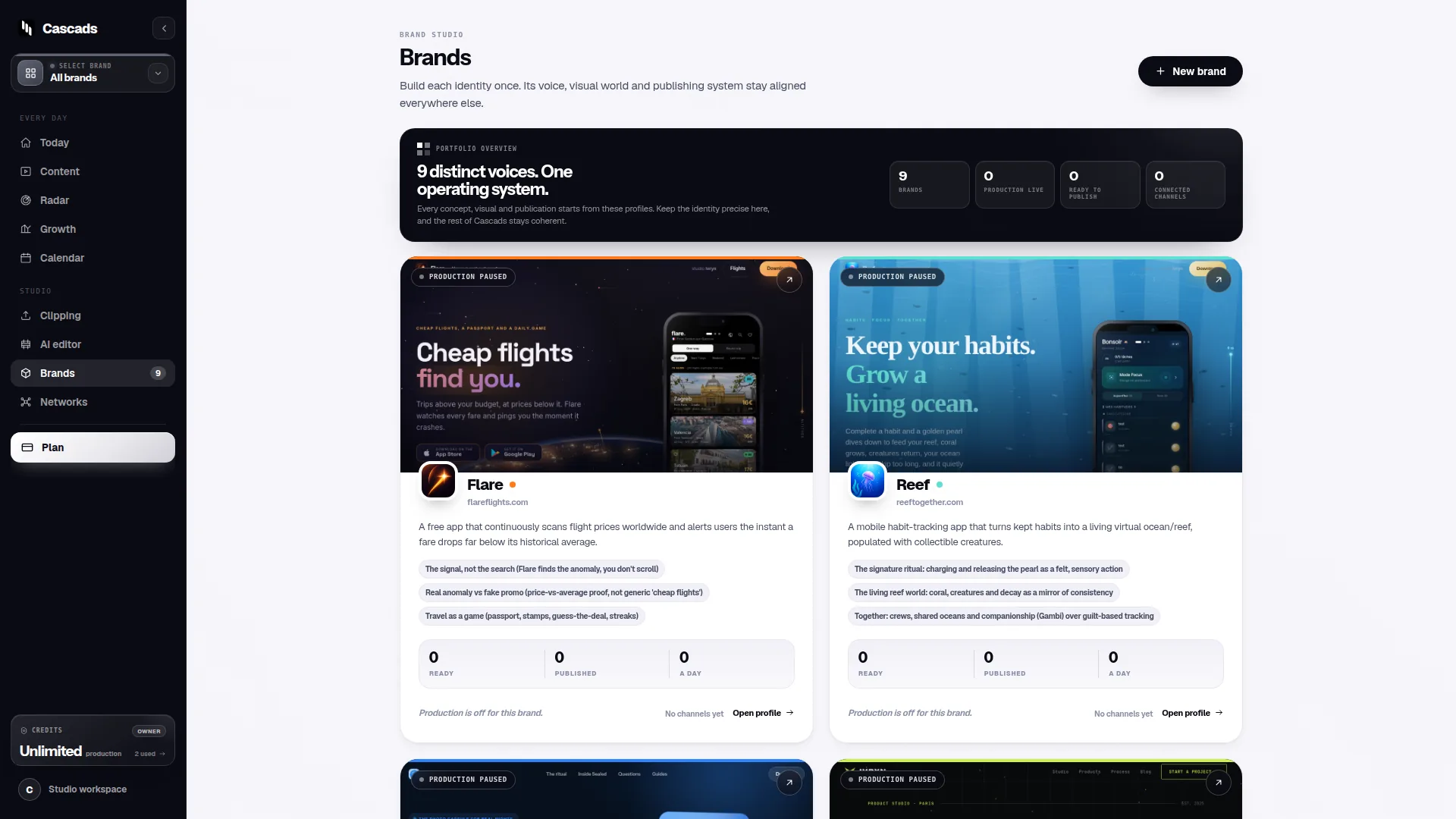
Automated content only stays usable if it starts from a consistent source of brand truth. Tools like Cascads, an IVRYN product built for social content production and scheduling, work from a reusable profile for each brand rather than generating content from scratch every time. That profile typically encodes voice, visual style, and recurring themes, so that repeated outputs stay recognizable as belonging to that brand rather than drifting with each generation.
For agencies handling several brands at once, this profile-based approach is less about saving time on any single post and more about reducing the chance that automation accidentally blurs brand identities together. A vertical video for one client and a carousel for another should not read as interchangeable just because they came from the same production pipeline. Maintaining separate profiles per brand is a structural safeguard, not a stylistic nicety.
This also means the quality ceiling of automated output is bounded by how well the profile itself is maintained. A stale or vague brand profile will produce content that technically fits the format but drifts from current positioning, offers, or tone. Keeping the profile current is itself a task that benefits from periodic human attention rather than being set once and forgotten.
Multi-format production: text, vertical video, and carousels
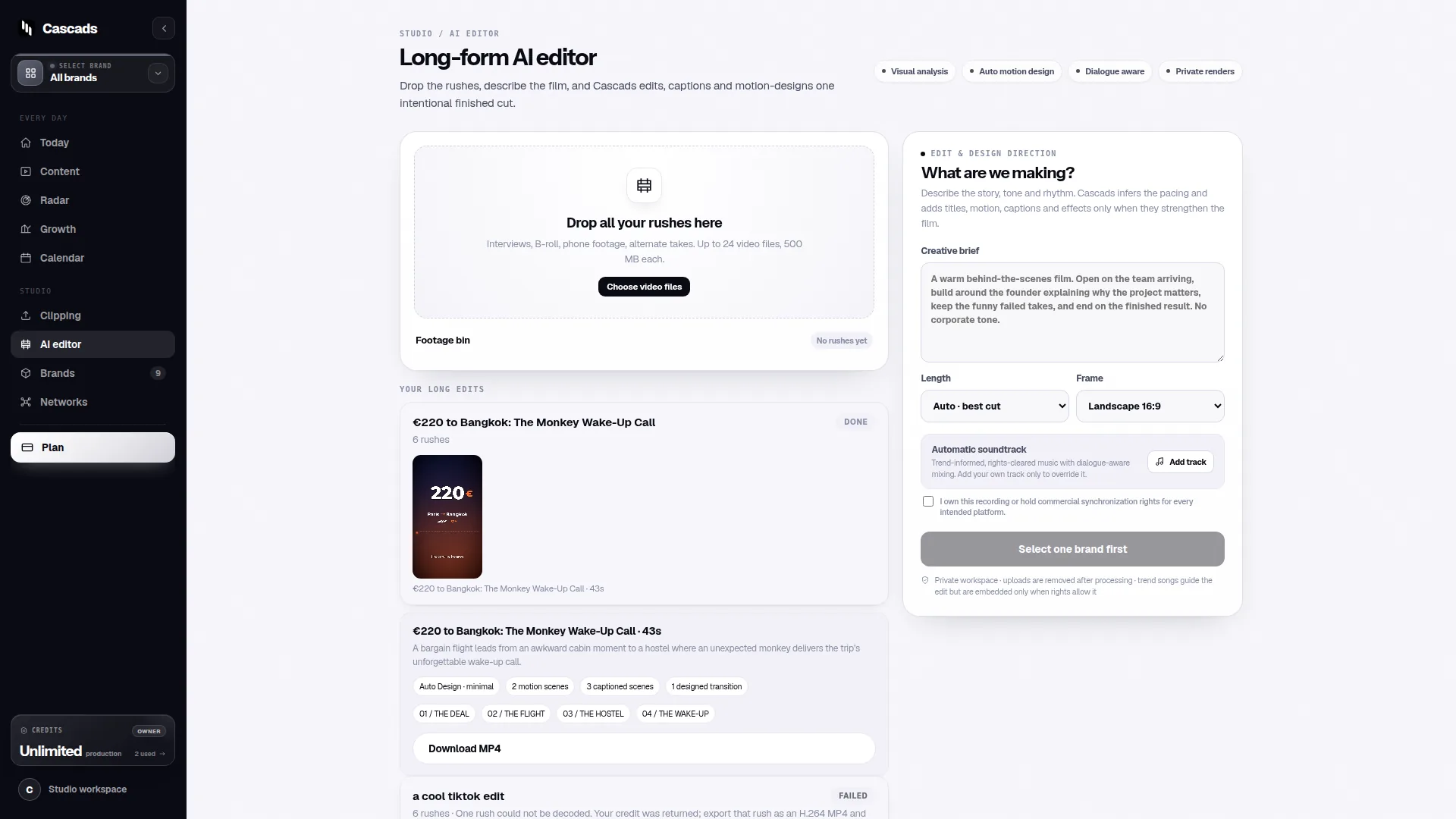
One practical answer to 'what is social media automation' is that it increasingly means multi-format production from a single input, not just scheduling a single static image across platforms. Cascads generates text posts, vertical videos, and carousels from the same brand profile, which reflects how modern feeds actually work: a single campaign idea often needs to exist as a short-form video for one placement, a carousel for another, and plain text for a third.
Producing these formats manually, one at a time, for every brand a team manages is where most of the real time cost sits for small teams and agencies. Automation that handles the format translation, turning one idea into the shape each network expects, addresses that specific bottleneck rather than the writing or strategy work itself.
It is worth being clear-eyed that format generation is still draft generation. A vertical video assembled automatically still needs someone to check pacing, captions, and whether the visual actually supports the message before it is treated as finished. Multi-format output multiplies the number of things that need a look before publishing, not just the number of things published.
Human review: which steps should stay manual
This is the part of the reader's question that matters most: which steps should stay under human review? Generated marketing output remains subject to human review before publication, and that applies regardless of how polished a draft looks. A well-formatted carousel or a fluent text post is not evidence that the claims, tone, or timing are correct.
In practice, a defensible review checkpoint sits between draft generation and scheduling for publish, and covers a few things that automation cannot reliably judge on its own:
Even in mature workflows, review does not have to mean re-checking everything from zero. Teams that use a documented approval workflow, such as the one Cascads outlines for social media approval, can scope review to what actually changed or what is genuinely new, rather than re-litigating every recurring post type. The point is not to slow production down uniformly, but to make sure judgment calls are never skipped silently.
- Factual accuracy of any claim, statistic, or reference to current events, promotions, or pricing
- Whether the content matches current brand positioning, not just the saved profile
- Sensitivity to timing: does this read wrong given anything happening in the news or the industry right now
- Whether the specific format (video captions, carousel slide order) reads correctly in that platform's actual layout
Format-aware publishing and platform limits
A frequently underestimated part of social media automation is that generating content and publishing it are not the same problem. Direct publishing depends on the network, the media format, the account's granted permissions, and external platform approval, which are all things a production tool does not fully control. A video that is technically finished can still fail to publish automatically if the connected account lacks the right permission scope, or if the platform's own review process intervenes.
This is why format-aware publishing matters as a distinct principle from format-aware production. A carousel and a vertical video may need different connection settings, different account-level permissions, or different fallback behavior if automatic publishing is not available for that combination. Teams evaluating any automation tool for this reason benefit from checking integration specifics per network and format rather than assuming one connected account covers every case uniformly.
Cascads documents this kind of format-and-permission dependency in its publishing integration checklist, which is a useful reference point precisely because it does not promise that every format will publish automatically on every network. Treating publishing as conditional, rather than guaranteed, is a more accurate way to plan a workflow than assuming automation removes the need to ever check platform status.
A worked example: a two-person agency managing three brands
To make this concrete, consider a hypothetical two-person agency managing social accounts for three small brands, each posting on Instagram and one short-form video network. This is an illustrative example, not a case study or reported outcome.
In this scenario, one person maintains the three brand profiles, updating them monthly with new offers, seasonal notes, and any tone shifts. Content generation, drafting text posts, vertical videos, and carousels from each profile, runs on a weekly cadence, producing a batch of drafts for the coming week rather than one post at a time. The second person's main job is review: checking each draft against current events, confirming factual claims, and adjusting anything that reads off-brand before it is queued.
Scheduling and queuing happen automatically once drafts are approved, but publishing status is checked per platform and per format, since one of the three brands' video format is not eligible for direct auto-publish on one network due to account permission limits, so those posts route to a manual-publish step instead. The lesson from this example is not that automation removes the two-person workload, but that it reallocates it: less time spent on manual formatting and copy-pasting, more time concentrated on review and on the specific platforms where automated publishing does not apply.
Frequently asked questions
Does social media automation mean posts go live without anyone checking them first?
Not in a well-run workflow. Automation typically handles drafting and formatting content into things like text posts, vertical videos, or carousels, but generated marketing output should remain subject to human review before it is published, since automated tools cannot reliably judge current events, factual accuracy, or brand fit on their own.
Can every social media post be published automatically once it's approved?
No. Direct publishing depends on factors like the specific network, the media format, the connected account's permissions, and the external platform's own approval processes. Some approved content may still need a manual publish step if a platform doesn't support automatic posting for that format or account setup.
What's the practical benefit of a reusable brand profile in automated content production?
A reusable brand profile gives automated tools a consistent source of voice, style, and context to generate from, so repeated outputs stay recognizable as belonging to that brand. This matters especially for teams managing multiple brands, since it helps prevent content from different clients or products blending together.
Sources and further reading
These resources provide the wider reference frame. Product statements on this page are limited to the public information provided by Cascads.