What automating social media posts actually means
Teams asking how to automate social media posts usually mean two different things at once: generating the content itself, and getting it onto each network without manual copy-pasting. Conflating the two causes most of the frustration people report, because a system that is good at drafting captions is not automatically good at handling platform-specific publishing rules, and a scheduler that posts reliably is not automatically good at producing on-brand content across formats.
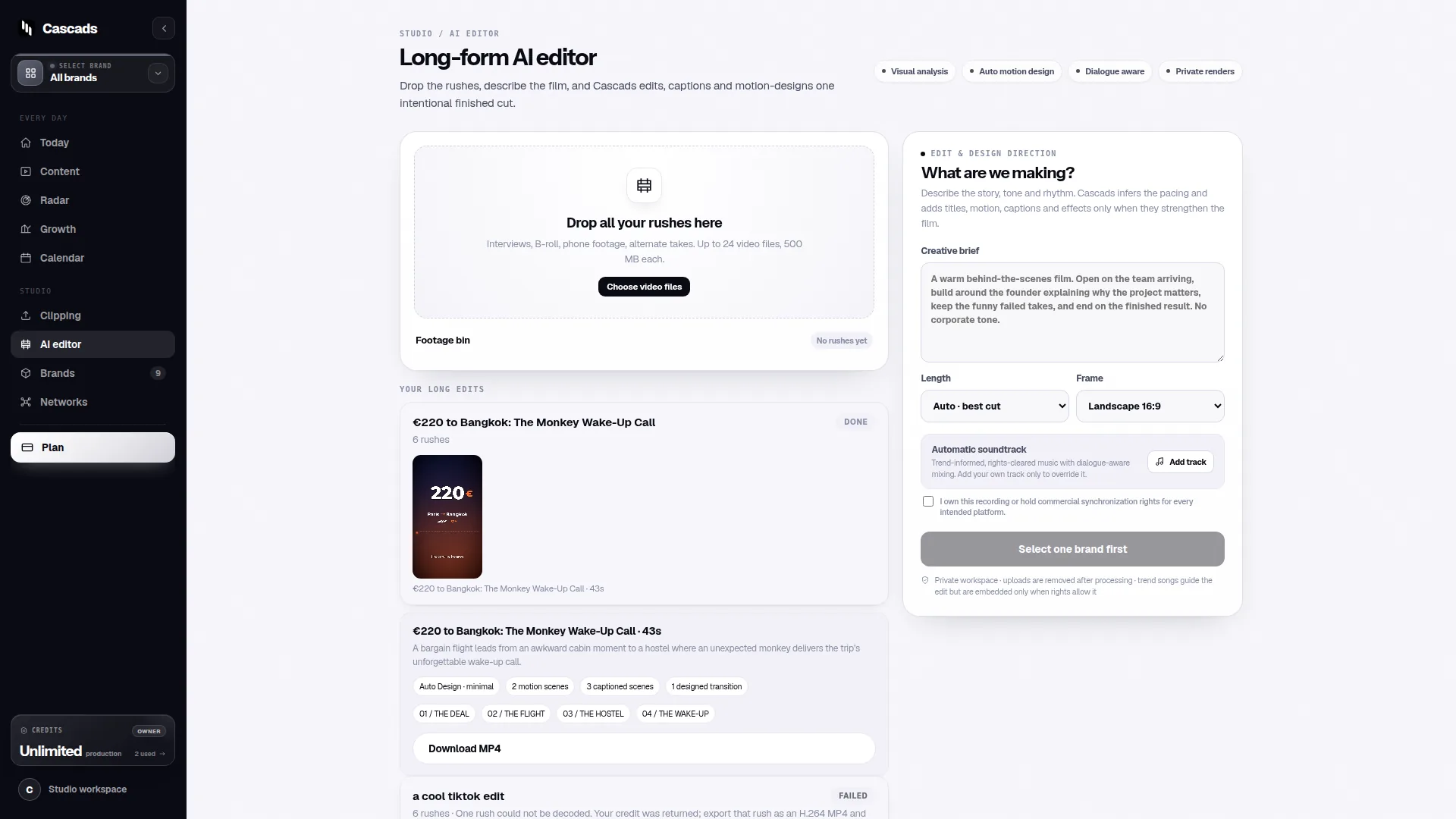
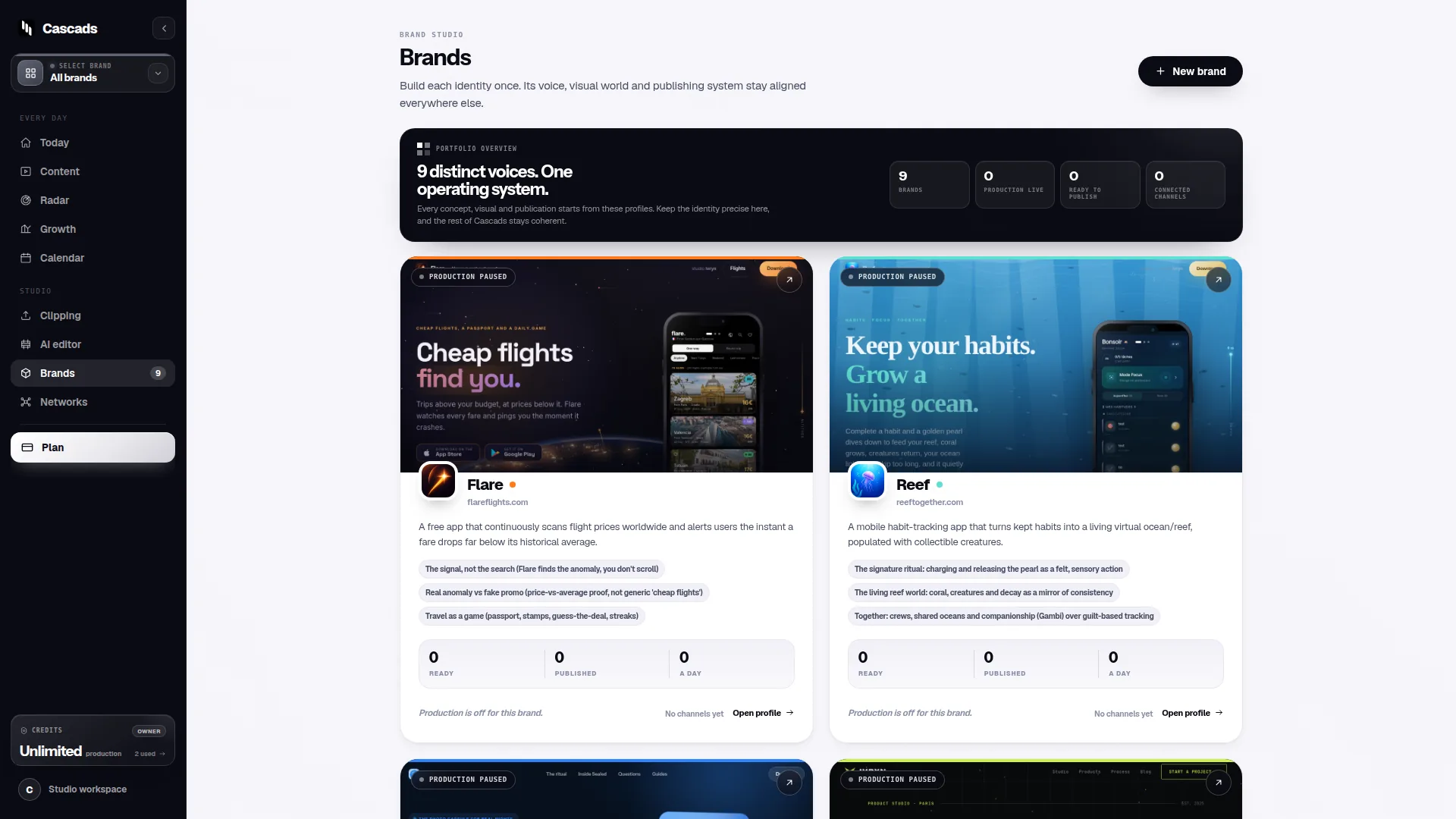
For a small team or agency running several brands, the practical goal is a repeatable pipeline: define what each brand sounds like and looks like once, generate text posts, vertical videos and carousels from that definition, then move approved output through to each network. Cascads, an IVRYN product built for social content production and scheduling, is built around that separation - a reusable brand profile feeds generation, and publishing is handled as its own step with its own constraints.
Treating generation and publishing as separate stages also makes it easier to diagnose problems later. If a post looks wrong, the issue is in the profile or the draft. If a post fails to go out, the issue is in permissions, format support or platform approval. Keeping these causes distinct saves time when something breaks.
Start from a brand profile, not a blank prompt
A reusable profile is the foundation of any automation setup that has to serve more than one brand. Instead of writing instructions from scratch for every post, the profile stores tone, audience, recurring themes and any constraints specific to that brand, and generation draws from it consistently. This is what keeps output recognizable as the brand's own voice even when volume increases.
For agencies managing multiple accounts, this also solves a real operational problem: without a per-brand profile, automation tends to produce content that is generic enough to work for everyone, which in practice means it represents no one well. A profile-driven approach lets the same underlying system produce distinctly different output for each brand it serves.
Profiles are not static documents you write once and forget. As a brand's messaging shifts or a campaign starts, the profile should be updated so future generated content reflects that change, rather than relying on ad hoc corrections after the fact.
Producing multiple formats from one source
Social automation is rarely just about text captions anymore. A single campaign idea often needs to become a text post, a vertical video and a carousel, each shaped for how people actually consume that format on a given network. Generating all three from the same brand profile keeps them consistent in voice and message even though the presentation differs.
This matters for automation specifically because format mismatches are one of the most common reasons content underperforms or gets rejected outright - a caption written for a feed post does not translate directly into a script for a short vertical video, and a carousel needs a different pacing than either. Building format-aware generation into the pipeline from the start avoids a second round of manual rework per format.
It's worth being explicit with your team about which formats are actually needed for which brands and networks, rather than generating every format for every post by default. Not every brand needs a carousel version of every idea, and generating unnecessary variants adds review burden without adding value.
Why human review has to stay in the loop
Generated marketing output remains subject to human review before publication, and this isn't a limitation to work around - it's the point where brand judgment, current events awareness and platform-specific nuance get applied that a generation step cannot fully anticipate. Automating the drafting and formatting work is valuable precisely because it frees reviewer time to focus on judgment calls rather than mechanical writing.
A practical review workflow assigns clear ownership: who checks brand voice, who checks factual accuracy, who has final sign-off before something goes live. Cascads' guidance on social media approval workflow describes structuring this step so it doesn't become a bottleneck that undermines the time savings automation is meant to provide.
Skipping review to move faster tends to backfire for teams handling several brands, since the risk of a caption or video going out under the wrong brand's voice - or missing a platform-specific requirement - grows with volume. Review scales more cheaply than damage control after a bad post is live.
How to automate social media posts without losing platform reliability
Direct publishing depends on the network, the media format, the account permissions granted, and external platform approval - none of which a content tool fully controls. This is the part of automating social media posts that catches teams off guard: generation can be fast and consistent, but the actual act of posting is gated by each platform's own rules and review processes, which can change and are outside any single vendor's control.
Before assuming a workflow will publish automatically end to end, it's worth checking, network by network, which formats support direct publishing, what account-level permissions are required, and whether the platform has its own approval step for certain content types. Cascads' social media publishing integration checklist lays out this kind of check per network and format, which is useful groundwork before building a publishing calendar around automation.
Building in a fallback - manually posting formats or networks that don't support direct publishing - keeps the overall process reliable even where automation doesn't reach. Treating that as expected, rather than a failure of the system, keeps expectations realistic.
Worked example: a small agency automating three brand accounts
Consider a hypothetical agency running social accounts for three client brands, each posting text updates a few times a week plus occasional vertical video and carousel content. This example illustrates how the pieces fit together, not a documented outcome.
The agency would first build a brand profile for each client capturing tone, audience and recurring content themes. From those profiles, they'd generate a mix of formats per campaign brief, route every draft through a review step where one person checks brand fit and another confirms accuracy, and then check per network and format which posts can go out directly versus which need manual publishing due to permissions or platform approval gaps.
A simple internal checklist for this kind of setup might include:
- Is the brand profile current, or does it need updating before this batch of content is generated?
- Which formats are actually needed for this campaign, and which networks support direct publishing for each?
- Has every draft passed brand-voice and accuracy review before scheduling?
- Are account permissions confirmed for each network being posted to?
- Is there a manual fallback plan for any format or network that doesn't support direct publishing?
Keeping the automated process sustainable over time
Automation setups tend to drift if no one revisits them. Brand profiles go stale, platform permission requirements change, and a network's approval rules for certain content types can shift without much notice. Treating the pipeline as something to periodically check, rather than a one-time setup, keeps it reliable.
A light recurring check - monthly or quarterly depending on posting volume - covering whether profiles still reflect current brand direction, whether review roles are still assigned correctly, and whether publishing permissions are current, catches most drift before it causes a visible problem. This is a modest time investment relative to the volume of manual work automation is replacing.
Ultimately, the goal of automating social media posts for a multi-brand team isn't to remove people from the process, but to let a small team produce consistent, on-brand content across formats and networks without each post requiring manual drafting from scratch, while keeping review and platform checks as the safeguards that make direct publishing dependable.
Frequently asked questions
Can social media posts be published automatically across every network without any manual step?
Not reliably. Direct publishing depends on the network, the media format, the permissions granted on the account, and approval processes the platform itself controls, so some content will still need a manual publishing step regardless of the tool used.
Why does a reusable brand profile matter for automating posts across multiple brands?
A brand profile stores tone, audience and recurring themes so generated content stays consistent with that brand's voice, which is especially important for agencies or teams managing more than one account, since without it automated content tends to become generic across brands.
Is human review still necessary once content generation is automated?
Yes. Generated marketing content should be reviewed by a person before publication to check brand accuracy, current context and platform fit - automation speeds up drafting and formatting, but judgment calls before publishing still require human review.
Sources and further reading
These resources provide the wider reference frame. Product statements on this page are limited to the public information provided by Cascads.