What 'best' actually means for a multi-brand team
When teams search for the best content calendar tool, they're usually not looking for a single feature but for a workflow that survives contact with several brands, several networks and several people approving content at once. A calendar view alone doesn't solve that; the harder problem is keeping each brand's voice, assets and formats separate while still letting one person plan a week of output in one sitting.
The honest way to evaluate a tool is to ask how it handles repetition without collapsing distinct brands into one generic feed. A tool that treats every account the same way will eventually produce content that reads as interchangeable, which defeats the purpose of running multiple brands in the first place.
- Can the tool hold a separate profile per brand, not just a separate folder?
- Does it distinguish text posts from vertical video and carousels, or force one format?
- Is there a step where a human sees the content before it goes out?
Brand context: why a reusable profile matters more than templates
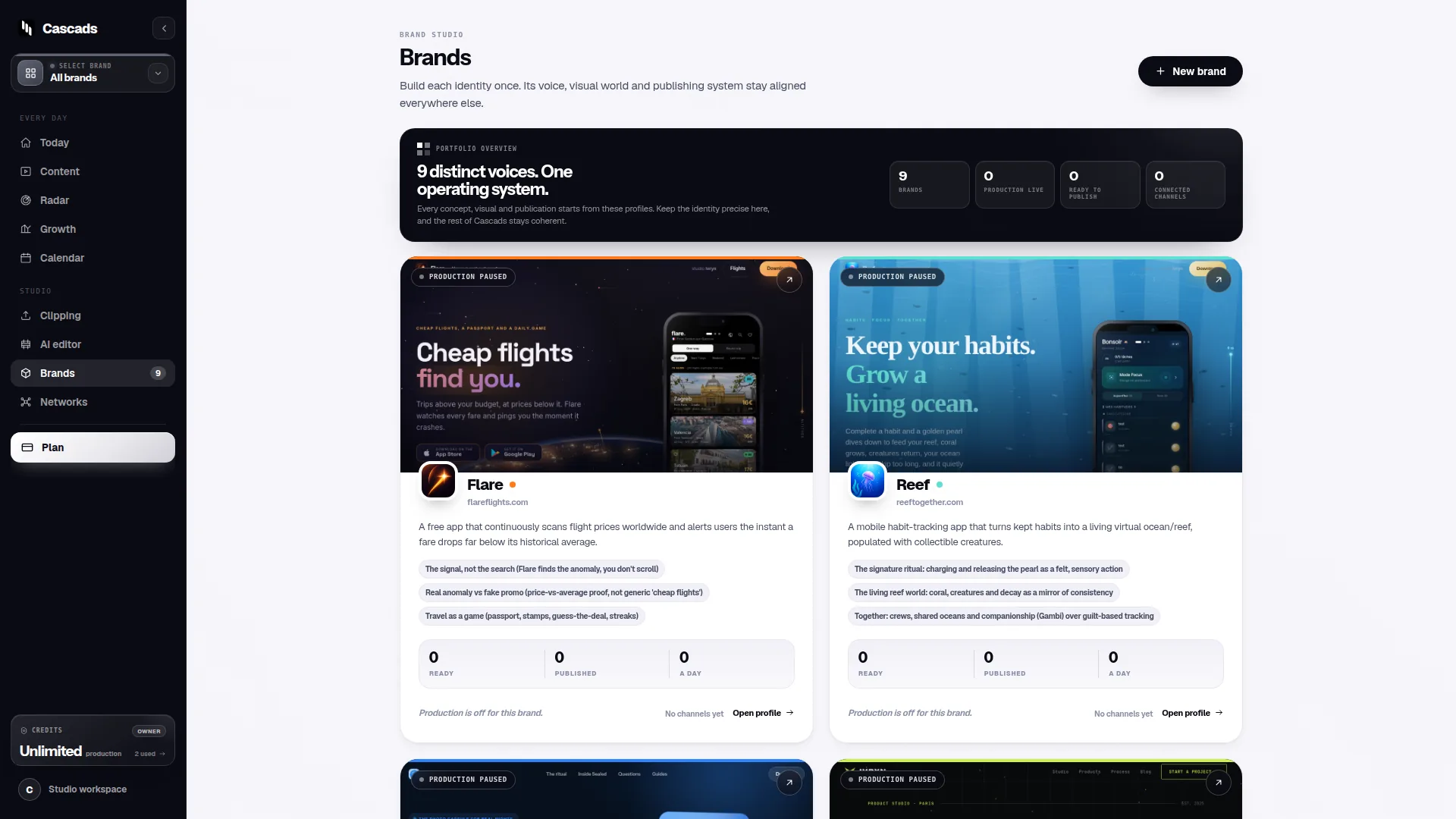
A recurring theme in evaluating any content calendar tool is whether it supports a reusable brand profile rather than one-off templates. Cascads, an IVRYN product built for social content production and scheduling, is built around this idea: each brand keeps a profile that informs how posts, videos and carousels are generated, so an agency running five brands isn't rebuilding context from scratch every time.
This matters because templates capture layout, but a profile can capture tone, audience and recurring context that templates don't. For a small team producing content across brands, that distinction determines whether output still needs heavy rewriting or can go straight to review with minor edits.
Multi-format production: text, video and carousels aren't interchangeable
Best content calendar tool searches often assume a single content type, but real social calendars mix text posts, vertical video and carousels, each with different production needs. A tool worth adopting should generate across these formats from the same brand profile, rather than treating video as an afterthought bolted onto a text-first system.
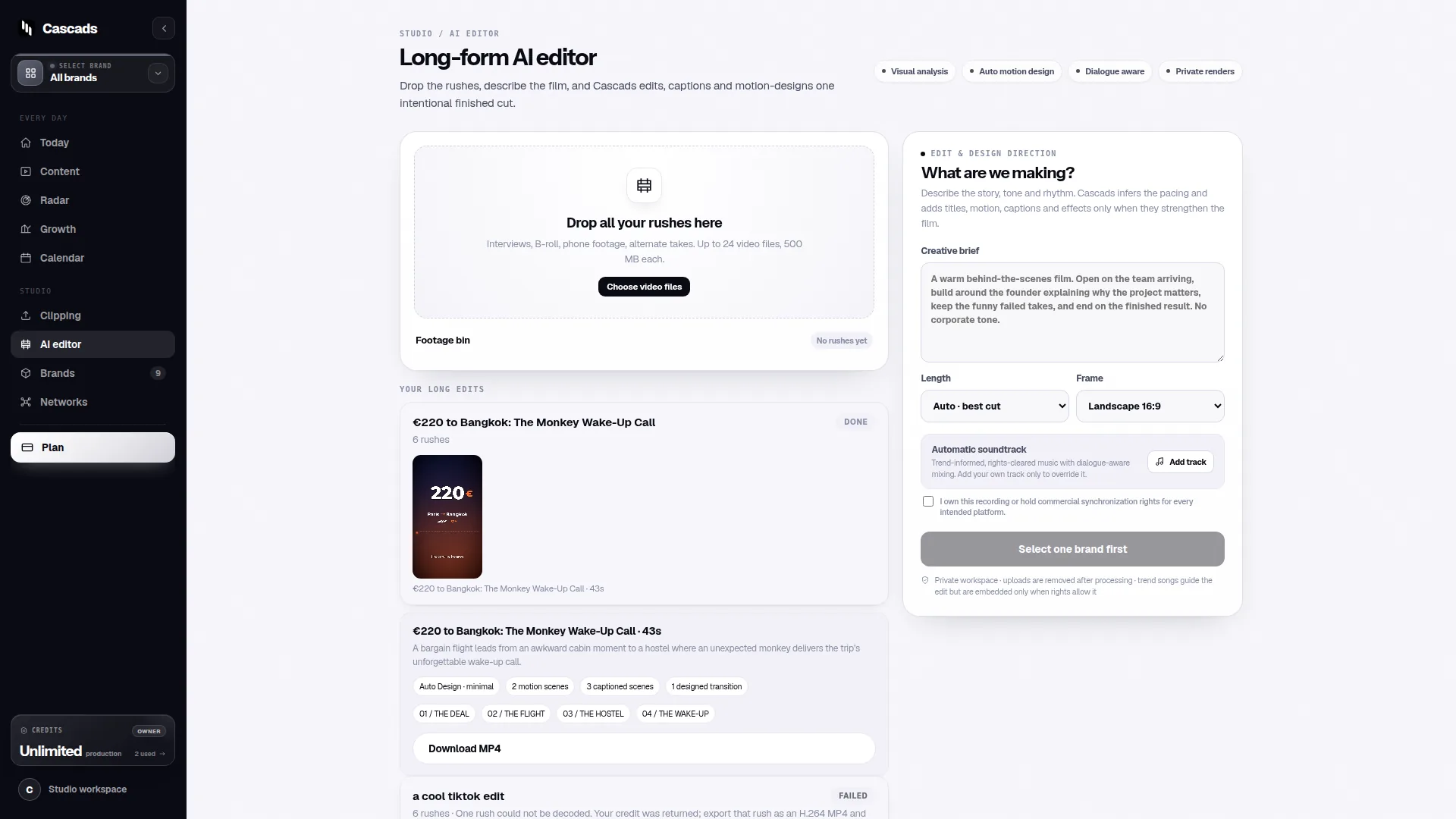
This is one of the areas where Cascads is explicit about its scope: it generates text posts, vertical videos and carousels from a reusable profile per brand. That's a meaningful capability to look for when comparing options, because a calendar that only schedules text still leaves the harder production work - matching a brand's voice across formats - unsolved.
- Does the tool generate video and carousel content, or only schedule text?
- Are formats generated from the same brand context, or built separately each time?
Human review is not optional, whatever the tool promises
No matter how capable a generation tool is, generated marketing output should remain subject to human review before publication. This isn't a limitation specific to one product; it reflects that automated content still needs a person checking accuracy, tone and appropriateness for the moment before it reaches an audience.
For agencies managing several brands, this review step is also where cross-brand consistency gets caught - a post that's fine for one brand's voice might be wrong for another's, even if the underlying facts are correct. Building review time into the calendar workflow, rather than treating it as a bottleneck to skip, is part of what separates a durable process from one that produces embarrassing mistakes at scale.
- Assign a named reviewer per brand, not a shared queue everyone assumes someone else is checking.
- Review before scheduling, not after the post goes live.
Format-aware publishing: the limit most tools don't advertise
Direct publishing depends on the network, the media format, account permissions and external platform approval - and this is true regardless of which content calendar tool a team uses. A vertical video that a network resizes badly, or a carousel format not yet supported for direct posting on a given account, isn't a bug in the tool; it reflects limits set by the platform itself.
This is why a genuine evaluation of any content calendar tool should include a format-aware publishing check, not just a features list. Teams should confirm, account by account, which formats can actually publish directly versus which need manual posting, because this varies by network and by the permissions granted to a connected account - and it can change over time as platforms update their own rules.
- Check per-network: which formats support direct publishing today for this specific account?
- Confirm account permissions before assuming a format will post automatically.
- Treat platform approval steps as a normal part of the process, not an error.
A worked example: choosing for a five-brand agency
Example (illustrative only, not a real case): imagine a small agency managing five brands across two networks, producing a mix of text posts, vertical video and carousels each week. The team wants one calendar view but doesn't want brand voices to blur together, and needs a review step before anything schedules.
Walking through the checklist above: they'd confirm each brand can hold a separate profile, that the tool generates all three formats from that profile, that a named reviewer signs off before scheduling, and that they've checked which formats actually support direct publishing for each of their ten connected accounts (five brands times two networks). If three of those ten accounts don't yet support direct carousel publishing, that's not a tool failure - it's a platform limit the team plans around, for instance by exporting and posting those manually.
This kind of walk-through is more useful than a feature checklist alone, because it surfaces where the real friction sits: usually not in generation, but in the gap between what a tool can produce and what a given network will accept directly on a given day.
A short decision checklist
Bringing the above together, here is a compact checklist for evaluating a content calendar tool for a multi-brand, multi-format team.
- Reusable brand profile per brand, not just shared templates
- Generation across text, vertical video and carousels from that profile
- A clear, named human review step before scheduling
- A per-account, per-network check of what can publish directly today
- A plan for formats that need manual posting due to platform limits
Frequently asked questions
Is there a single best content calendar tool for every team?
No tool is universally best; the right choice depends on how many brands and formats a team manages and whether it needs a reusable brand profile, multi-format generation, and a built-in human review step, since these needs vary significantly between small single-brand teams and multi-brand agencies.
Why can't a content calendar tool guarantee direct publishing for every post?
Direct publishing always depends on the network, the media format, the connected account's permissions, and approval from the external platform, so any calendar tool is subject to these external limits regardless of how it generates or schedules content.
Should generated social content skip human review to save time?
No; generated marketing output should remain subject to human review before publication to catch tone, accuracy, and brand-consistency issues that automated generation cannot reliably judge on its own.
Sources and further reading
These resources provide the wider reference frame. Product statements on this page are limited to the public information provided by Cascads.