Context is the campaign’s working memory
A campaign rarely fails because one person forgot the central idea. More often, the idea becomes thinner as it moves between planning notes, draft copy, design requests, approval comments and publishing screens. For small teams and agencies, that drift multiplies when several brands, stakeholders and networks are involved.
The context that should follow a campaign is the information needed to make the next decision without reopening the entire planning process. It should help a writer understand the message, a producer understand the intended asset, a reviewer understand what to assess and a publisher understand what can realistically be sent to each destination.
Treat this as a compact campaign record, not a lengthy strategy document. The goal is continuity: enough shared information to keep decisions aligned, while making it easy to update when the campaign changes.
Start with reusable brand context
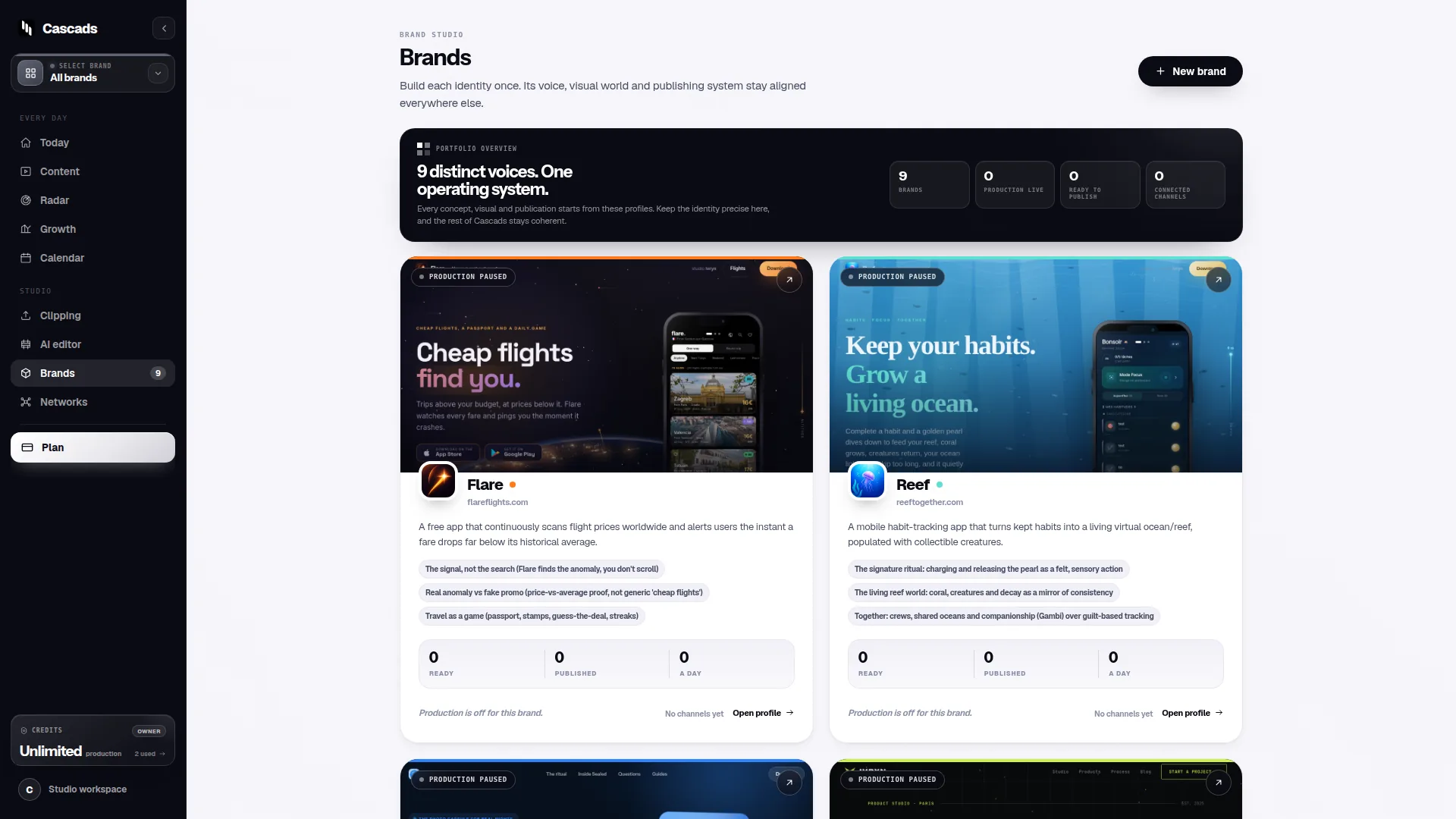
The first layer is brand context. It should travel with every campaign because it answers questions that should not need to be solved again in every draft: who is speaking, who the message is for, what tone is appropriate and what boundaries apply to the brand’s communication.
For an agency, keep this layer distinct for each client. For an internal team, do the same for each brand or business line. A general campaign brief may describe an offer, but it cannot replace the reusable choices that make output recognizably appropriate for a particular brand.
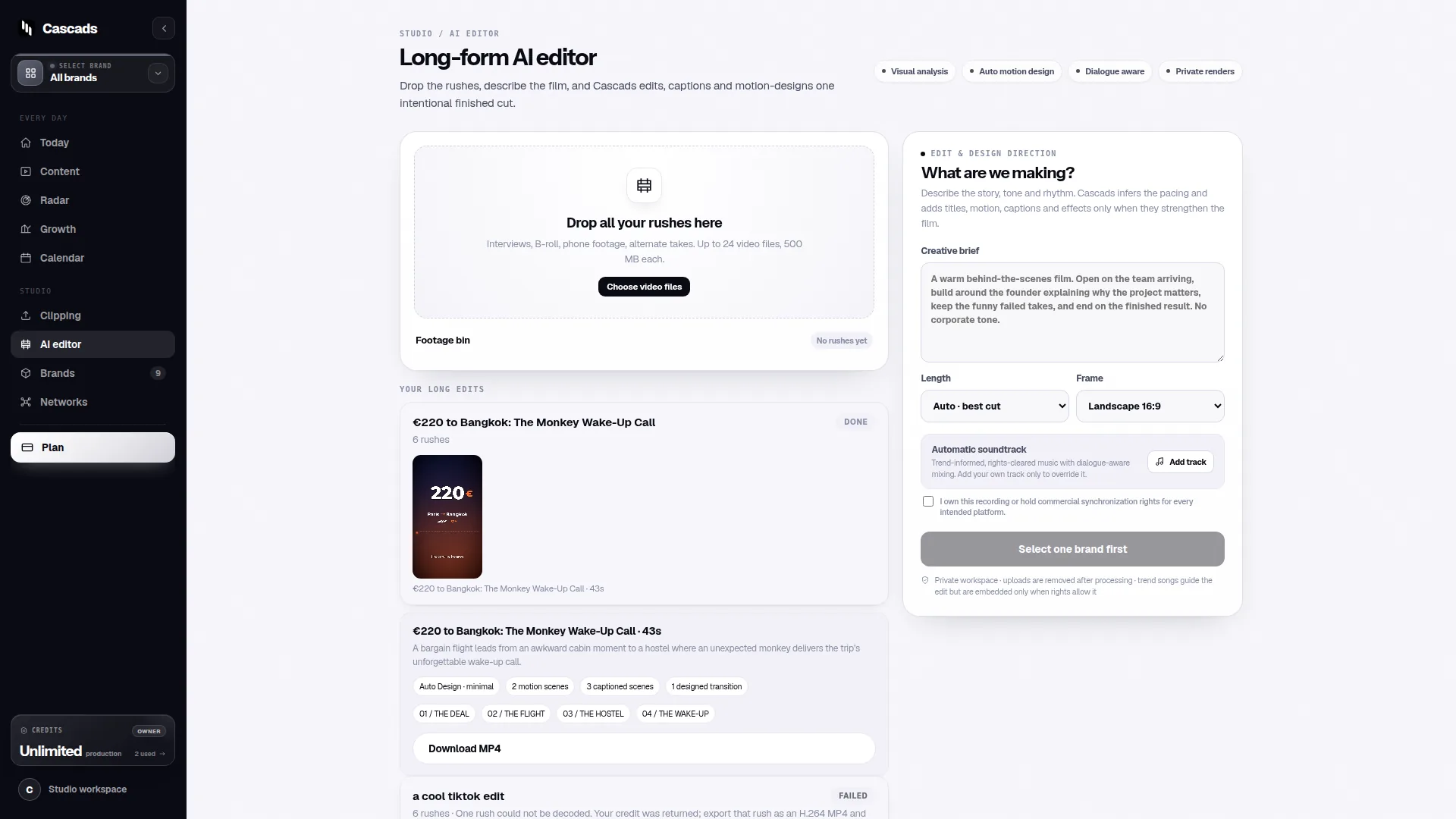
Cascads is an IVRYN product for social content production and scheduling. Its reusable profile for each brand is relevant to this workflow because Cascads generates text posts, vertical videos and carousels from that profile. The campaign record should still add the time-specific context that a reusable profile alone is not meant to carry.
Carry a clear campaign brief into production
After brand context, attach campaign-specific direction: the purpose of the campaign, the audience segment, the core message, the offer or call to action, timing and any required facts or approved wording. This gives every format a common center without requiring identical execution everywhere.
Also record what is undecided. A draft can look finished while still depending on a missing landing page, an unconfirmed price or a pending legal review. Marking open decisions prevents a production tool or reviewer from treating placeholders as approved claims.
Make ownership visible. Name the person or role responsible for factual confirmation, creative approval and publishing readiness. Context is more reliable when a team can distinguish between a source fact, an interpretation and an item awaiting a decision.
Translate the idea for each format
The same campaign message should not be copied mechanically across a text post, vertical video and carousel. Each format needs its own content shape: a text post may foreground a single thought, a vertical video may need a visual sequence and a carousel may need a slide-by-slide progression.
Preserve the common campaign purpose, but add format instructions before production begins. Note the key message for the asset, the intended opening, the supporting material, any required visual or accessibility considerations and the final action you want the audience to take. This makes revisions more specific than a broad request to “make it work for social.”
Cascads can generate text posts, vertical videos and carousels from a reusable profile for each brand. That makes format context especially important: generation can begin from shared brand direction, while the campaign record clarifies how this particular message should differ by format.
Example: a compact context handoff
Example: An agency is preparing a three-week campaign for a software brand announcing a new reporting feature. The campaign record states that the audience is operations leads, the approved message is that the feature helps organize recurring reporting work, and the call to action is to visit the product page. It also states that feature availability must be confirmed before publishing.
For a text post, the handoff asks for a concise problem-and-solution message. For a vertical video, it asks for a simple sequence that opens with the reporting problem, shows the organizing idea and ends with the approved call to action. For a carousel, it asks for a progression from common reporting friction to a clear overview of the feature. Each asset retains the same factual boundaries and campaign goal.
Before review, the record identifies the product owner who confirms feature wording, the brand lead who reviews tone and the campaign manager who checks dates and links. This is a decision aid: if a reviewer cannot find the intended audience, approved claims, format purpose and owner, the asset is not ready to move forward.
Keep review and publishing context connected
Review is where campaign context becomes a practical safeguard. Reviewers should see the original objective, the approved facts, the brand direction and the format-specific intent alongside the draft. Otherwise, feedback can focus on isolated wording and unintentionally change the campaign’s meaning.
Generated marketing output remains subject to human review before publication. Build that expectation into the workflow: reviewers should check accuracy, fit with the brand profile, clarity of the call to action, visual and text details, and whether the format serves the stated purpose. A human decision is still needed when material is generated or adapted.
Publishing adds another layer of context. Direct publishing depends on the network, media format, account permissions and external platform approval. Record the intended network, asset type, account and publishing status so the team knows whether a post can be sent directly, needs adjustment or requires another publishing path.
Use one short readiness checklist
A useful final check is brief enough to complete for every asset and specific enough to expose missing context. It should be part of the handoff from review to scheduling, rather than a separate document that no one consults.
The checklist does not replace judgment. Its value is that it makes the campaign’s essential context visible at the point where decisions become difficult to reverse.
- Brand profile and campaign objective are attached.
- Audience, approved facts and call to action are clear.
- The asset’s format-specific purpose is stated.
- A human reviewer has checked the output before publication.
- The target network, media format, account permissions and platform approval status are confirmed.
Frequently asked questions
What context should follow a campaign from planning to review?
Carry reusable brand direction, the campaign objective, audience, approved facts, call to action, format-specific instructions, open decisions, owners and publishing requirements from planning through review.
Why should format context be documented separately?
Text posts, vertical videos and carousels use different content structures. Separate format context preserves the shared campaign message while giving each asset a clear purpose and review standard.
Can a social post always be published directly after review?
No. Direct publishing depends on the target network, media format, account permissions and external platform approval, so publishing readiness should be checked for each asset.
Sources and further reading
These resources provide the wider reference frame. Product statements on this page are limited to the public information provided by Cascads.