Social media management vs marketing: what the terms actually cover
When people search for social media management vs marketing, they're usually trying to figure out whether they need a scheduling tool, a strategy service, or both. The two terms overlap but describe different layers of work. Social media management is the operational layer: producing posts, formatting them for each network, scheduling them, and getting them approved before they go live. Social media marketing is the strategic layer: deciding who the audience is, what the brand should say, and how content ties back to broader goals like awareness or lead generation.
This distinction matters because it changes what you're actually shopping for. A team that already has a clear brand voice and content calendar may just need reliable production and publishing support. A team without a defined strategy needs marketing thinking first, and management tooling second. Small teams and agencies handling several brands often need both, but rarely at the same intensity, and conflating the two can lead to buying the wrong kind of help.
- Management: production, formatting, scheduling, approval, publishing
- Marketing: audience definition, messaging strategy, campaign goals
- Overlap zone: brand voice consistency across formats and networks
Why brand context changes the comparison
A generic feature checklist for management vs marketing tools misses a practical reality: agencies and multi-brand teams don't work from a blank slate for each client. Every brand has its own voice, visual style, and constraints, and any tool being evaluated needs to respect that context rather than forcing a one-size-fits-all template.
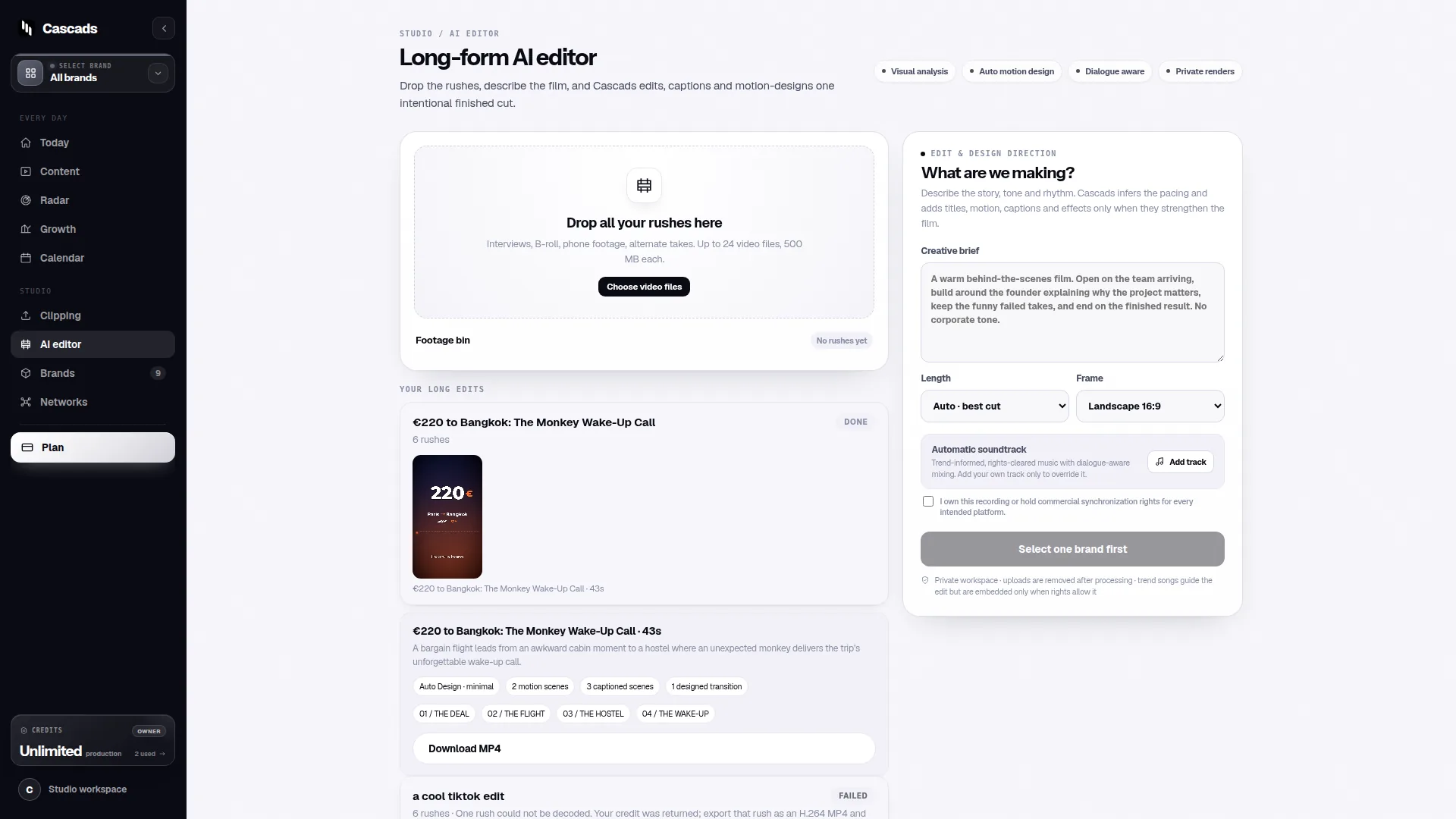
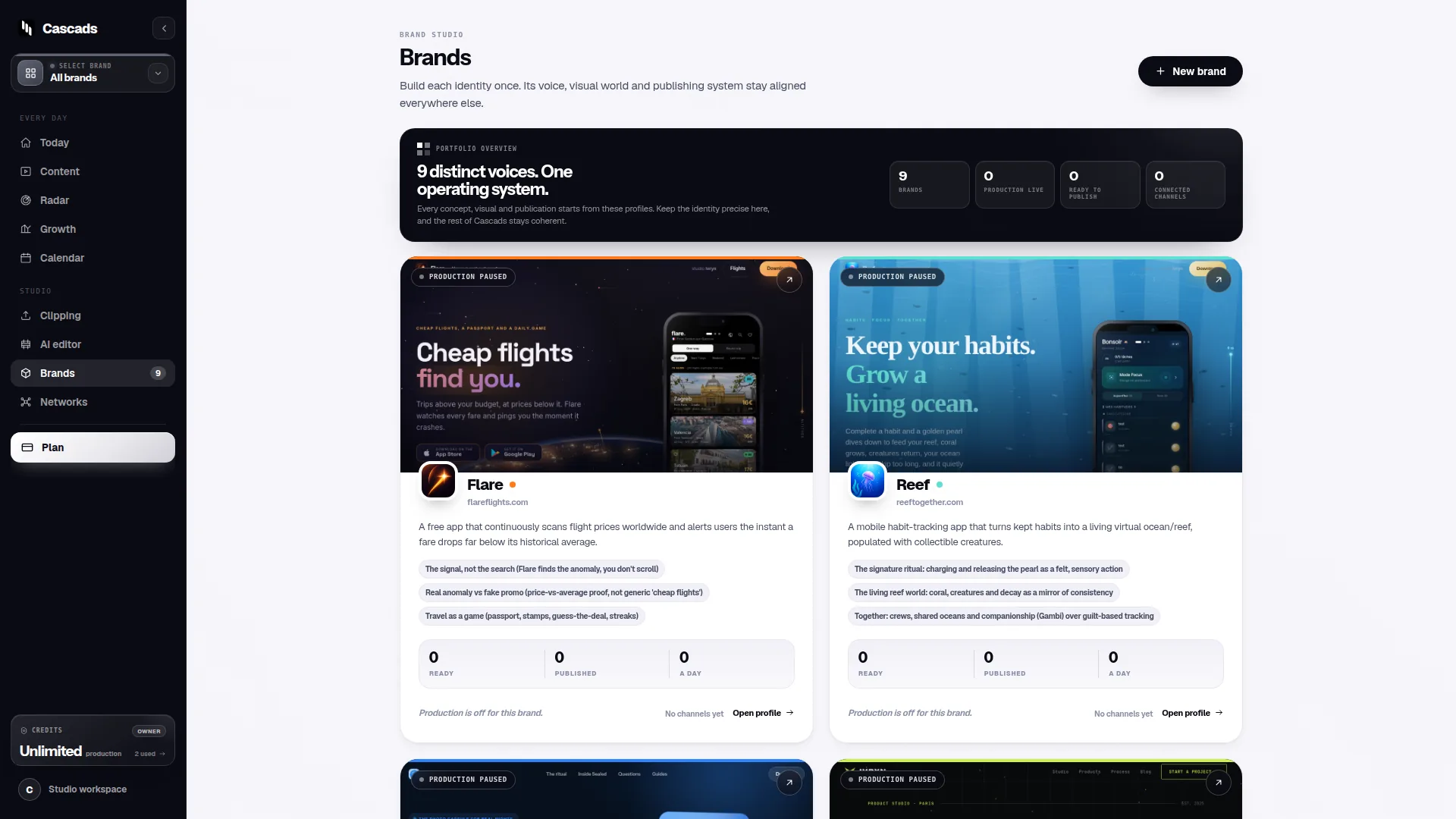
This is where a reusable brand profile becomes a meaningful evaluation criterion, not just a nice-to-have. Cascads, an IVRYN product for social content production and scheduling, builds around this idea: it generates text posts, vertical videos and carousels from a reusable profile for each brand, so teams managing several brands don't have to re-explain tone and style every time they produce content. That's a management-layer capability, but it directly supports marketing consistency across a portfolio of brands.
When comparing options, ask whether the tool treats brand context as a first-class, reusable asset or as something you re-enter manually for every campaign. The answer affects how much marketing strategy work gets diluted or lost during day-to-day production.
Multi-format production as a comparison criterion
Another practical axis for comparing management vs marketing needs is format. Marketing strategy often calls for a mix of content types - a written announcement, a short vertical video, a carousel walking through a product feature - aimed at different platforms and different stages of attention. Management tools vary widely in how well they actually support that mix versus just scheduling whatever you upload.
Cascads generates text posts, vertical videos and carousels from the same brand profile, which is relevant here because it means a single strategic idea can be produced across formats without starting from scratch for each one. That doesn't replace marketing judgment about which format suits which platform or audience segment, but it reduces the operational friction of acting on that judgment.
For teams evaluating tools, it's worth asking concretely: can this tool produce more than one format from the same brief, or does each format require a separate workflow? The answer often reveals whether a tool is built for genuine multi-format marketing execution or just single-format scheduling with some extras.
Human review and why no tool should skip it
Whatever side of the management vs marketing line you're focused on, generated or drafted content still needs a human check before it goes live. This is true regardless of vendor: automated production speeds up drafting, but brand risk, factual accuracy, and tone judgment are still human responsibilities. Cascads' generated marketing output remains subject to human review before publication, and any comparison of tools should treat an approval step as a requirement, not an optional add-on.
For agencies managing several brands, this becomes more than a formality. Different brands may need different reviewers, different approval thresholds, or different turnaround expectations depending on the client relationship. A social media approval workflow (see Cascads' guide at https://cascads.com/guides/social-media-approval-workflow/) is useful reference material for thinking through how approval steps should be structured before content reaches a queue.
When comparing management and marketing tools, ask who reviews content, at what stage, and what happens when a reviewer rejects a draft. Tools that treat approval as an afterthought create risk for agencies working across multiple brand voices and compliance needs.
Format-aware publishing: the limit that affects both sides
A comparison of management vs marketing tools is incomplete without acknowledging platform publishing constraints. Direct publishing depends on the network, media format, account permissions and external platform approval - this is a structural limit, not a feature gap specific to any one tool. Vertical video, carousels, and text posts each have different publishing paths depending on the network, and account-level permissions can change what's technically possible at any given time.
This matters for the comparison because a marketing strategy that assumes uniform, instant publishing across every network and format may not reflect operational reality. Teams should plan content calendars with some buffer for platform-specific approval steps, especially for formats or accounts newer to a brand's presence. Cascads' publishing integration checklist (https://cascads.com/guides/social-media-publishing-integration-checklist/) outlines the kinds of account and permission checks worth doing before assuming a format will publish directly.
Practically, this means the marketing side of the comparison (what content strategy calls for) and the management side (what can actually be scheduled and published) need to stay in sync. A tool that generates ambitious multi-format campaigns but can't clearly communicate publishing constraints per network creates friction that shows up late, often right before a launch.
A worked example: comparing needs for a three-brand agency
Here's a hypothetical example to illustrate how the comparison plays out in practice. Imagine a small agency running social content for three unrelated brands - a coffee roaster, a boutique law firm, and a fitness studio. Each brand has a distinct voice and posts across different networks: the roaster favors carousels and vertical video on visual platforms, the law firm sticks mostly to text posts, and the fitness studio wants a mix of all three formats.
In this hypothetical, the agency's marketing layer decides what each brand should say and how often. The management layer needs to turn that into actual posts, formatted correctly per brand and per network, then routed through review before publishing. A reusable brand profile per client reduces repetitive setup; multi-format generation from one profile lets the fitness studio's mixed-format calendar happen without three separate production processes; a defined approval workflow lets the law firm's more conservative reviewer sign off before anything goes out; and awareness of publishing limits per network keeps the team from promising same-day publishing on formats where account approval is still pending.
This example is illustrative only - it is not a case study or reported outcome, simply a way to show how the principles (brand context, multi-format production, human review, format-aware publishing) interact when comparing management and marketing needs for a real-feeling but hypothetical team.
A short decision checklist
To bring the comparison down to something actionable, here is a checklist for teams deciding where to focus first - strategy, operations, or both.
This isn't exhaustive, but it covers the practical questions raised above and should surface whether a gap in marketing strategy or in management tooling is the more urgent problem to solve.
- Do we have a defined brand voice and content goals for each brand, or is that still undecided?
- Does our current process let us reuse brand context, or do we redo setup for every campaign?
- Can we produce more than one content format from a single brief without separate workflows?
- Is there a clear, documented approval step before anything publishes, and who owns it per brand?
- Do we understand which formats and networks currently support direct publishing for our accounts, and where approval or permissions are pending?
Frequently asked questions
Is social media management the same as social media marketing?
No. Management refers to the operational work of producing, formatting, scheduling and publishing content, while marketing refers to the strategic work of defining audience, messaging and goals. Most teams need both, but usually at different intensities depending on how developed their strategy already is.
Do social media tools guarantee that content will publish directly to every platform?
No responsible tool can guarantee this. Direct publishing depends on the network, the media format, account permissions and external platform approval, all of which can vary by account and change over time, so teams should plan for some manual steps or delays.
Why does human review still matter if content is generated automatically?
Generated content can speed up drafting, but it doesn't remove the need for a human check on tone, accuracy and brand fit before publication. Human review remains a necessary step regardless of which tool or process produces the draft.
Sources and further reading
These resources provide the wider reference frame. Product statements on this page are limited to the public information provided by Cascads.