Direct answer
A lightweight approval flow names the reviewer, shows the complete publication payload and records approve, reject or revise against that exact version. Low-risk work can use sampling, but material edits, sensitive claims and destination changes need a fresh decision.
Make approval match the decision
Approvals become slow when every edit follows the same route. A typo correction, a new promotional claim, a redesigned carousel and a vertical video with a revised message do not carry the same brand or publishing risk. Start by defining what needs a full review and what can move through a lighter check. The goal is not fewer standards; it is applying attention where it changes the outcome.
For small teams and agencies, a useful default is to approve the message and creative direction early, then reserve final approval for changes that alter meaning, brand fit, compliance-sensitive wording, audience targeting or the intended publishing format. Small execution changes can be handled by the person responsible for the work when they stay inside the approved direction.
This gives contributors room to improve an asset without repeatedly reopening settled decisions. It also gives approvers a clear reason to step in: they are reviewing material changes, not re-reading every version of the same post.
- Full review: new campaign message, offer wording, major visual direction, audience-sensitive topic or new network.
- Light review: grammar, crop adjustments, approved-brand design refinements and scheduling changes that do not change the message.
- Escalate: any edit that changes what the audience may understand, promise or do.
Start with reusable brand context
Clear approvals begin before a draft exists. Each brand needs a usable working context: its voice, audiences, approved themes, recurring calls to action, visual constraints, prohibited language and the people who can approve content. This should be short enough to consult during production, rather than a document that only appears when there is a disagreement.
For agencies, separate brand context is especially important because reviewers may be working across several clients. A shared process is useful, but it should not flatten real differences between brands. One brand may need a cautious tone and two reviewers for promotional language, while another may allow a faster editorial check for routine community content.
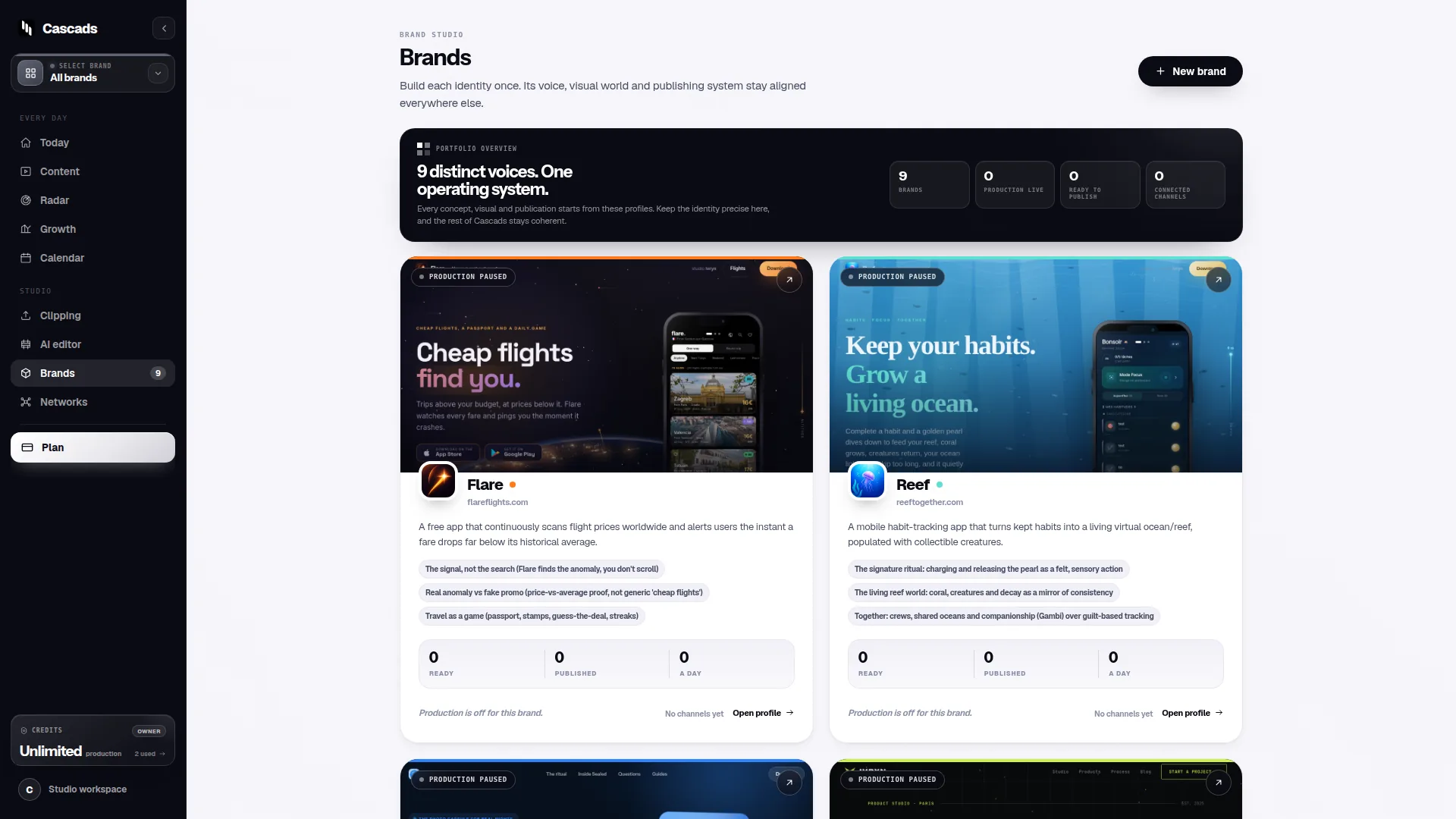
Cascads supports social content production and scheduling through a reusable profile for each brand. That makes brand context a practical input to content creation rather than an afterthought added during review. Teams should still decide what their own profile includes and who has authority to change it.
- Keep a named primary approver and a backup approver for each brand.
- Record standing rules in plain language, including examples of approved and disallowed wording.
- Review brand context when strategy or ownership changes, not only after an approval problem.
Approve a campaign before its assets
When a campaign contains text posts, vertical videos and carousels, approving each finished item from zero creates unnecessary repetition. First agree on a compact campaign brief: objective, audience, central message, call to action, themes, required facts, sensitive boundaries, formats and publishing window. This becomes the decision record for the asset-level work that follows.
Then ask reviewers to comment at the right level. In an early review, ask whether the concept represents the brand and whether the message is acceptable. In a later review, ask whether the specific asset faithfully expresses that approved concept. Separating these questions reduces conflicting feedback, because the team is not debating strategy while trying to correct captions or layout details.
This approach also helps when one idea is adapted into several formats. The carousel may need a stronger sequence, the vertical video may need a more concise opening, and the text post may need a direct caption. Adaptation is not automatically a new campaign decision if it preserves the approved message and stays within the agreed brand context.
- Campaign approval covers the core message and boundaries.
- Asset review covers clarity, accuracy, brand fit and format execution.
- A change outside the brief returns to the appropriate approver with a clear explanation of what changed.
Use a visible, lightweight decision aid
A lightweight flow works best when everyone can see the current status, the owner and the next decision. Avoid relying on a long comment thread as the only record. Instead, attach a simple label to every item and define what each label means. The labels should make it easy to distinguish a draft waiting for feedback from an approved asset waiting to be scheduled.
Set a response expectation that fits the type of work. Routine posts may have a short review window, while launches or sensitive messages can be planned earlier. If an approver cannot respond, the team should know whether the backup approver may decide, whether the item should pause, or whether it can proceed under a pre-agreed rule. Silence should not be treated as approval unless the team has deliberately established that rule.
Example: A three-person agency is preparing a weekly series for two brands. The strategist approves the weekly message themes on Monday. A designer and writer create one carousel, two text posts and one vertical video for each brand. The account lead reviews anything that introduces a new claim or changes the approved tone. The writer can correct clarity and punctuation without another round. Each approved item is marked “approved to schedule,” while anything needing a decision is marked “revision requested” with one named owner and a specific requested change.
- Draft: work is in progress and not ready for review.
- Needs decision: a reviewer must decide on a defined issue.
- Revision requested: the requested change and owner are recorded.
- Approved to schedule: the content is approved for the stated network, format and publishing window.
- Published or held: the final outcome is visible to the team.
Keep publishing approval format-aware
Approval of content is not always the same as approval to publish. Direct publishing depends on the network, media format, account permissions and external platform approval. A team should treat these conditions as part of the final publishing check, especially when a campaign includes a mixture of text posts, vertical videos and carousels.
Before scheduling, confirm the destination network, account, media type and intended publishing method. If direct publishing is unavailable for a particular combination, the approval record can still be useful, but the team may need a different handoff or publication step. This prevents people from assuming that a creatively approved asset is automatically ready for every network.
Format-aware review also improves the quality of feedback. A reviewer can assess whether the message is clear in the caption, whether a carousel tells its story in sequence, and whether a vertical video communicates its main point early enough for its intended use. The same campaign idea may be approved, while a particular format still needs revision.
- Confirm the approved network and account before scheduling.
- Check that the approved asset matches the actual media format.
- Treat platform and permission constraints as publishing conditions, not as a judgment on the creative.
- Record any manual handoff needed so responsibility remains clear.
Set boundaries for Cascads-based workflows
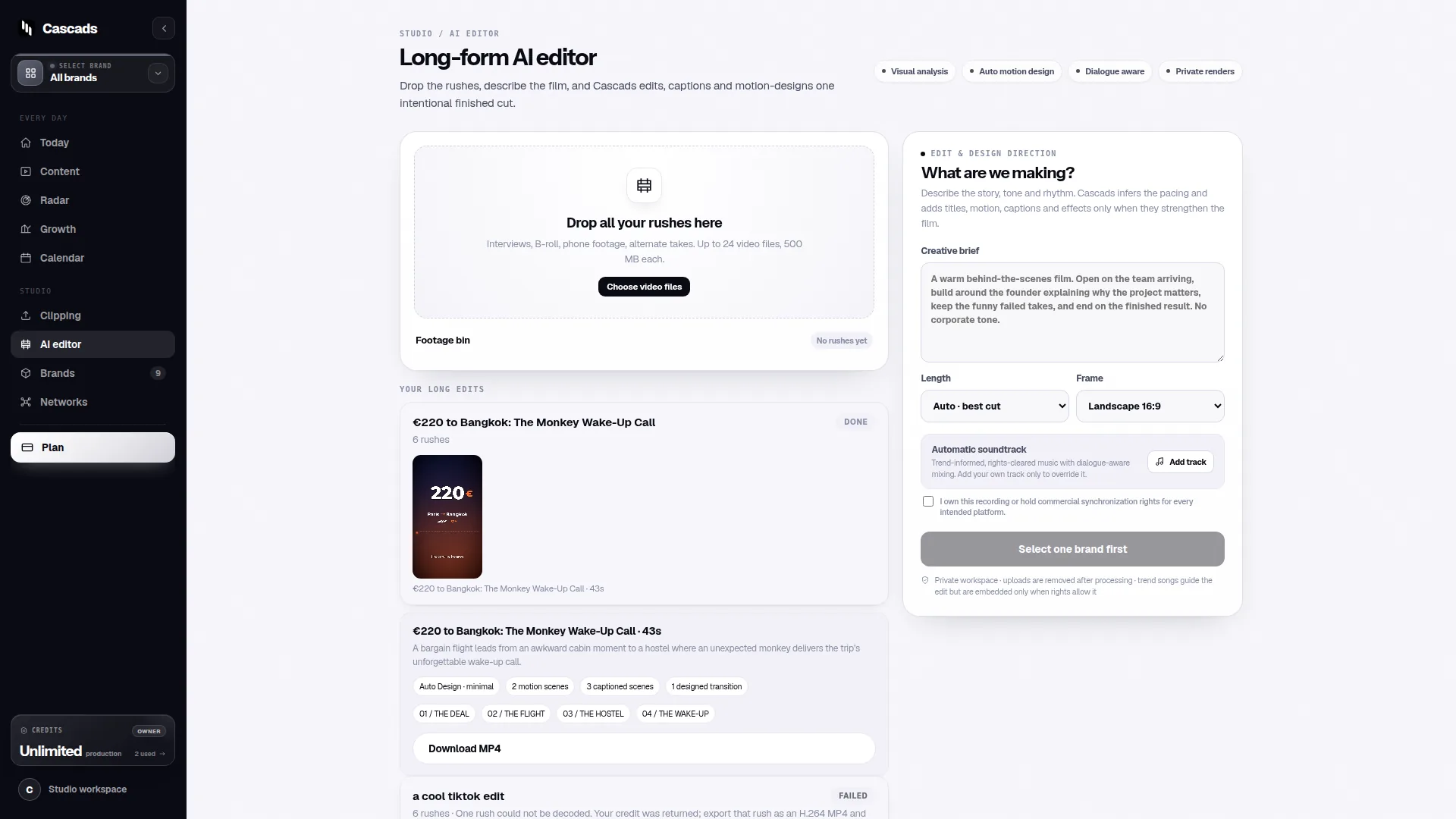
Cascads is an IVRYN product for social content production and scheduling. It generates text posts, vertical videos and carousels from a reusable profile for each brand. Those capabilities can support an organized workflow by helping teams work from defined brand context across multiple content formats.
The advice in this article is bounded by that public product context. It does not assume that Cascads makes approval decisions, confirms that a post meets every internal policy, or guarantees direct publishing to every network. Direct publishing depends on the network, media format, account permissions and external platform approval.
Generated marketing output remains subject to human review before publication. In practice, that means teams should use their approval flow to assess the final message, brand suitability, accuracy, format and intended publishing path. Cascads can be part of the production and scheduling process, while people retain responsibility for reviewing and approving what is published.
- Use reusable brand profiles to guide production, then review the resulting content.
- Do not treat generated output as automatically approved.
- Confirm publishing conditions for the specific network, account and media format.
Frequently asked questions
How can a small team avoid approving every tiny social post edit?
Define material changes that require review, such as a new claim, changed message, new audience-sensitive topic or major creative shift. Let a designated owner make minor edits that stay within the already approved brand context and campaign brief.
Should a content approval also count as approval to publish?
Not always. Approval of the creative should be separate from checking the intended network, media format, account permissions and available publishing method. Direct publishing can depend on those conditions and external platform approval.
Why is human review needed for generated marketing content?
Generated marketing content should be reviewed by people before publication so the team can assess the final wording, brand fit, accuracy, format and planned publishing context. Cascads-generated output remains subject to human review before publication.
Sources and further reading
These resources provide the wider reference frame. Product statements on this page are limited to the public information provided by Cascads.