What a manage social media free strategy actually means in practice
Anyone searching for a manage social media free strategy is usually trying to solve two problems at once: keeping several brand accounts active without a large budget, and doing it without losing consistency across networks. 'Free' rarely means zero cost in effort - it means minimizing spend on tools and headcount while still producing enough content to stay visible. That framing matters before choosing any workflow or tool.
A workable free strategy tends to rest on a small number of decisions made once and reused: who the brand is speaking as, what formats it will post, and how often. Teams that skip this step end up improvising content brand-by-brand, which is the most expensive way to run a 'free' strategy because it burns time instead of money.
Why brand context has to come before any posting schedule
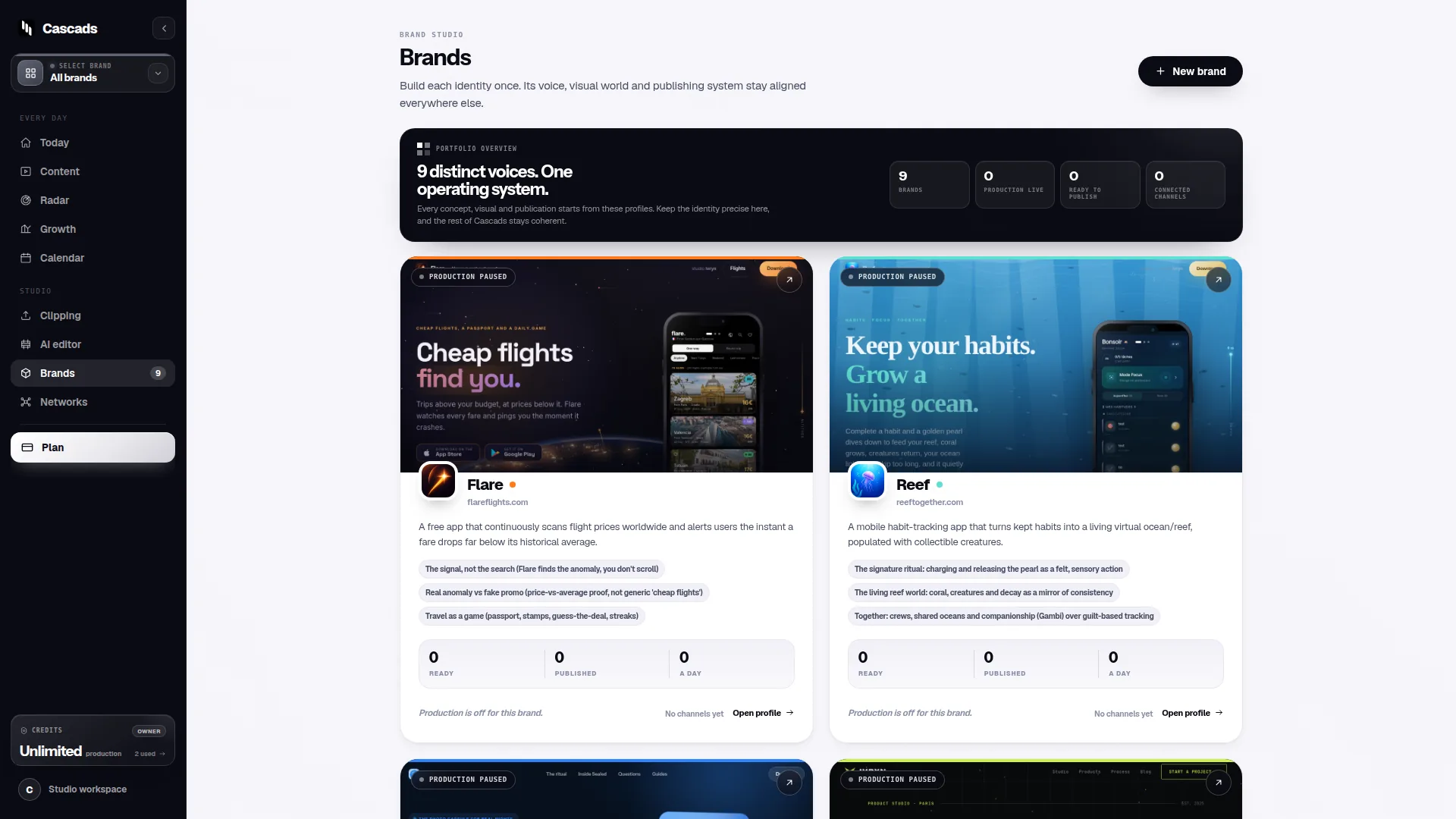
A recurring mistake in low-budget social operations is treating every brand the same way inside a shared calendar or shared prompts. Small teams and agencies managing several brands need a defined context for each one - tone, audience, visual style, recurring themes - so that content doesn't have to be reinvented from scratch every week.
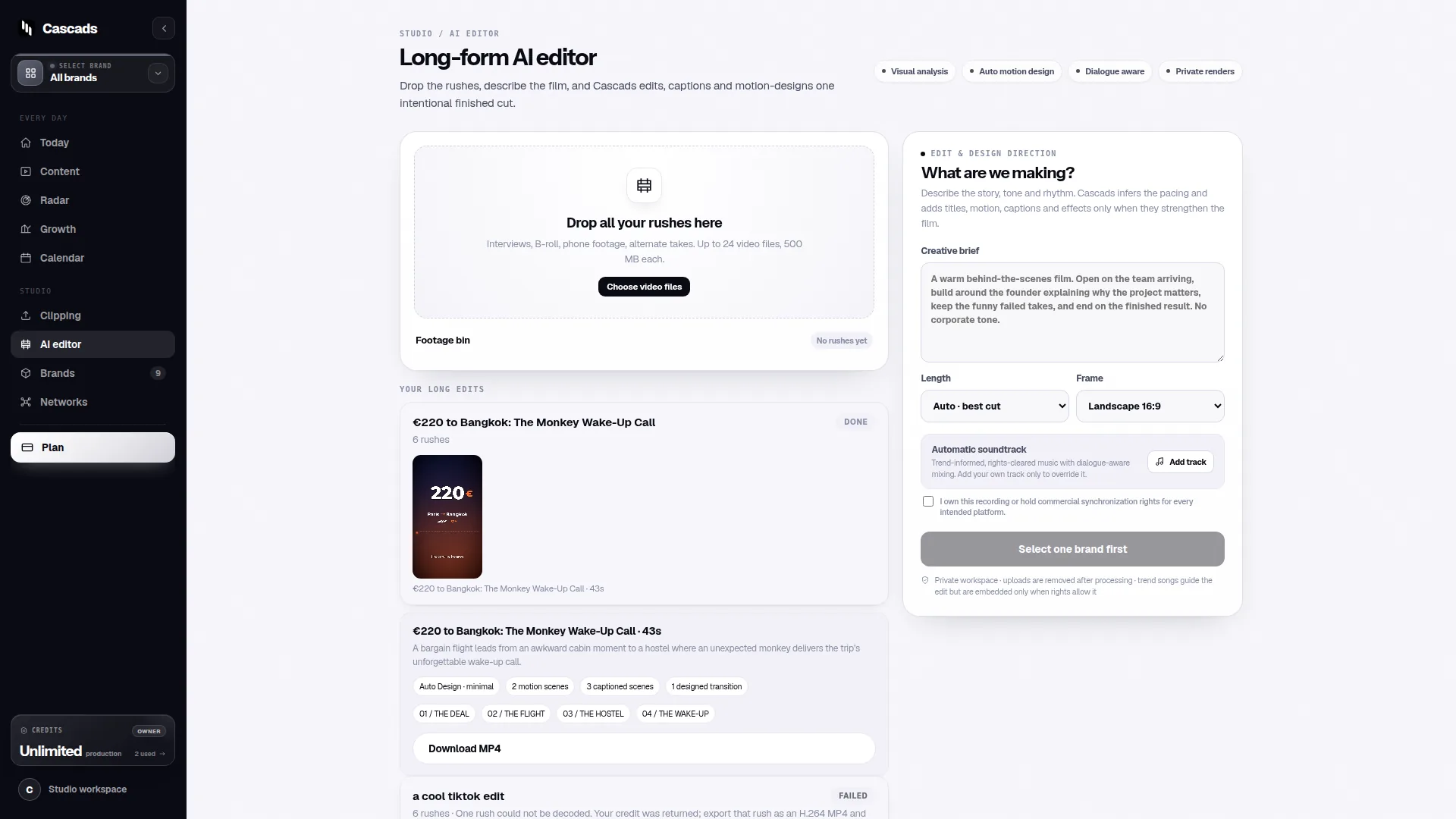
This is where a reusable brand profile helps, whether built manually in a shared document or through a dedicated tool. Cascads, for instance, is built around this idea: it works from a reusable profile per brand to generate text posts, vertical videos and carousels, so the same brand context can be reapplied across formats and networks instead of being recreated each time. That is a starting point for consistency, not a substitute for a strategy - someone still has to decide what each brand should say and when.
Producing multiple formats without multiplying the work
A free or low-cost strategy usually fails not from lack of ideas but from the sheer labor of adapting one idea into a text post, a vertical video, and a carousel separately for each network. Multi-format production - planning content so it can flow into several formats from one brief - is one of the more practical ways to keep output high without adding headcount.
Even without dedicated software, a team can apply this principle manually: draft the core message once, then adapt it into the two or three formats that matter most for the audience, rather than starting from a blank page each time. Tools that automate this adaptation can save time, but the underlying discipline - one brand context, several format outputs - is what actually controls cost.
Human review is not optional, even in a free workflow
Whatever the level of automation involved, generated or drafted marketing content should go through human review before it is published. This is true whether a post is written by a person, adapted from a template, or produced with the help of software - accuracy, tone, and compliance with each platform's expectations still need a final check by someone who understands the brand and the audience.
Skipping this step to save time is one of the more common ways a 'free' strategy ends up costing more later, through corrections, deleted posts, or reputational cleanup. Building a short review checkpoint into the workflow - even five minutes per post - is cheap insurance relative to the risk of an unreviewed post going out.
Format-aware publishing: the limit most free strategies underestimate
Publishing directly to a network is not guaranteed to work the same way across all formats and accounts. Whether a post, video, or carousel can be published directly depends on the specific network, the media format involved, the permissions granted on the account, and approval from the platform itself. This is one of the more concrete limits anyone managing several brands and networks needs to plan around, especially in a free strategy where manual workarounds absorb the extra effort.
A social media publishing integration checklist is useful here precisely because it forces a team to verify these constraints account by account and format by format, rather than assuming that what works on one network or one brand's account will work identically elsewhere. Treating this as a planning step, not an afterthought, avoids last-minute surprises when a scheduled post silently fails to go out.
- Confirm which formats (text, vertical video, carousel) each target account actually supports before scheduling
- Check account-level permissions for direct publishing versus manual posting
- Verify platform approval status for any connected app or integration
- Rebuild the checklist whenever a new brand or network is added
Worked example: a small agency planning a free strategy for two brands
Consider an agency handling two client brands with no dedicated content budget. Example only: they start by writing a short brand profile for each client - audience, tone, three recurring themes - and agree on a weekly cadence of one text post, one short vertical video, and one carousel per brand. Each week, one person drafts the core message per brand, adapts it into the three formats, and a second person reviews everything before it's scheduled.
Before publishing, they check each account's permissions and confirm which formats can post directly versus which need manual upload, using a checklist similar in spirit to the one referenced above. Where a tool like Cascads is used to generate drafts from the brand profile, human review still happens before anything goes live. This keeps the strategy genuinely low-cost: the recurring investment is time for planning and review, not spend on ad-hoc production.
Deciding how much to automate versus do manually
Not every small team needs software to run a free social media strategy - a shared document, a simple content calendar, and a review habit can work for a while, especially with one or two brands. The calculation changes as the number of brands, formats, or networks grows, because the manual coordination cost rises faster than the content itself.
At that point, weighing the cost of dedicated social media management software against the time saved becomes a reasonable exercise, and understanding what such tools typically cost is worth doing before committing. The right choice depends on team size, number of brands, and how much manual adaptation the team is willing to sustain - there is no universally correct answer, only a trade-off worth evaluating deliberately.
Frequently asked questions
Is it realistic to manage social media completely free for multiple brands?
It's realistic to keep direct software spend near zero, but time for planning, content adaptation, and human review remains a real cost regardless of budget, especially once more than one or two brands are involved.
What is the biggest limit teams overlook in a free social media strategy?
Direct publishing to a network isn't guaranteed for every format or account - it depends on the network, the media type, account permissions, and platform approval, so this should be checked before relying on it for scheduling.
Do I still need human review if I'm using a tool to generate posts?
Yes. Generated marketing content, whatever the format, should be reviewed by a person before publication to check accuracy, tone, and platform fit.
Sources and further reading
These resources provide the wider reference frame. Product statements on this page are limited to the public information provided by Cascads.