Why social media post scheduling best practices start with brand context, not calendars
It's tempting to treat social media post scheduling best practices as purely a calendar problem: pick times, queue posts, move on. But for teams juggling several brands or clients, the harder problem is keeping each brand's voice, visuals and offers consistent across every scheduled post. A scheduling tool that doesn't preserve brand context forces someone to manually re-check tone and assets before every send, which defeats the purpose of scheduling in the first place.
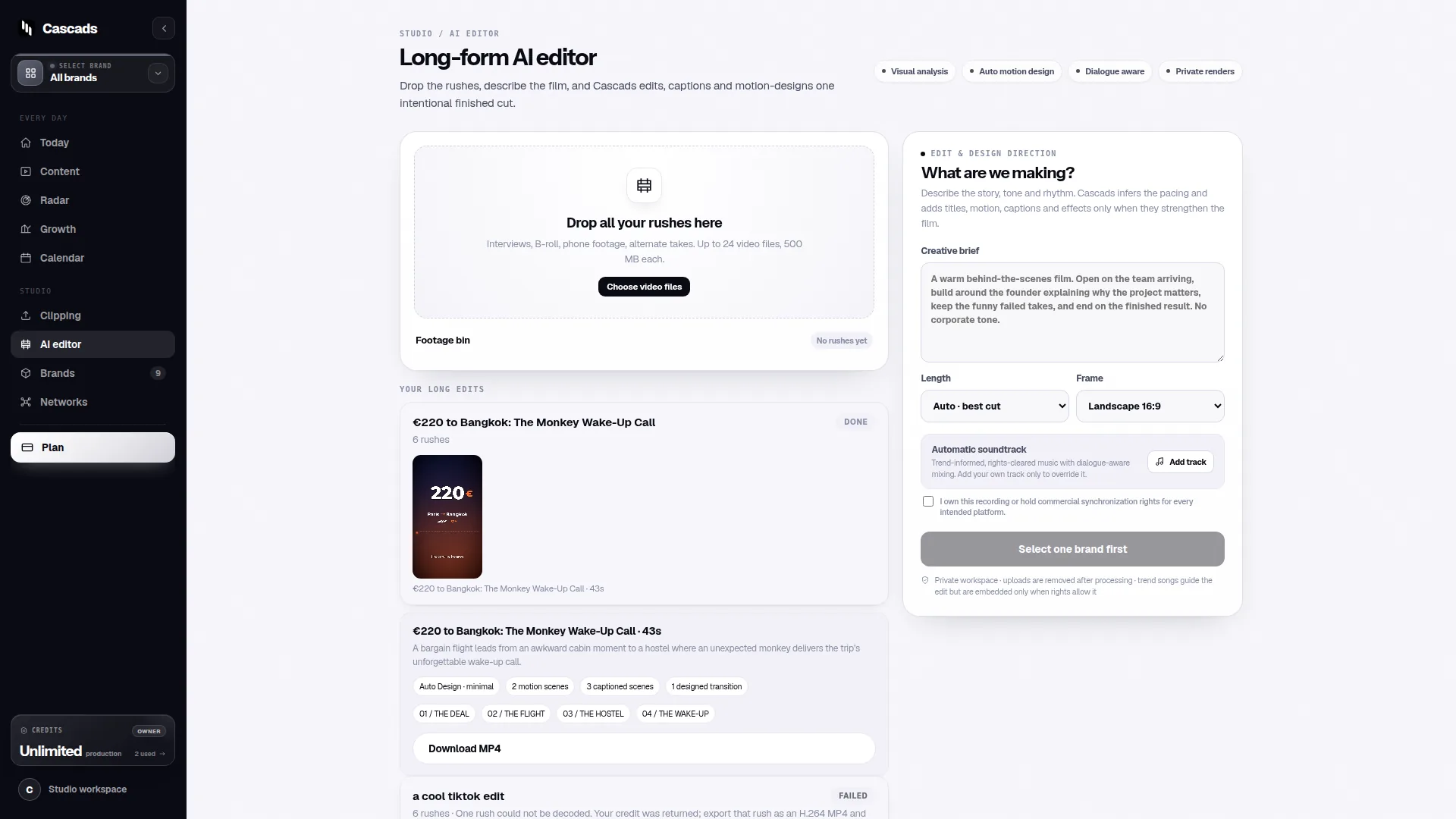
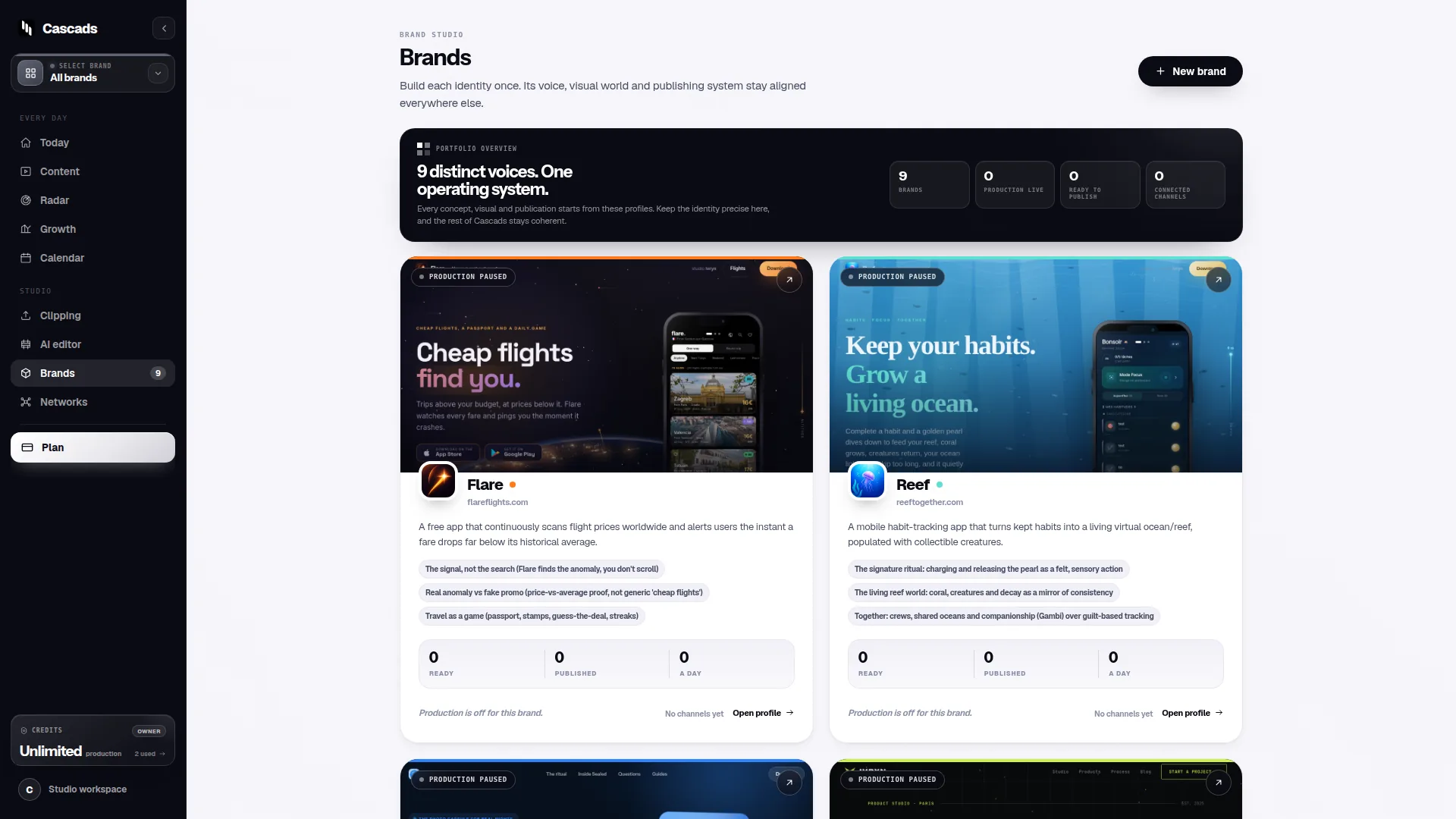
This is where a reusable brand profile matters more than the calendar interface itself. When a platform lets a team define a brand's voice, visual style and content preferences once and reuse that profile to produce text posts, vertical videos and carousels, scheduling becomes a downstream step rather than a source of drift. Cascads is built around this idea: it's a product for social content production and scheduling that generates multi-format content from a reusable per-brand profile, so the scheduling layer inherits consistency rather than trying to enforce it after the fact.
The practical implication for anyone managing multiple accounts is to audit brand consistency before optimizing send times. A perfectly timed post that doesn't match the brand's established look or tone does more harm than a slightly late one that does.
Matching format to platform before you queue anything
A second pillar of sound scheduling practice is format awareness. Text posts, vertical video and carousels behave differently across networks, and each platform has its own expectations for aspect ratio, length and interaction style. Scheduling the same asset everywhere without adapting the format usually produces mediocre results on at least one channel.
Multi-format production tools that generate text, video and carousel variants from the same underlying brand profile give teams a practical shortcut: instead of manually reformatting one piece of content for each network, the variants are produced in parallel and each can be scheduled to the channel it fits best. This doesn't eliminate the need for judgment about which format suits which platform and audience, but it removes a significant amount of manual rework.
Teams should still expect that direct publishing depends on the network, the media format involved, the connected account's permissions and the platform's own approval processes. No scheduling workflow can guarantee that every post type will publish identically on every network, because these constraints sit with the platforms themselves, not with the scheduling tool.
Human review is a best practice, not a bottleneck
One of the most common mistakes in social media scheduling workflows is treating automation as a substitute for review rather than a complement to it. Generated or templated content, even when produced from an accurate brand profile, benefits from a human check before it goes live - for tone, factual accuracy, timeliness and appropriateness to current events.
This is especially true for any workflow that includes AI-assisted or automatically generated marketing content: that output should remain subject to human review before publication. Building a lightweight approval step into the scheduling process, rather than treating scheduling and publishing as a single uninterrupted action, is one of the simplest ways to prevent an off-brand or poorly timed post from reaching an audience.
For agencies managing several client accounts, this also creates an audit trail: reviewers can confirm what was approved, when, and by whom, which matters when a client asks why a particular post went out. A structured approval workflow, such as the one Cascads documents publicly, gives teams a repeatable review pattern rather than an ad hoc one (see: https://cascads.com/guides/social-media-approval-workflow/).
Applying social media post scheduling best practices: a worked example
Consider a hypothetical small agency managing three client brands across three networks each. This is an illustrative example, not a documented case: it exists only to make the decision points concrete.
In this example, the agency first builds a brand profile for each client capturing voice, visual style and recurring themes. Content is then produced in multiple formats per brand - a short text post, a vertical video, and a carousel - from that same profile, so all three variants stay visually and tonally aligned even though they're built for different networks.
Before anything is queued, a designated reviewer checks each batch for accuracy and brand fit, flagging anything that needs adjustment. Only approved content moves into the schedule, and even then, the agency treats the calendar as a plan rather than a guarantee, since actual publishing timing and success still depend on each network's own permissions and approval mechanics for the account in question.
This structure - profile, multi-format production, review, format-aware scheduling - separates the parts of the workflow a team fully controls (brand consistency, content variants, review) from the parts that depend on external platforms (final publishing behavior).
- Define the brand profile before creating scheduled content, not after
- Produce format variants deliberately for the networks you actually use
- Route every batch through a named reviewer before scheduling
- Treat the calendar as a plan, not a publishing guarantee
A practical checklist for teams managing multiple brands
Given the constraints above, a simple checklist can help small teams and agencies apply social media post scheduling best practices consistently rather than reinventing the process for each client.
Before scheduling any batch of content, it helps to confirm that the brand profile is current, that the content mix matches the formats each target network supports well, that a human reviewer has signed off, and that the connected account has the permissions needed for the intended publishing method on that platform.
Teams evaluating scheduling tools can also use a structured integration checklist to verify that a platform's publishing setup - account connections, permissions, format support - is actually ready before relying on it for client work, rather than discovering gaps mid-campaign (see: https://cascads.com/guides/social-media-publishing-integration-checklist/).
- Brand profile reviewed and up to date for the campaign period
- Content formats chosen to fit each target network, not copy-pasted across all of them
- Review step completed and documented before scheduling
- Account permissions and platform approval status confirmed for the publishing method used
Where scheduling tools help - and where their responsibility ends
It's worth being precise about what a scheduling and production tool like Cascads can and cannot promise. It can help generate on-brand content in multiple formats from a reusable profile and organize that content into a review and scheduling workflow. What it cannot do is override a platform's own rules about media formats, account permissions or approval processes, because those sit outside any single vendor's control.
This distinction matters for setting realistic expectations with clients or internal stakeholders. If a post fails to publish as scheduled, the cause is often a platform-side permission or format issue rather than a flaw in the scheduling logic itself. Teams that understand this upfront spend less time troubleshooting and more time building resilient review habits, like double-checking account connections periodically rather than assuming they'll remain valid indefinitely.
Frequently asked questions
What is the single most important best practice for scheduling social posts across multiple brands?
Establishing and maintaining a consistent brand profile - voice, visual style, recurring themes - before content is created is more important than optimizing send times, because inconsistent branding undermines even perfectly timed posts.
Does scheduling software guarantee that a post will publish exactly as planned?
No. Direct publishing outcomes depend on the social network's rules, the media format used, the connected account's permissions, and the platform's own approval processes, so a scheduling tool can queue content but cannot override these external factors.
Why is human review still necessary if content is generated automatically?
Automatically generated marketing content can miss context like current events, factual accuracy, or subtle brand fit issues, so a human review step before publication remains a necessary safeguard regardless of how the content was produced.
Sources and further reading
These resources provide the wider reference frame. Product statements on this page are limited to the public information provided by Cascads.