Why creators are turning to social media automation for creators
Anyone managing more than one brand or account quickly runs into the same wall: there is far more content to produce than there is time to produce it manually. Social media automation for creators has become a common search precisely because the promise sounds simple - set up a system once, and let it keep producing. In practice, the useful version of this promise is narrower and more mechanical than it sounds.
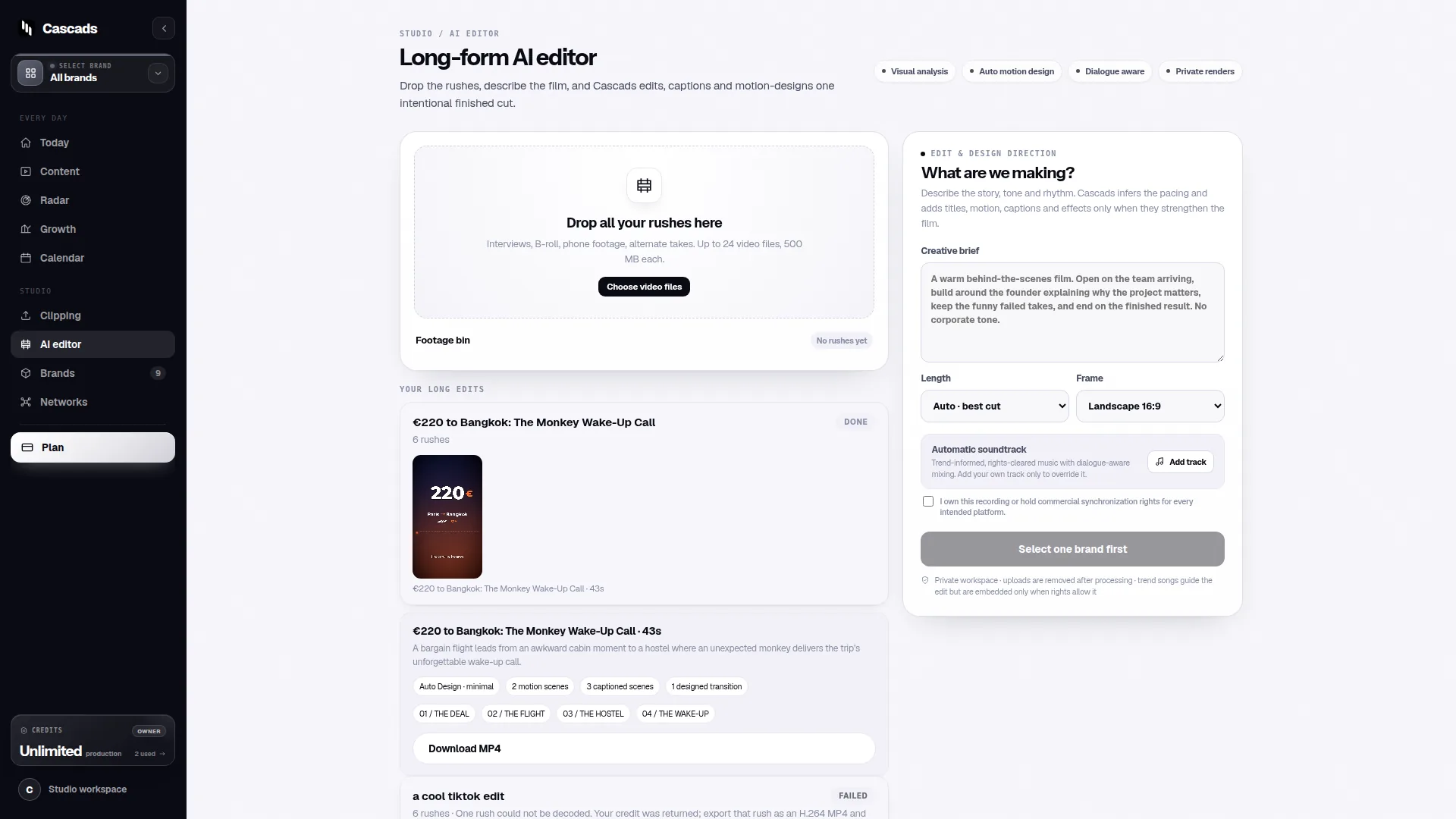
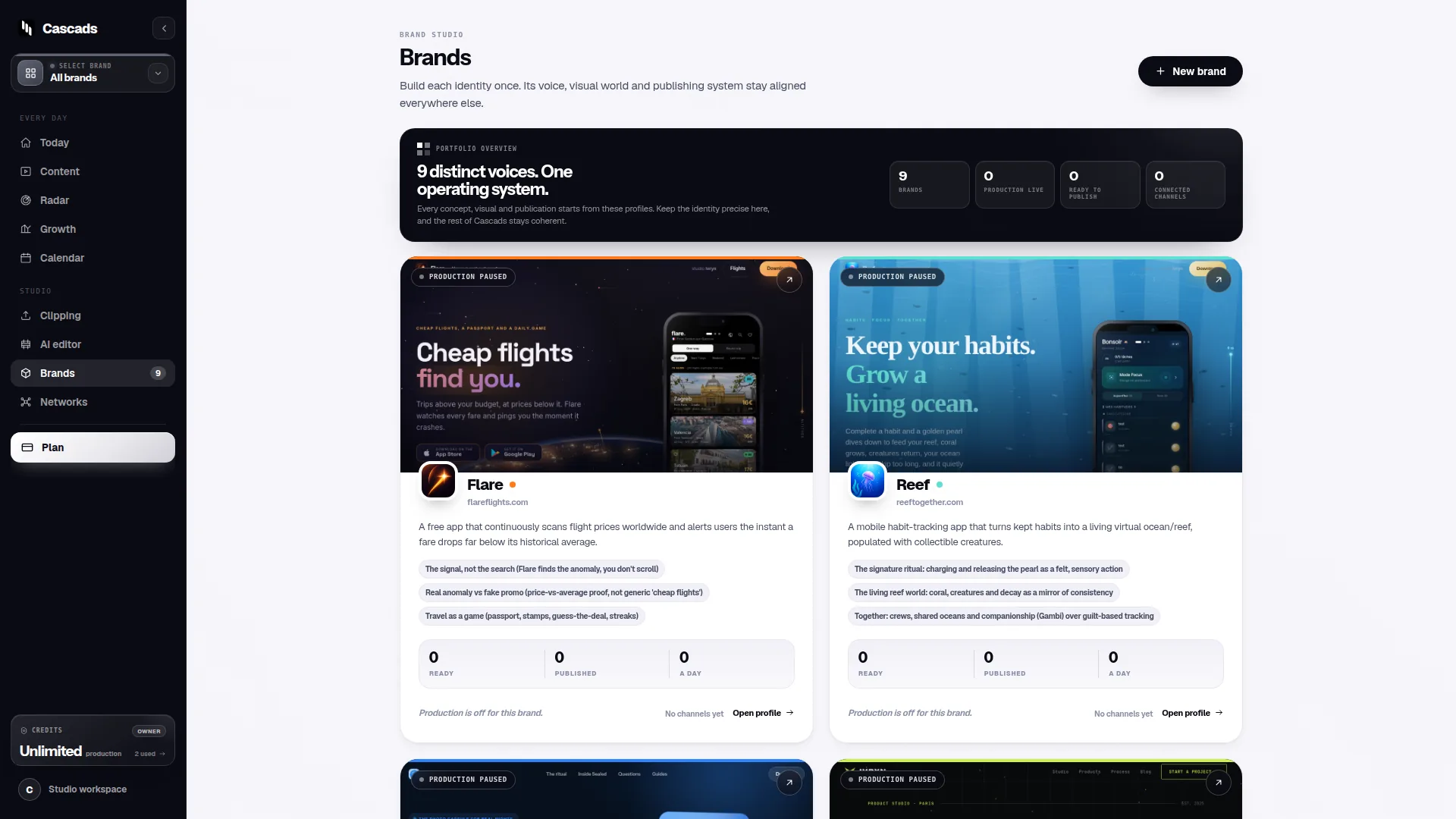
The realistic starting point is a reusable brand profile: a stored description of tone, visual style, offers and audience that a tool can draw on repeatedly instead of starting from a blank page each time. Cascads, an IVRYN product built for this exact workflow, structures its content generation around that idea - a profile is set up per brand and then reused to produce text posts, vertical video and carousels. That reuse is where the time savings actually come from, not from removing human judgment entirely.
What automation can and cannot do across formats
Format matters more than most people expect when they first look at automation. A short text post, a vertical video and a carousel are not interchangeable outputs; each has its own constraints around length, pacing, image count and platform-specific expectations. A tool that generates all three from one profile is solving a production problem, not a publishing problem - those are separate steps with separate risks.
This distinction is worth sitting with before adopting any workflow. Generation is the part that scales well because it is largely computational. Publishing does not scale the same way, because it depends on things outside the tool's control: which network is involved, what media format is being sent, what permissions the connected account actually has, and whether the platform's own review or approval processes allow the post through. Two brands with identical content can have very different publishing outcomes simply because their account permissions differ.
Where human review still belongs
A common misconception is that automation and review are opposites - that the more automated a workflow becomes, the less a person needs to look at the output. The opposite is closer to true. As volume increases, review becomes more important, not less, because the same brand profile is now producing more variations of content that could drift in tone, misstate an offer or use an image in a way that doesn't fit the brand.
Generated marketing content, regardless of the tool that produced it, should be treated as a draft until a person has confirmed it fits the moment: a caption that reads fine in isolation might land badly next to current events, or a carousel might reuse an outdated price. Building a review step into the workflow - not as an afterthought, but as a defined stage before anything goes live - is what keeps automation from producing embarrassing or inaccurate posts at scale instead of just producing more posts.
A worked example: three brands, one small team
Consider a hypothetical two-person agency handling social accounts for three small brands, each with its own Instagram, TikTok and LinkedIn presence. This is an illustrative example, not a case study, but it maps out how the pieces fit together in practice.
In this scenario, each brand gets its own profile capturing tone, key offers and visual guidelines. The team schedules a weekly batch: a handful of text posts, a couple of short vertical videos and one carousel per brand. Rather than approving everything at once, they route the batch through a review pass where one person checks tone and accuracy before anything is queued.
Publishing is where the plan has to stay flexible. TikTok video permissions might be fully connected for one brand but not another; a LinkedIn carousel might need manual upload if the connected account lacks the right posting permission; Instagram might apply its own review before a video actually appears. The team doesn't treat 'scheduled' as the same thing as 'published' - they check each network's actual status rather than assuming automation guarantees delivery.
A practical decision checklist
Before relying on any automation setup, including Cascads, it helps to work through a short checklist rather than assuming every format and network will behave the same way.
This isn't exhaustive, but it covers the questions that most often trip up small teams new to automated production.
- Does the brand profile actually reflect current offers, pricing and visual guidelines, or is it stale?
- Is there a defined human review step before content goes live, not just before it's scheduled?
- Have account permissions been checked per network and per format - text, video, carousel?
- Is there a fallback plan for formats or networks where direct publishing isn't approved or supported?
- Who is responsible for confirming a post actually published, versus just queued?
Setting realistic expectations for social media automation for creators
The most useful mental model here is that automation compresses the production side of the workflow and leaves the publishing side largely as it was. That's a meaningful improvement for teams stretched thin across brands, but it isn't a system that removes oversight or guarantees that content reaches an audience the moment it's generated.
Teams that get the most out of tools like Cascads tend to treat the brand profile as a living document that needs periodic updates, treat review as a required stage rather than optional polish, and treat publishing status per network as something to verify rather than assume. None of that is a limitation unique to any one product - it reflects how social platforms themselves operate, with permissions and approval processes that sit outside any single tool's control.
Frequently asked questions
Can social media automation for creators fully replace manual posting?
No. Automation tools can generate text, video and carousel content from a reusable brand profile, but direct publishing still depends on the network, the media format, the connected account's permissions and that platform's own approval process. Manual steps or checks are often still needed, especially for formats or accounts without full posting permissions.
Does automated content still need human review before it's published?
Yes. Generated marketing content should be reviewed by a person before publication regardless of which tool produced it, since automated output can drift from current brand facts, pricing or tone even when it's built from an up-to-date profile.
Why might a scheduled post not actually appear on a platform?
Scheduling and publishing are different steps. A post can be generated and queued successfully but still fail to go live because of account permission gaps, unsupported media formats for that network, or the platform's own external approval process rejecting or delaying it.
Sources and further reading
These resources provide the wider reference frame. Product statements on this page are limited to the public information provided by Cascads.