What a social media manager for gym actually needs to juggle
Anyone acting as a social media manager for gym accounts is rarely working with just one brand voice. A single facility might run a main studio account, a nutrition or supplement side-brand, and a founder's personal profile, each needing its own tone, offers, and visual identity even though the underlying business is the same. The practical challenge is less about creativity and more about consistency: keeping class schedules, membership promotions, and trainer spotlights aligned with how the gym actually presents itself, week after week, across every account it runs.
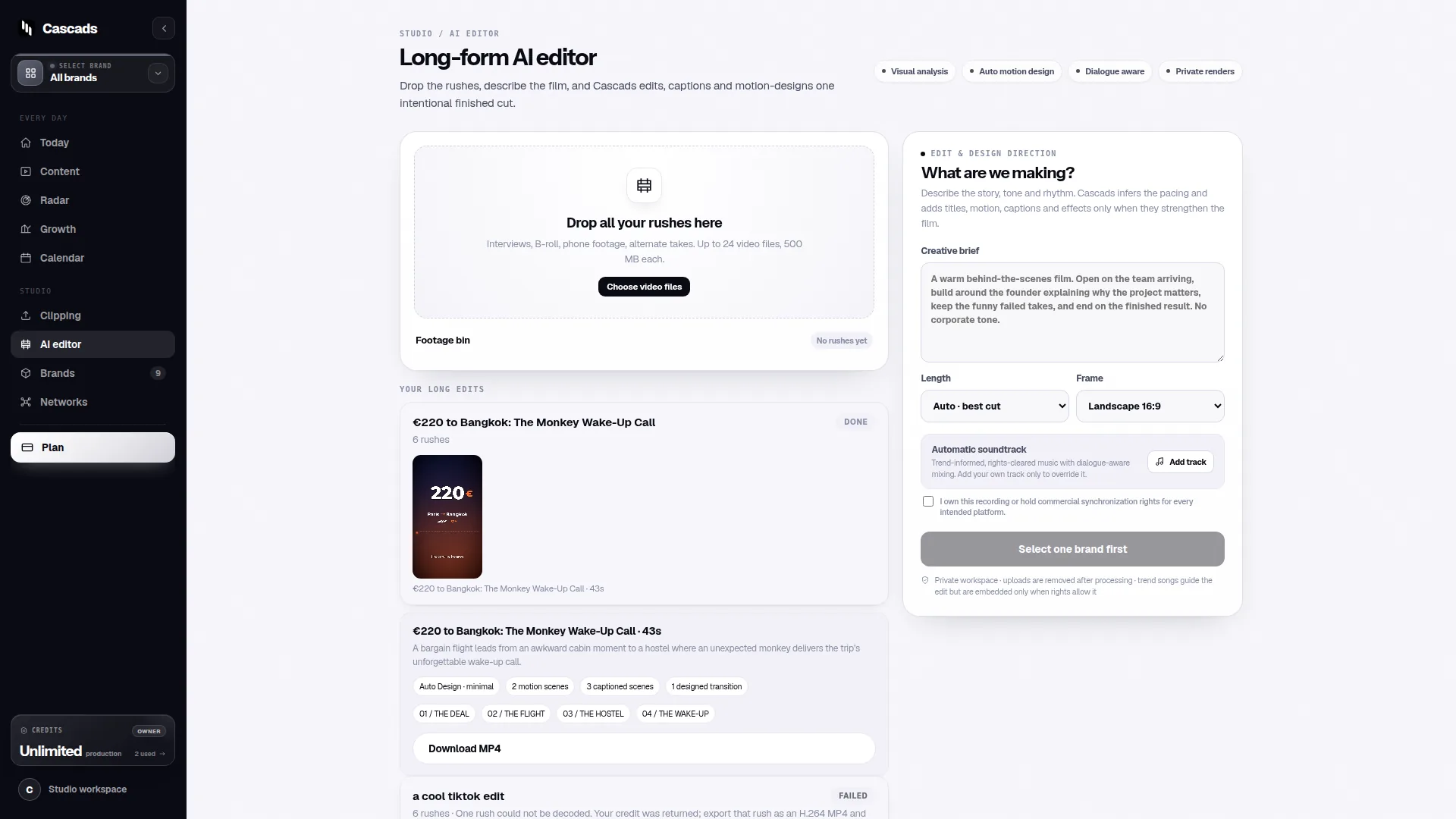
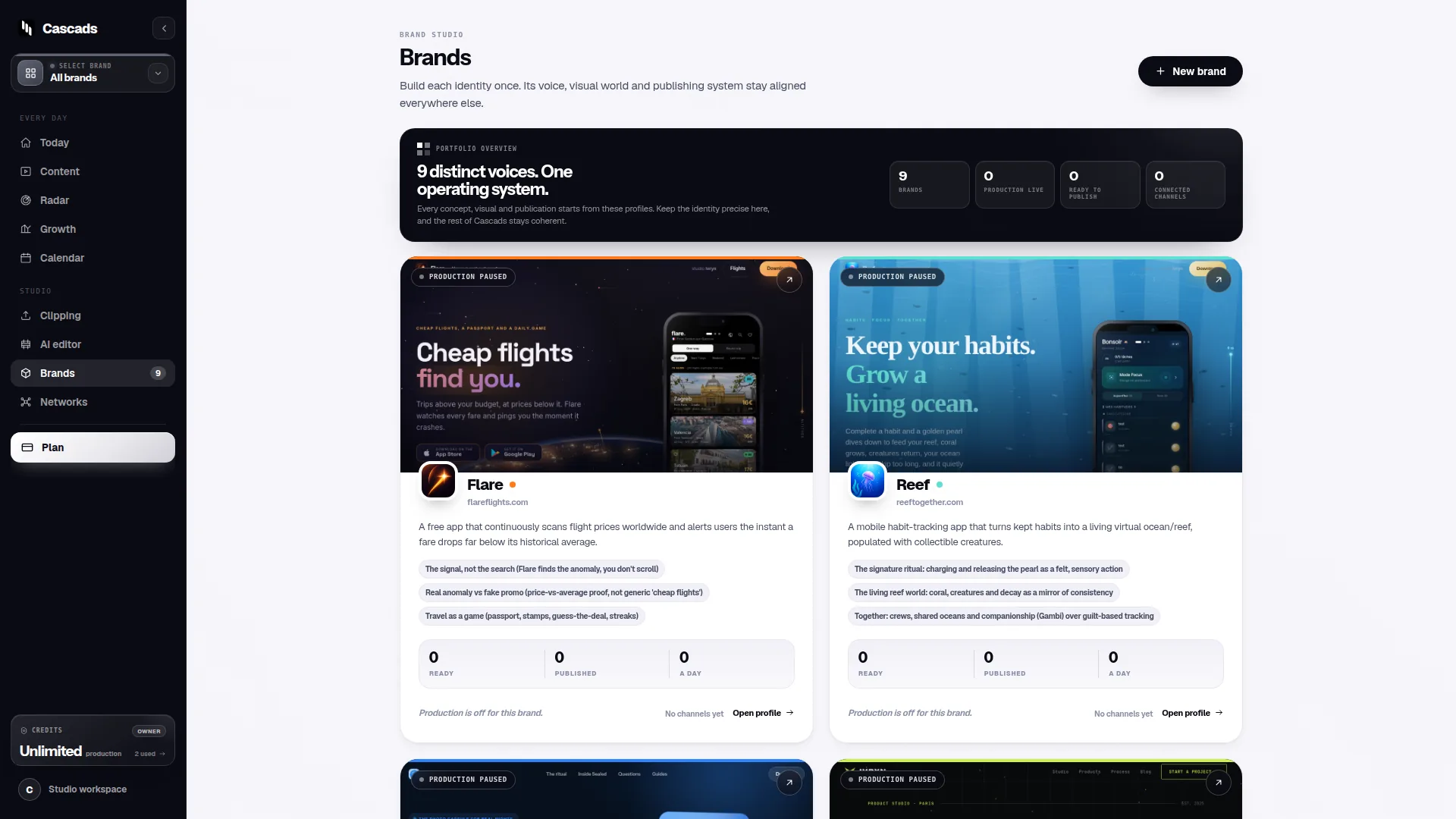
This is where a defined brand profile becomes useful rather than optional. Instead of rewriting context every time a post is drafted, a reusable profile capturing tone, target member, and recurring themes (transformation stories, class types, seasonal promotions) lets a manager or a small team produce content faster without drifting off-brand. Cascads, an IVRYN product built for social content production and scheduling, is built around this idea of a reusable brand profile, which is one reason it comes up in conversations about managing several gym-related accounts at once rather than a single page.
- Separate brand profiles for the main gym, any sub-brands, and personal trainer accounts
- Recurring content themes tied to the actual weekly schedule, not generic fitness tropes
- A shared calendar so promotions don't collide across accounts
Why multi-format production matters for a gym's social presence
Gyms sell an experience, and that experience is communicated very differently depending on format. A vertical video of a class in progress conveys energy that a static graphic cannot; a carousel breaking down proper form for a lift works better as a swipeable sequence than a single caption; a straightforward text post announcing a holiday schedule change doesn't need production value at all. A social media manager for gym content has to think in formats, not just topics.
Producing all three formats manually, for every theme, across every network, is where most small teams get stuck - not because the ideas run out, but because the production time does. Tools that can generate text posts, vertical videos, and carousels from the same underlying brand profile reduce that bottleneck, but they don't remove the judgment calls about which format actually fits a given piece of content. A class-recap idea might work as video on one week and as a carousel the next, depending on what footage or design assets are available.
The point isn't to produce more content for its own sake. It's to make sure the format matches the message, so a member scrolling past a class-schedule change isn't watching a video for information that would be clearer as three lines of text.
Human review is not optional, even with faster production
Speeding up production doesn't remove the need for a person to check what's about to go out. This matters more for gyms than it might for some other business categories, because gym content often touches things that carry real consequences if mishandled: member testimonials, before/after imagery, health or nutrition claims, pricing and promotional terms, and liability language around classes or equipment. Generated marketing output, whatever tool produces it, remains subject to human review before publication, and that review step is where a gym's specific risk areas actually get caught.
In practice this means someone with authority over the brand - not necessarily the person drafting content - should be looking at anything mentioning results, health outcomes, or pricing before it goes live. A caption implying guaranteed weight loss, or an outdated membership price left in a carousel, is a much bigger problem for a gym than a slightly off-tone post. Building that check into the workflow, rather than treating it as a bottleneck to route around, protects the gym from the kind of avoidable errors that don't show up until a member points them out publicly.
Format-aware publishing and its practical limits
Even after content is drafted, approved, and scheduled, getting it onto the platform isn't automatically guaranteed. Direct publishing depends on the network involved, the specific media format, the account's granted permissions, and the external platform's own approval processes. A vertical video destined for one network might need a different aspect ratio or length than the same concept posted elsewhere, and a carousel format that's straightforward on one platform may not be supported the same way on another.
For a gym running accounts across multiple networks - a video-first platform for class energy, an image-first one for facility and community photos, plus a business page for schedule and pricing updates - this means building in the assumption that not everything will publish identically or instantly everywhere. Cascads' own guidance on this, including its social media publishing integration checklist, frames this as a planning issue: know ahead of time which formats and permissions apply to each connected account, rather than discovering a gap when a scheduled post fails to go out.
Treating platform approval as a variable rather than a formality also protects timing-sensitive content, like a same-day class cancellation or a flash promotion, which needs a fallback communication channel if a scheduled post doesn't clear in time.
Worked example: a small gym's weekly content flow
Consider a hypothetical single-location gym with a main brand account and a supplement side-brand, run by one social media coordinator with occasional input from the owner. This is an illustrative example, not a case study or observed result.
On Monday, the coordinator drafts the week's themes from the class schedule: a Tuesday HIIT class as vertical video, a Wednesday form-technique breakdown as a carousel, and a Friday text post about a schedule change for the long weekend. Each draft pulls from the gym's brand profile so tone and visual style stay consistent with prior weeks. Before anything is queued, the owner reviews the HIIT video caption (which references a member's progress) and the carousel's technique claims, catching a phrasing issue that could read as medical advice and adjusting it. Once approved, posts are scheduled per platform, with the coordinator checking beforehand which accounts have video permissions enabled and which formats each connected network currently supports, per the gym's own publishing approval workflow.
This sequence - draft with brand context, produce in the right format, route through human review, then check platform-specific publishing constraints - is the practical shape of the job, regardless of which tools are used to execute it.
Building an approval workflow that fits a small team
Cascads' guidance on social media approval workflow points at a useful structural question for any gym team, even one that isn't using that specific product: who has final sign-off, and on what categories of content? A gym doesn't need a heavy multi-stage approval chain for every post, but it benefits from having at least one clear checkpoint for anything involving claims, pricing, or imagery of members.
Smaller teams often skip this because it feels like unnecessary process, but the cost of skipping it tends to show up later - a promotional price that never got updated, a testimonial posted without explicit consent, or a claim that draws a complaint. A lightweight approval step, even just one person glancing at scheduled posts each week, is usually enough to catch these before publication rather than after.
Frequently asked questions
Does a social media manager for gym need different content for every platform?
Not identical content, but format-appropriate content. The same idea, like a class recap, may work as vertical video on one platform and as a short text update on another, since not every network handles every format the same way, and account permissions or platform approval can affect what actually publishes.
Can AI-generated gym content be published without anyone checking it first?
No. Generated marketing content, regardless of the tool that produced it, should go through human review before publication. This is especially important for gyms because posts often touch health claims, member imagery, and pricing, all of which carry real consequences if published inaccurately.
Why would a gym need a reusable brand profile instead of writing each post from scratch?
A reusable brand profile captures a gym's tone, audience, and recurring themes once, so content stays consistent across accounts and formats without re-establishing context for every post. This is particularly useful for gyms running multiple accounts, such as a main studio brand and a side-brand, that still need to feel like one business.
Sources and further reading
These resources provide the wider reference frame. Product statements on this page are limited to the public information provided by Cascads.