What social media management york actually involves
Anyone researching social media management york, whether as a York-based business owner, a regional agency, or a team supporting several local brands, is usually trying to answer a practical question: how do you keep content consistent, on-brand, and compliant with each platform's rules without burning hours on repetitive manual work? The phrase covers a wide range of activities, from planning and writing captions to producing video and imagery, scheduling posts, and reviewing what actually goes live.
The honest answer is that 'management' is less about a single tool and more about a repeatable workflow. Teams that struggle usually lack a clear separation between three stages: producing content that reflects a brand's voice and assets, reviewing that content before it reaches an audience, and publishing it in a format each network actually accepts. Treating these as one blurred step is where most delays and mistakes creep in.
Brand context: why generic content workflows break down
A recurring problem for small teams and agencies handling multiple brands is that generic posting tools treat every account the same way. In practice, each brand has its own tone, visual identity, product details, and audience expectations. Without a structured way to store and reuse that context, every new post starts from a blank page, and consistency depends entirely on whoever happens to be writing that day.
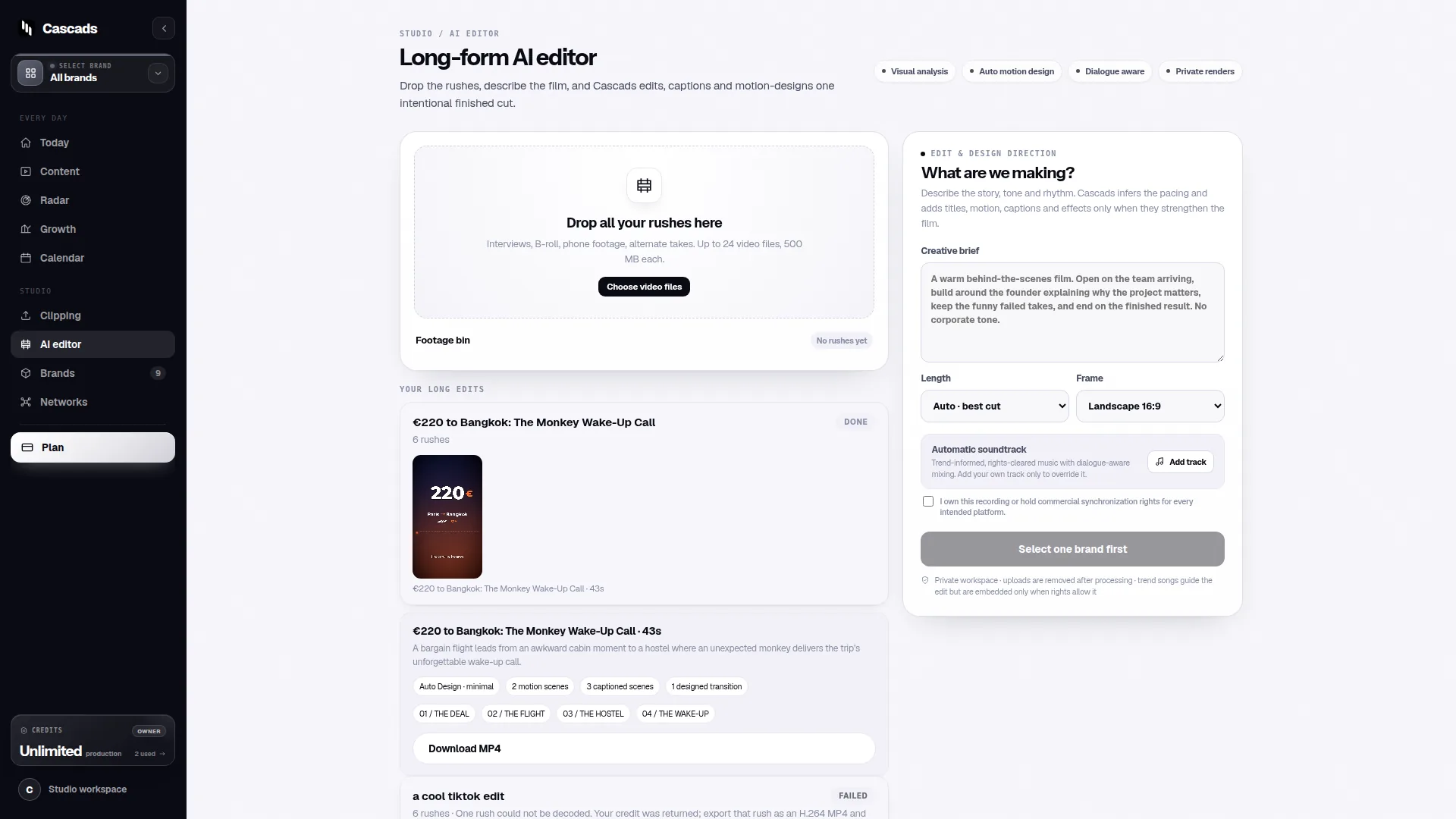
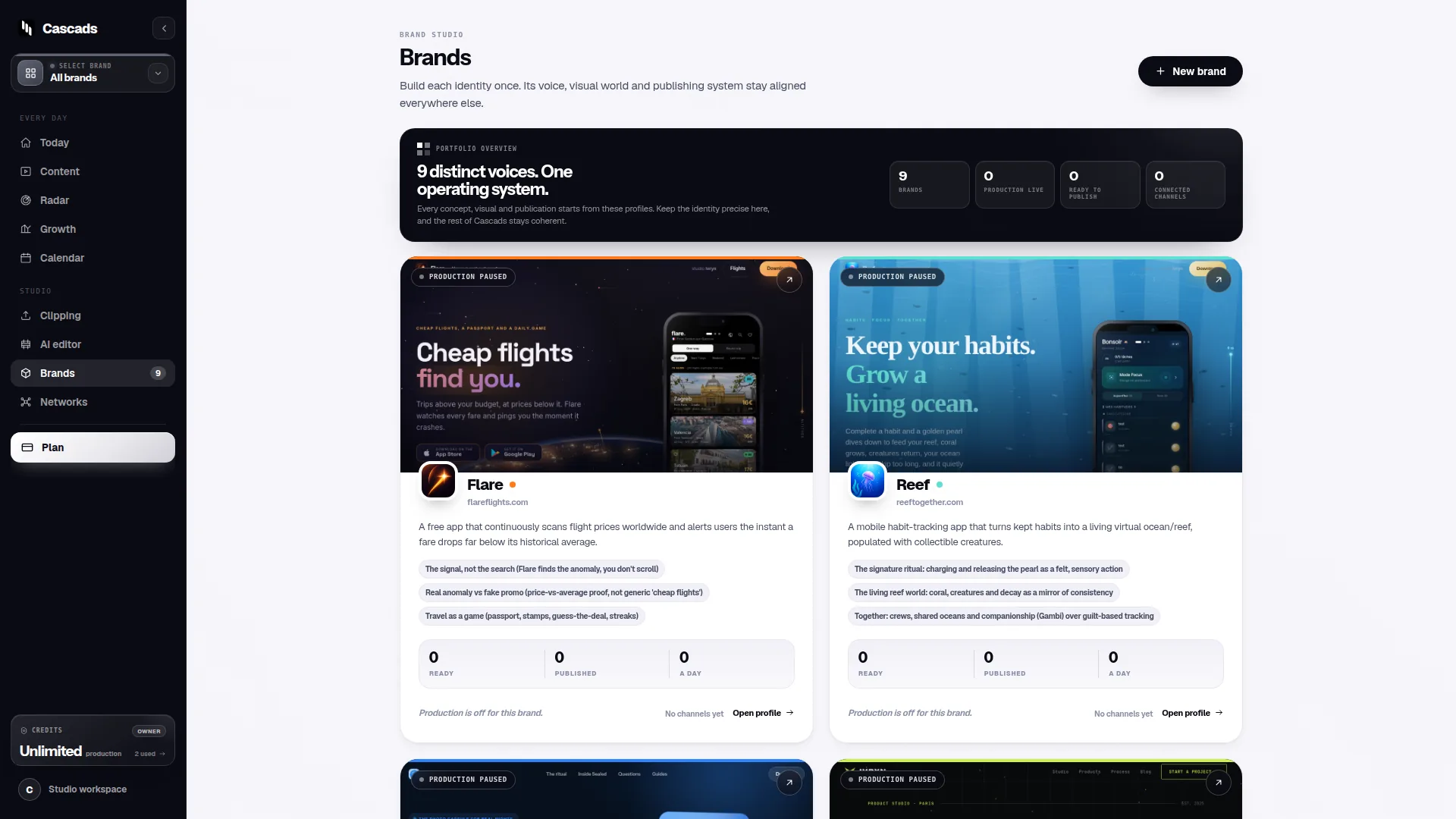
This is where a reusable brand profile becomes useful rather than optional. Cascads, an IVRYN product built for social content production and scheduling, works from a profile defined per brand so that generated text posts, vertical videos, and carousels draw on the same reference material each time. That doesn't remove the need for judgment, but it does reduce the amount of re-explaining required every time content is produced, which matters most when one person or small team is juggling several client accounts.
Multi-format production and why it complicates management
Social media management york-style operations, small teams handling multiple local or regional clients, rarely deal with a single content format. A campaign might call for a short vertical video for one platform, a carousel of images for another, and a plain text update for a third. Each format has different production requirements, different editing tools, and different audience expectations, which multiplies the coordination work compared with managing a single feed.
Producing multiple formats from the same underlying brand material, rather than starting each format from scratch, is one practical way to keep output consistent without duplicating effort. That said, format generation is only part of the picture. The format that gets produced still has to match what the destination platform will actually accept, and that constraint doesn't disappear just because the content was generated efficiently.
- Vertical video for short-form feeds
- Carousels for multi-image storytelling
- Text posts for updates and announcements
- Each format may need different review criteria before it's approved
Human review: the step that shouldn't be skipped
It's worth being direct about this: generated marketing output, regardless of how it was produced, remains subject to human review before publication. Automation can speed up drafting and formatting, but it cannot reliably judge tone in a sensitive moment, catch a factual error specific to a local market, or confirm that a claim is still accurate. For teams managing several brands at once, skipping review to save time is a common shortcut, and it's usually the one that causes the most visible mistakes.
A workable review step doesn't need to be elaborate. It needs a clear owner, a short checklist covering brand voice, accuracy, and platform fit, and a defined point where content is either approved or sent back. Formalizing that step, even briefly, tends to catch far more problems than relying on someone noticing an error after the fact.
Format-aware publishing: where plans meet platform reality
Even well-produced, well-reviewed content can stall at the final step if publishing isn't format-aware. Direct publishing to a network depends on several factors outside the content itself: which network is involved, what media format it supports, what permissions the connected account has, and whether the platform has approved the integration being used. None of these are fixed; they vary by platform and can change over time, so treating any current publishing capability as permanent is a mistake.
This is a core reason social media management york efforts benefit from planning publishing constraints in early, not as an afterthought. A brand profile and multi-format production pipeline are only useful if the resulting content can actually reach its destination in the required form. Teams that map out format and permission requirements per platform tend to avoid last-minute surprises when a post is ready but can't go live as planned.
A worked example: planning a week of content for two brands
Consider a hypothetical small agency, this is an illustrative example, not a case study, managing two client brands with different needs: a local café wanting casual, frequent updates, and a professional services firm wanting more polished, less frequent posts. In this example, the team would first confirm each brand's profile details, tone, key offers, and visual assets, are current before generating anything.
Next, they'd decide which formats suit each platform for the week: a vertical video for the café's short-form video channel, a carousel introducing a service for the firm's professional network, and text updates for both on general-purpose channels. Each piece would go through a brief review pass checking tone and accuracy against the brand profile. Finally, before scheduling, they'd confirm which pieces can be published directly given current account permissions and platform format support, and which need manual posting instead.
- Confirm brand profile details are current
- Choose formats matched to each platform
- Review each piece for tone and accuracy
- Check publishing permissions and format support before scheduling
Frequently asked questions
What does social media management york typically include for small teams handling multiple brands?
It generally includes producing content in several formats, such as text, video, and carousels, based on brand-specific context, reviewing that content before it's published, and confirming it can be published in a format each platform accepts.
Can generated social content be published automatically without review?
Generated marketing output should still go through human review before publication, since automated tools cannot reliably judge every tonal, factual, or contextual detail on their own.
Why does direct publishing to a platform sometimes fail even when content is ready?
Direct publishing depends on factors like the specific network, the media format used, the connected account's permissions, and whether the platform has approved the relevant integration, any of which can prevent a post from going live directly.
Sources and further reading
These resources provide the wider reference frame. Product statements on this page are limited to the public information provided by Cascads.