What social media automation apps are actually automating
Social media automation apps rarely automate the whole job. In most workflows, what gets automated is the repetitive middle: drafting variations of a post, resizing a video for different feeds, or queuing content against a calendar so a person doesn't have to log into five platforms separately. The creative direction and the final judgment call about what goes live still sit with a human.
This matters because the term 'automation' can suggest something closer to unattended publishing than what most teams actually want. A small team managing several brands typically wants speed on the repetitive parts and control on the parts that carry reputational risk. Understanding which category a given task falls into is the first useful filter when evaluating any tool in this space.
- Repetitive tasks: format conversion, scheduling, basic copy variation
- Judgment tasks: brand voice fit, timing, final publish approval
Why brand context changes the output
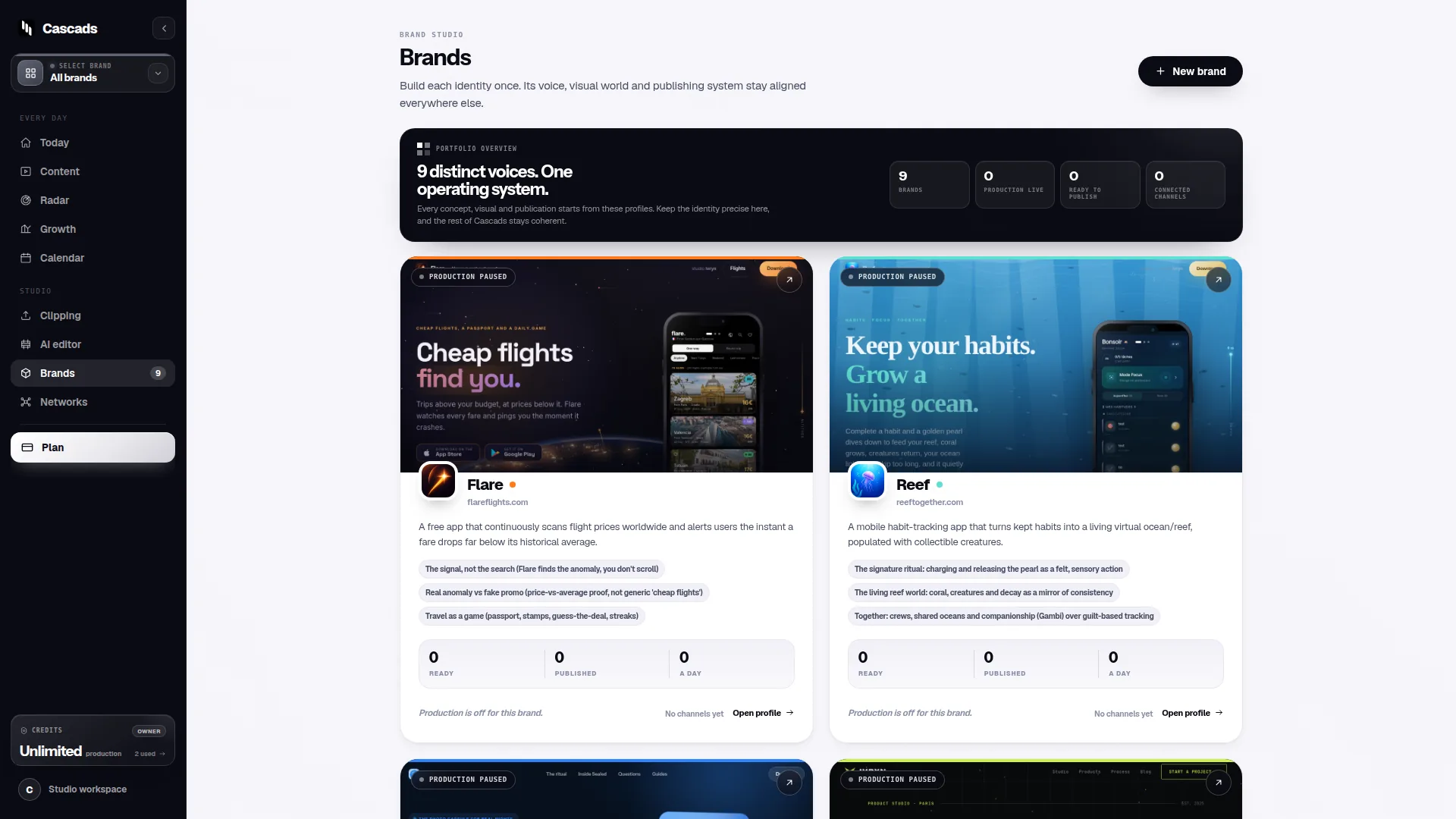
A tool that generates content without any memory of a brand's voice, audience or visual style tends to produce output that needs heavy rewriting before it's usable. This is one reason reusable brand profiles matter in practice: they let a team set tone, imagery preferences and other constraints once, then reuse them across many pieces of content instead of re-explaining the brand every time.
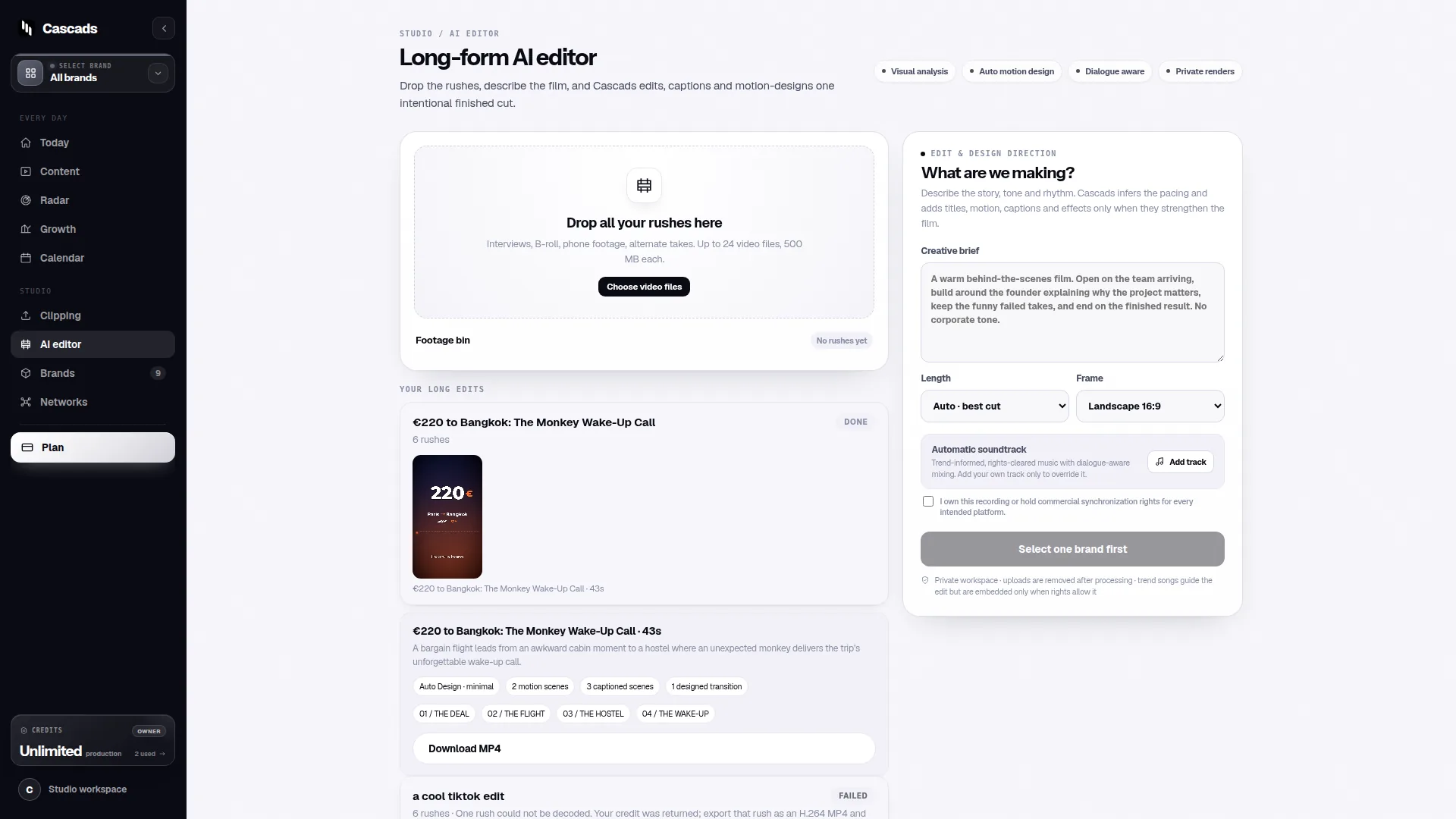
Cascads, for example, is built around this idea for agencies and teams handling multiple brands: content generation draws on a profile built for each brand rather than starting from a blank prompt each time. That's a narrow, specific claim worth noting because it directly affects how much editing a team should expect to do downstream - profile-driven generation tends to need less correction than generic, context-free generation, though it still needs review.
Multi-format production and its practical limits
Producing text posts, vertical video and carousels from the same underlying brand material sounds efficient, and it can be, but each format has its own constraints that automation doesn't erase. A carousel needs a different pacing than a single image post; a vertical video has aspect-ratio and duration considerations that a repurposed horizontal clip won't satisfy well. Automation apps can generate a first pass in each format, but matching that pass to what a given network actually rewards or accepts is still a judgment call.
Teams evaluating automation apps for social media automation apps should ask specifically which formats a tool handles natively versus which it merely resizes or reformats from a single source. The difference shows up in quality: a video generated with format-specific structure in mind tends to need less rework than one that's simply cropped from something else.
Why human review stays in the loop
Generated marketing content, regardless of how well it's grounded in brand profile data, benefits from a review step before publication. This isn't a limitation unique to any one tool; it reflects the reality that automated generation can miss context a human would catch immediately - a seasonal sensitivity, a competitor mention, a claim that needs softening.
Cascads' public approval workflow guidance treats this review step as a defined stage rather than an afterthought, which is a useful model regardless of which tool a team uses: build review into the pipeline as a checkpoint, not as a fallback for when something goes wrong. Teams that skip this step to save time tend to pay for it later in corrections or retractions.
- Check brand voice and factual accuracy before scheduling
- Confirm claims and comparisons are still current at publish time
- Have a named reviewer, not an ambient 'someone will check it'
Publishing is format-aware, network-aware, and permission-aware
Even after content is approved, direct publishing from an automation app to a social network depends on several things outside the tool's control: which network is involved, what media format is being posted, what permissions the connected account has, and whether the platform's own approval process allows it. This is a structural constraint, not a quality issue with any particular app - platforms change their APIs, permission models and content policies on their own schedules.
A practical consequence is that teams should not assume every format will publish directly to every network at all times. Cascads' public integration checklist reflects this by treating publishing readiness as something to verify per network and per format rather than assuming universal compatibility. Before relying on direct publishing for a new format or a newly connected account, it's worth confirming permissions and format support rather than discovering a gap at send time.
A worked example: evaluating a tool for a five-brand agency
Here's a hypothetical, for illustration only. Imagine an agency managing five client brands across Instagram, TikTok and LinkedIn, currently producing content manually in a shared drive with a rotating set of freelancers. They're considering an automation app and want a simple way to decide if it fits.
Rather than judging the tool on volume of output alone, they could walk through four questions: Does it let us set up a distinct profile per brand, or will content drift toward a generic voice? Which formats does it actually generate versus merely resize? What does the review step look like before something goes live, and who owns that step on our team? And for each network we use, what does the tool tell us about publishing permissions and approval requirements before we rely on direct publishing? Answering these before committing to a tool tends to surface real fit issues faster than a general features comparison would.
- Example checklist item: one profile per brand, not one shared voice
- Example checklist item: native format generation vs. resized reuse
- Example checklist item: named reviewer and approval step per brand
- Example checklist item: per-network publishing permission check
Where social media automation apps fit in a small team's workflow
For a small team or agency, the honest way to think about social media automation apps is as a way to compress the repetitive parts of content production, not as a replacement for editorial judgment or platform-specific knowledge. The apps that work best in practice tend to be the ones that let a team encode brand context once, generate in the formats they actually need, keep a clear review step, and treat publishing as conditional on network and permission rather than guaranteed.
Cascads operates within that frame: it's built for producing and scheduling social content from a brand profile, with generated output still subject to review and with direct publishing bounded by network, format and permission constraints. That's a specific, bounded description of what the product does - not a claim that automation removes the need for a team's own judgment about what and when to publish.
Frequently asked questions
Do social media automation apps publish content without any human involvement?
Most rely on a human review step before publication, and even after approval, direct publishing depends on the network, media format, connected account permissions and the platform's own approval process - so full unattended publishing shouldn't be assumed.
Why does a reusable brand profile matter for automation tools?
A brand profile lets a tool generate text, video or carousel content that already reflects a brand's tone and style, which typically reduces the amount of manual rewriting needed compared with generating from generic, context-free prompts each time.
Can every content format be published directly to every social network through an automation app?
No - publishing capability varies by network, media format, account permissions and external platform approval, so it's worth confirming format and permission support for a specific network before relying on direct publishing.
Sources and further reading
These resources provide the wider reference frame. Product statements on this page are limited to the public information provided by Cascads.