What a social media management internship is actually training you to do
A social media management internship is less about learning one platform and more about learning a repeatable process: understanding a brand well enough to write and design for it, producing content in the formats a given network expects, and moving that content through a review step before it goes live. Interns who treat the role as 'posting things' tend to plateau quickly, because the real skill being built is judgment about brand fit and publishing constraints, not button-pressing.
This matters because most small teams and agencies rotate interns across several brand accounts at once. Each brand has its own voice, visual identity, and audience expectations, so the internship is really an exercise in switching context cleanly between clients or product lines without letting one brand's tone leak into another's feed.
Brand context is the foundation, not an afterthought
One of the most useful habits an intern can build early is treating each brand as a distinct reference point rather than working from memory or a shared house style. In practice this means keeping notes, examples, and prior approved posts for each brand close at hand, and checking new drafts against that reference before submitting them for review.
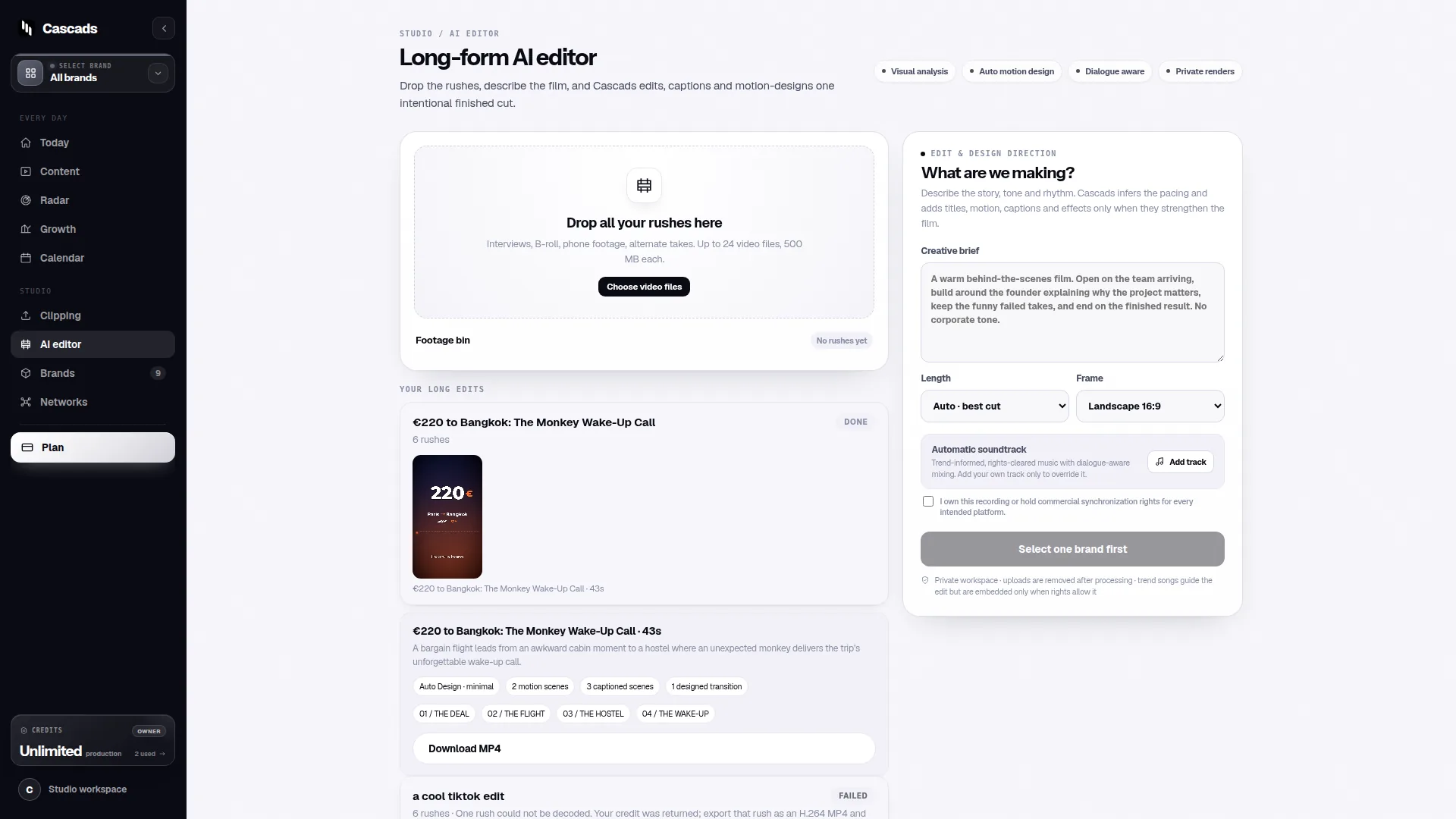
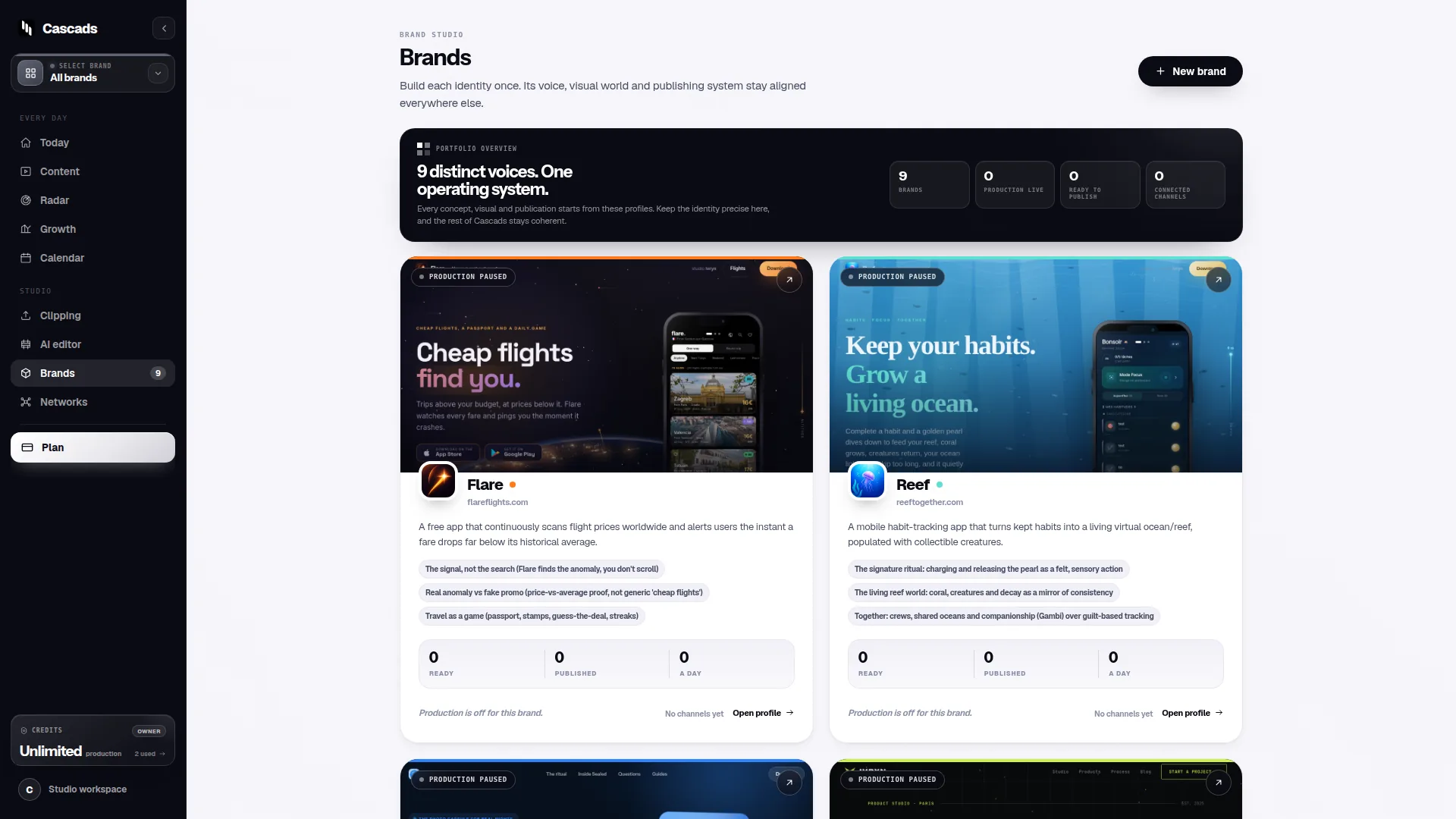
Tools built for agencies increasingly support this by letting a brand's voice, visuals, and preferences be stored once and reused across posts, rather than re-explained every time. Cascads, an IVRYN product used for producing and scheduling social content, works this way: it generates text posts, vertical videos, and carousels from a profile set up per brand, so an intern drafting for five clients isn't starting from a blank page for each one. That doesn't remove the need for judgment, though, since a stored profile is a starting point, not a substitute for actually understanding what the brand is trying to say this week.
- Keep a short reference sheet per brand: tone words, banned phrases, visual do's and don'ts
- Compare new drafts against the last few approved posts for that brand, not just the guidelines document
- Flag anything that feels like a judgment call rather than guessing and moving on
Multi-format production: why one caption doesn't become three posts automatically
A common misconception in early social media roles is that a single piece of content can be mechanically reshaped for every format and network. In reality, a text post, a vertical video, and a carousel each have different pacing, different amounts of text that make sense, and different expectations from the audience watching or reading them. An intern's job is often to take one idea and rebuild it appropriately for each format rather than just resizing the same asset.
This is where understanding format constraints becomes a practical skill rather than a design preference. A carousel can carry more sequential detail than a single image post. A vertical video needs a hook in the first seconds because attention drops off quickly. A text-only post lives or dies on the first line before a 'see more' cutoff. Learning to recognize which format suits which idea, and adjusting the content accordingly, is one of the more transferable skills from this kind of internship.
Human review is a checkpoint, not a formality
Whatever tools are used to draft or generate content, marketing output should go through human review before it's published. This is true whether the draft was written entirely by hand or assembled with help from an automated tool, and it's a principle worth internalizing early rather than treating the review step as a rubber stamp on the way to publishing.
For an intern, this means submitting drafts in a state that makes review efficient: clear about which brand and platform the post targets, flagged if anything is uncertain (a claim, a date, a tagged account), and not treated as final just because it looks polished. Review workflows that document who approved what and when, such as the one described in Cascads' approval workflow guide, exist precisely because content decisions get revisited later and someone needs to be able to trace how a post was signed off.
It's worth being honest with yourself and your supervisor about where you're not sure. An internship is a low-stakes place to ask 'should this go out as written' before a post reaches an audience, rather than a high-stakes place to find out afterward that it shouldn't have.
Format-aware publishing: why the same post doesn't behave the same everywhere
Even after a post is approved, whether and how it actually publishes depends on factors outside the content itself: the network's current rules, the media format being sent, the permissions attached to the connected account, and whether the platform's own approval processes allow it through. This is a source of confusion for people new to the field, who sometimes assume that once a post is 'ready,' it will go live automatically and identically everywhere.
A practical habit here is checking, before scheduling, whether the target account has the permissions a given post needs (for example, tagging, certain video lengths, or link placement) and whether the network has any pending approval step of its own. Cascads' publishing integration checklist covers this kind of check systematically, and the underlying idea applies regardless of which tool a team uses: direct publishing is conditional, not guaranteed, and part of the job is knowing what could block a post before it's scheduled rather than after.
- Confirm account permissions for the specific format (video length, tagging, link stickers) before scheduling
- Check whether the destination network has its own review or approval delay
- Have a fallback plan (manual posting, resubmission) if automated publishing doesn't go through
A worked example: planning one week of content for two brands
Imagine an intern responsible for two client brands, a coffee roaster and a small fitness studio, and asked to plan one week of posts. For the coffee roaster, the brand profile notes a warm, conversational tone and heavy use of product photography; the plan calls for three text posts and one carousel walking through a new bean's tasting notes. For the fitness studio, the profile notes a punchier tone and video-first content; the plan calls for two vertical videos and one text post promoting a class schedule change.
Before submission, the intern checks each draft against the brand's reference sheet, confirms the carousel doesn't exceed the platform's slide guidance, and flags the class schedule post because it contains a specific date that needs double-checking with the client. After human review, the reviewer approves everything except the schedule post, which needs a date correction. Once corrected and re-approved, the intern checks that the fitness studio's account has video permissions enabled before scheduling the vertical videos, since a permissions gap discovered after scheduling would have delayed the whole week's plan.
This example is illustrative only, not a report of an actual campaign or outcome, but it shows how brand context, format choice, review, and publishing checks connect in an ordinary week rather than existing as separate boxes to tick.
What this means for evaluating a social media management internship
If you're assessing whether a program will teach you something durable, look for whether it exposes you to the full cycle described above: understanding a brand deeply enough to draft for it, choosing formats deliberately rather than defaulting to one, going through a real review step with feedback, and seeing what happens (or doesn't) when content reaches the publishing stage. An internship that only involves drafting captions in isolation, without exposure to review or publishing constraints, will teach less than one where you see a post through from idea to (attempted) live post.
It's also reasonable to ask what tools the team uses and why, since a well-chosen tool for reusing brand context or tracking approvals can make the learning curve gentler, but the underlying skills (brand judgment, format awareness, review discipline, and understanding platform limits) are what transfer to any future role, tool or no tool.
Frequently asked questions
Does a social media management internship require knowing how to code or use automation tools?
No. The core skills are understanding brand voice, choosing the right format for an idea, and following a review process. Familiarity with scheduling or content tools is helpful but secondary to those judgment skills, and most teams will train interns on their specific tools.
Why doesn't an approved post always publish immediately across every platform?
Publishing depends on factors beyond content approval, including the specific network's current rules, the media format used, the permissions attached to the connected account, and any approval process the platform itself applies. An approved post can still be delayed or blocked at that stage, which is why checking these conditions before scheduling is a useful habit.
What should an intern do if they're unsure whether a post is ready to publish?
Flag the uncertainty explicitly to a supervisor or reviewer rather than guessing. Human review exists specifically to catch these judgment calls, and raising a question before publishing is far lower-risk than raising it after a post has already gone live.
Sources and further reading
These resources provide the wider reference frame. Product statements on this page are limited to the public information provided by Cascads.