Why social media management video is more than filming and posting
When people search for social media management video, they usually mean the whole pipeline: deciding what to say, producing something watchable in a vertical format, getting it approved, and getting it live on the right account without breaking a platform's rules. Each of those steps has its own failure points, and treating video as just another asset to drop into a scheduler tends to create bottlenecks later.
A useful way to frame it is that video adds constraints text posts don't have. Aspect ratio, duration, captions, and file size all vary by network, and a video that looks right on one platform can be rejected or cropped badly on another. Anyone managing several brands or several networks at once needs a workflow that accounts for this before video becomes a bottleneck rather than an asset.
Brand context matters before a single frame is produced
A recurring principle in social media management video work is that video should start from a defined brand context rather than a blank page. That means having a consistent visual style, tone, and set of talking points that stay stable across time, even as individual videos change. Without that baseline, teams end up re-deciding basic brand choices for every new post, which slows production and creates inconsistency across a brand's feed.
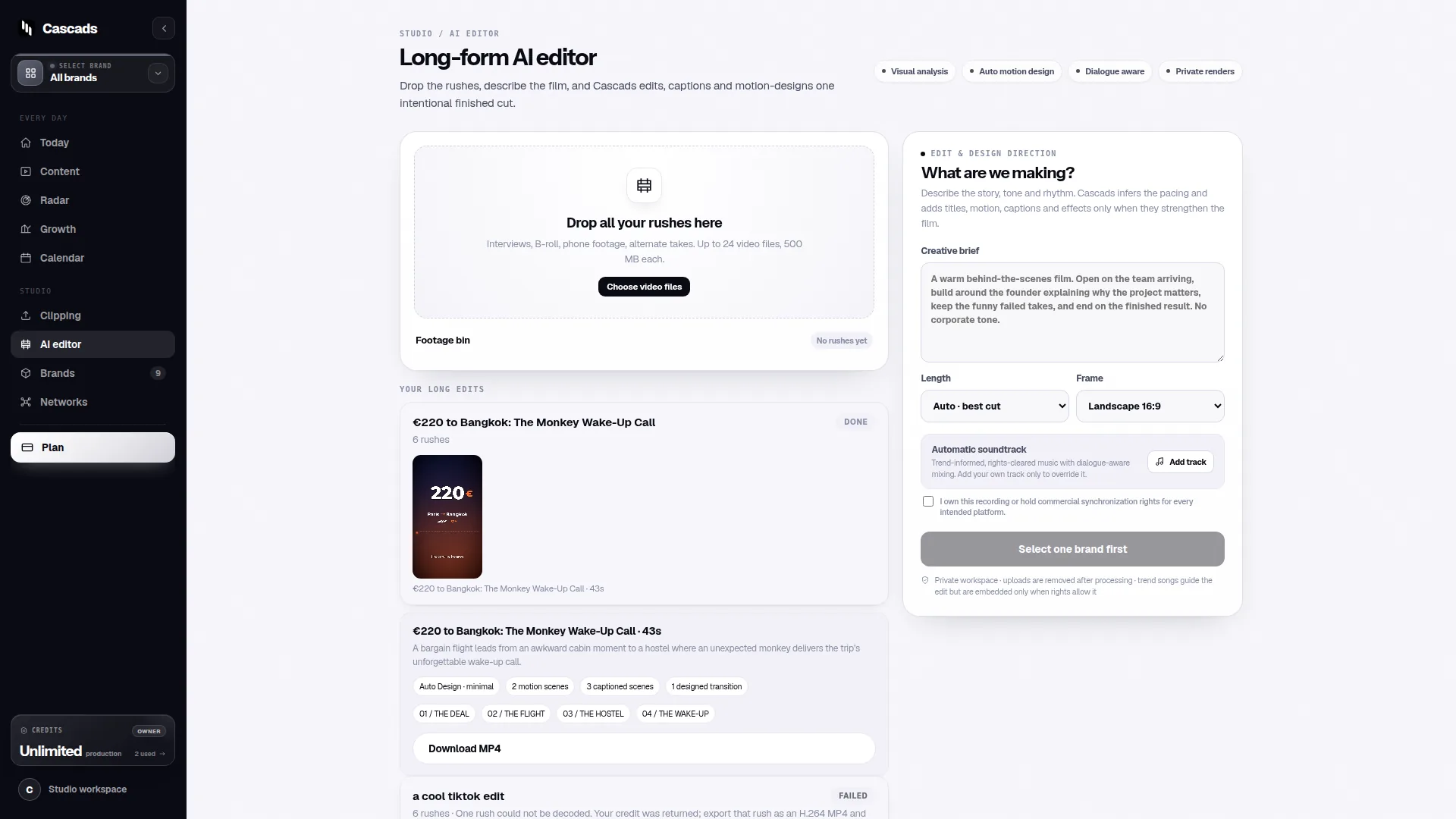
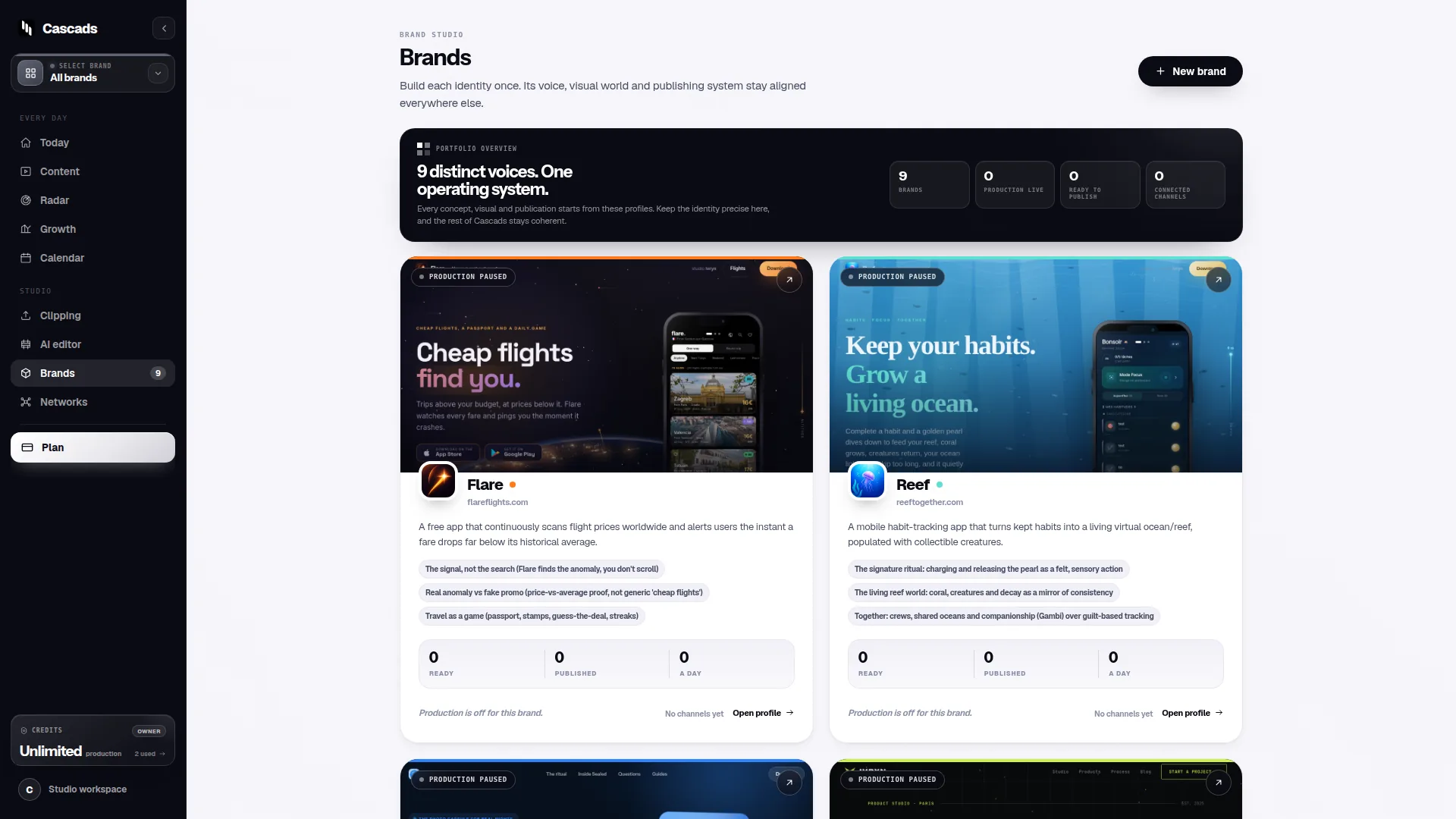
This is one of the areas where a tool like Cascads is relevant: it works from a reusable profile for each brand to generate text posts, vertical videos, and carousels, so the starting point for a new video is the brand's established context rather than a fresh brief each time. That doesn't remove the need for judgment about what to say in a given video, but it does reduce the setup work involved in keeping output on-brand across many pieces of content.
For agencies or teams handling multiple brands, this distinction matters more, not less. Reusable brand context is what makes it feasible to produce video at a reasonable pace across several clients without each one requiring a separate creative process from scratch.
Producing across formats without losing consistency
Social media video rarely exists on its own. Most teams also need text posts and carousels covering similar themes, and keeping all three visually and tonally aligned is harder than it sounds once volume increases. Multi-format production, where video, text and carousel content are generated from the same underlying brand material, is one practical way to keep a feed coherent instead of looking like it was assembled by different people with different references.
This also affects planning. If a team decides a topic works well as a carousel, it's worth asking whether the same core idea should also exist as a short vertical video, since different formats perform differently depending on the platform and the audience's habits there. Building content in multiple formats from a shared starting point makes that kind of repurposing far less labor-intensive than producing each format independently.
None of this replaces editorial judgment about which format best suits which message. Some ideas are genuinely better suited to a short static post than a video, and no workflow should push everything into video format just because the tooling can produce it.
Human review is not optional for generated video content
Any generated marketing output, including video, still needs a human review step before it goes live. This is not a formality. Generated content can miss context a human would catch immediately, whether that's a factual inaccuracy, a tone mismatch for a sensitive moment, or a claim that shouldn't be made without further backing.
A practical approval workflow for video should check a few specific things: does the content match current brand guidelines, does it avoid claims the brand can't support, and does it read correctly when watched with sound off, since many viewers on social platforms watch video muted by default. The approval workflow guide referenced below outlines how a structured review step fits into a broader publishing process, which is worth consulting when setting up review responsibilities across a team.
Skipping or rushing this step is one of the more common ways teams get into trouble with generated video content, particularly when volume increases and the temptation to auto-publish grows. Building review into the schedule, not as an afterthought but as a required stage, keeps output quality consistent even as production speeds up.
Format-aware publishing and its platform-dependent limits
Even a well-produced, well-reviewed video can hit friction at the publishing stage. Whether a video can be published directly to a given account depends on the network in question, the specific media format used, the permissions granted to the connected account, and the platform's own approval processes, which can change or introduce new restrictions without much notice.
This is a genuinely important limit to understand: no publishing tool, including Cascads, can guarantee that every video will publish automatically to every network in every situation. Direct publishing support depends on those external factors, and teams should expect to occasionally handle a manual upload or troubleshoot a permissions issue rather than assume full automation at all times.
A publishing integration checklist, like the one referenced below, is a useful reference point precisely because it forces a team to confirm account permissions, format compatibility, and platform-specific requirements before relying on direct publishing for a given video. Treating that checklist as a recurring step, rather than a one-time setup task, reduces the number of surprises when a platform updates its requirements.
A worked example: planning one week of video content for two brands
Consider a hypothetical, illustrative example. A small agency manages social accounts for two client brands and wants to publish one short vertical video per brand each week, alongside their usual text and carousel posts. The team starts by confirming each brand's profile is current: tone, visual style, and key messages for the month.
From there, they draft video topics for both brands, generate a first version of each video from the brand profile, and route both through a review step where someone checks brand accuracy, claims, and how the video reads with sound off. Only after that review passes do they check the publishing checklist for each target network, confirming the account has the right permissions and the video's format matches what that platform expects for that week.
In this example, if one platform rejects a video due to a temporary format mismatch, the team has already planned for a manual fallback rather than assuming automatic publishing would always work. That kind of contingency planning, built into the weekly rhythm rather than improvised, is what keeps a small team's video output steady even when one part of the pipeline runs into a platform-specific snag.
Setting realistic expectations for social media management video
The underlying message for anyone evaluating social media management video is that production and publishing are separate problems with separate constraints. Production benefits from consistent brand context and multi-format workflows; publishing depends on factors outside any single tool's control, including the target platform's own rules and approval processes.
Teams that plan for both halves, rather than assuming that generating a video also guarantees it will publish cleanly everywhere, tend to run into fewer surprises. Building in human review and a habit of checking publishing requirements before each send is a more durable approach than expecting full automation from end to end.
Frequently asked questions
Does generating a social media video mean it will publish automatically everywhere?
No. Direct publishing depends on the specific network, the video's media format, the permissions granted to the connected account, and that platform's own approval process, so some videos may require manual upload or adjustment rather than fully automatic publishing.
Why does brand context matter for video content specifically?
Video involves more creative decisions per piece than a text post, including visual style and pacing, so starting from a consistent, reusable brand profile helps keep videos on-brand and reduces the setup work needed for each new piece, especially across multiple brands or clients.
Is human review still necessary if video content is generated?
Yes. Generated marketing content, including video, should always go through human review before publication to catch factual issues, tone mismatches, or unsupported claims that automated generation may miss.
Sources and further reading
These resources provide the wider reference frame. Product statements on this page are limited to the public information provided by Cascads.