Why social media management in Kuwait needs its own workflow logic
Teams searching for social media management kuwait are often juggling more than one brand, more than one language, and more than one network, sometimes across agency clients and sometimes across sister brands within the same company. That combination changes what 'good' management looks like: it is less about a single clever post and more about a repeatable process that can be run consistently, week after week, without losing brand nuance.
The practical question is rarely 'what should we post' but 'how do we produce and approve enough content, in the right formats, without the process collapsing under its own workload'. A small team managing three or four brands across Instagram, TikTok and LinkedIn is really running several small production lines at once, each with its own tone, audience and approval chain.
Brand context as the starting point, not an afterthought
A recurring failure mode in multi-brand social work is treating every brand as if it shares the same voice, offers and visual language. In practice, each brand needs its own reference point: tone of voice, product or service details, target audience, and any recurring constraints such as regulated claims or seasonal messaging.
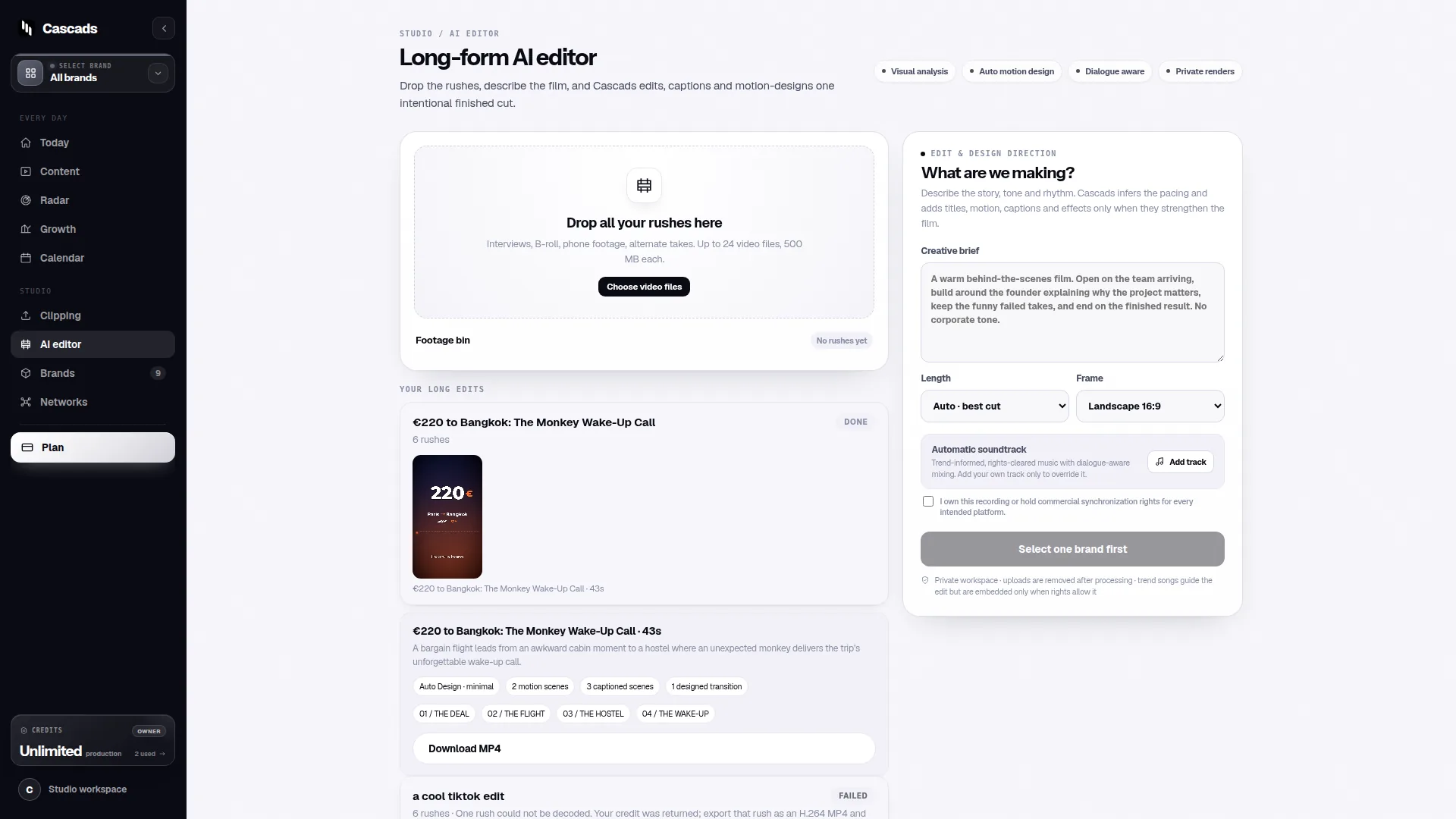
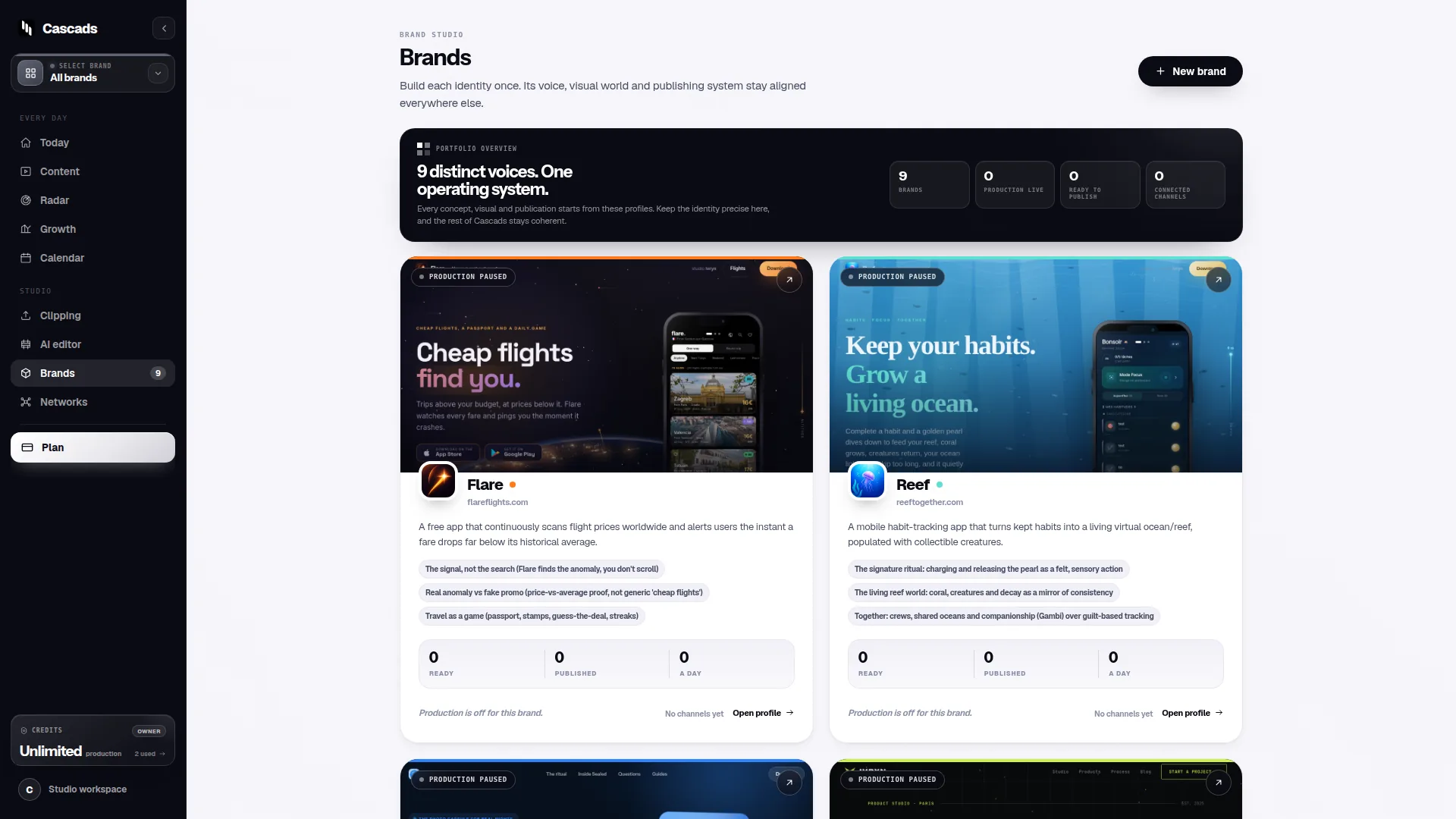
This is one area where a tool like Cascads is relevant to the reader question, not as a sales pitch but as an example of how the underlying problem gets addressed structurally. Cascads is built around a reusable profile for each brand, so that generated drafts start from that brand's established context rather than from a blank page each time. For a Kuwait-based team managing several accounts, that kind of per-brand reference point reduces the chance that one brand's content accidentally slips into another's tone or claims.
Whether or not a team uses a dedicated tool, the underlying discipline matters: write down what each brand can and cannot say, who it speaks to, and what its visual identity requires, before content production scales up.
Producing across formats: text, vertical video and carousels
Social media management kuwait searches often assume a single format, but most networks now expect a mix: short text posts, vertical video, and carousels, each with different production and review needs. Vertical video, for instance, usually requires more time for scripting and editing than a text post, while carousels need attention to how each slide reads on its own and as part of a sequence.
Cascads' relevance here is again structural rather than performance-based: it is designed to generate text posts, vertical videos and carousels from that same reusable brand profile, so a team is not rebuilding brand context separately for each format. That does not remove the need for judgment about which format suits which message; it simply means the starting draft is consistent with the brand across formats.
A useful habit for small teams is to decide, brand by brand, which formats are core (posted every week) and which are occasional (used for specific campaigns), rather than trying to produce every format for every brand at the same cadence.
Human review: the step that should never be skipped
Whatever tools or processes generate a draft, someone still needs to check it before it goes live. This applies equally to hand-written drafts and machine-assisted ones. Generated marketing output remains subject to human review before publication, and that review is where local nuance, cultural context, and factual accuracy get caught.
For a Kuwait-focused audience, human review is also where region-specific considerations get applied: local holidays, language mix between Arabic and English, and sensitivity around certain topics or imagery. No workflow, however well structured, replaces a person who understands the local audience checking the final draft.
Cascads' approval workflow guide describes how a review step can be built into a content pipeline so that drafts pass through a defined checkpoint rather than being published automatically the moment they are generated. Teams evaluating any social tool for a Kuwait market should ask specifically how the tool supports that kind of checkpoint, since the absence of one is a real operational risk.
- Assign a named reviewer per brand, not just a general 'social team' queue
- Check drafts for local calendar events, language accuracy and imagery sensitivity
- Keep a record of what was approved and when, in case a post needs to be traced back
Format-aware publishing and platform limits
A detail that trips up many teams is assuming that once content is approved, publishing is automatic and uniform across networks. In reality, direct publishing depends on the network, the media format, account permissions and external platform approval. A carousel that publishes smoothly on one network might require manual upload on another; a vertical video might need specific account permissions activated before automated posting is possible.
This is a case where the integration checklist approach is genuinely useful: before assuming a workflow will publish directly everywhere, a team should verify, network by network, which formats are supported for automated posting, what account permissions are required, and whether the platform itself needs to approve the connection. Skipping this step is a common source of last-minute scrambling when a scheduled post fails to go out.
For agencies managing multiple client accounts in Kuwait, this verification step should happen once per client account, not once per campaign, since permissions and platform approval status can change independently of any single piece of content.
A worked example: planning a week for a two-brand agency team
Consider a hypothetical small agency in Kuwait managing two clients: a retail brand and a food and beverage brand, each active on Instagram and TikTok. This example is illustrative only, not a report of an actual engagement.
Monday, the team reviews each brand's profile notes and confirms nothing has changed (new promotion, new spokesperson, regional holiday coming up). Tuesday, drafts are produced for the week: two text posts and one vertical video per brand, using each brand's established tone. Wednesday, a designated reviewer for each brand checks the drafts against brand guidelines and local sensitivities, flagging one video that references a competitor by name for the retail brand. Thursday, the flagged draft is revised and re-reviewed. Friday, before scheduling, the team checks that TikTok video permissions are active for both accounts and that Instagram carousel posting has been previously approved by the platform for the food brand's account; the retail brand's Instagram carousel permission is still pending, so that content is queued for manual posting instead of automated scheduling.
This kind of week-by-week checklist, adapted to a team's actual brands and networks, does more to prevent problems than any single tool choice.
Choosing an approach that fits a Kuwait-based team's scale
Teams new to social media management kuwait searches are often comparing 'do it manually' against 'use a platform', but the more useful comparison is between workflows that build in brand context, multi-format production and human review, versus those that do not, regardless of which tool sits underneath.
Cascads is one option built specifically around a reusable per-brand profile, multi-format generation and a review step before publishing, which makes it a relevant reference point for the workflow principles discussed here rather than a universal recommendation. Any team evaluating tools, Cascads included, should verify current network support, format capabilities and permission requirements directly with the platform in question, since these details change over time.
The core takeaway is that structure, not tooling alone, is what makes multi-brand social management sustainable at small-team scale.
Frequently asked questions
Does social media management in Kuwait require different tools than elsewhere?
Not necessarily different tools, but the workflow should account for local factors such as Arabic/English language mix, regional holidays, and cultural sensitivities during human review, regardless of which platform or process a team uses.
Can generated social content be published automatically without review?
Generated marketing output should always go through human review before publication; automated generation does not remove the need for a person to check accuracy, tone and local context before content goes live.
Why does a post sometimes fail to publish automatically even after approval?
Direct publishing depends on the network, the media format, account permissions and external platform approval, so an approved post can still require manual posting if one of those conditions isn't met for that specific account or format.
Sources and further reading
These resources provide the wider reference frame. Product statements on this page are limited to the public information provided by Cascads.