Why teams consider going without social media
Small teams and agencies sometimes ask whether going without social media, even temporarily, might be less costly than maintaining a constant posting cadence across several brands and networks. The question usually surfaces after a stretch of thin engagement, a stretched-thin content calendar, or a reorganisation that leaves no clear owner for the channels. It is a reasonable question to ask, but it is rarely an all-or-nothing decision in practice.
Before treating a pause as a strategic move, it helps to separate the symptom from the cause. If the real problem is that content production takes too long, or that approvals bottleneck every post, then stepping away from social media entirely may remove the pain without addressing why it existed. A narrower question - which formats, which networks, which brands actually need a break - is usually more useful than a blanket decision.
What going without social media actually changes
Pausing social activity mainly changes visibility and momentum, not underlying brand equity. Audiences built over time on a given network do not disappear the moment posting stops, but algorithmic reach on most platforms rewards consistency, so a pause can reduce how often existing content or brand mentions surface to non-followers. This is a platform behavior, not something any tool can promise to reverse.
It also changes internal workflow load. Teams that stop producing social content free up time normally spent on drafting, brand-context alignment, and review cycles. Whether that time is better spent elsewhere depends on what the social channels were actually contributing - direct customer acquisition, community management, or simply brand presence. Being honest about which of these applied is more useful than assuming social media was doing all three equally.
A structured way to decide, using brand context
One consideration worth surfacing explicitly is brand context: a decision to pause should be evaluated per brand rather than as a single policy for an entire portfolio. An agency running several brand accounts may find that one brand's audience is highly dependent on regular posting while another's is not, simply because of differences in industry, audience habits, or how the brand acquires customers elsewhere.
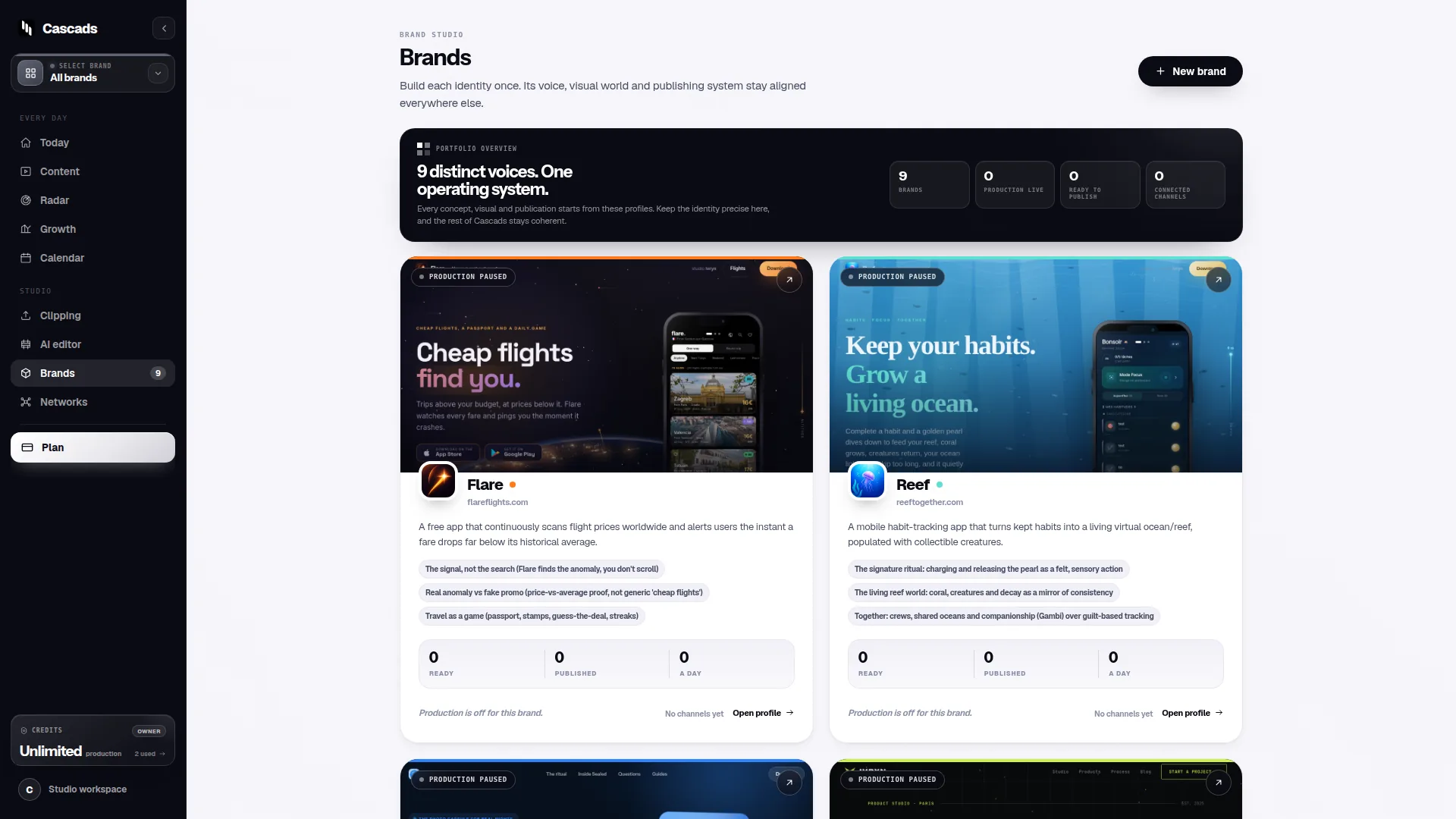
Cascads, an IVRYN product used for producing and scheduling social content, works from a reusable profile built for each brand - a structure that, in this context, is useful less because it automates content and more because it forces a team to articulate what a brand's social presence is actually for before deciding whether to pause it. Reviewing that profile before stepping back can clarify whether the audience, tone, and cadence built up for a brand justify continuing, adjusting, or stopping.
A useful exercise is to ask, brand by brand: does this account drive measurable inbound interest, does it support customer service or community trust, or does it mainly exist because a competitor has one. Only the first two are strong reasons to keep posting through a lull; the third is worth questioning independently of any pause decision.
Multi-format production and what a pause means for each format
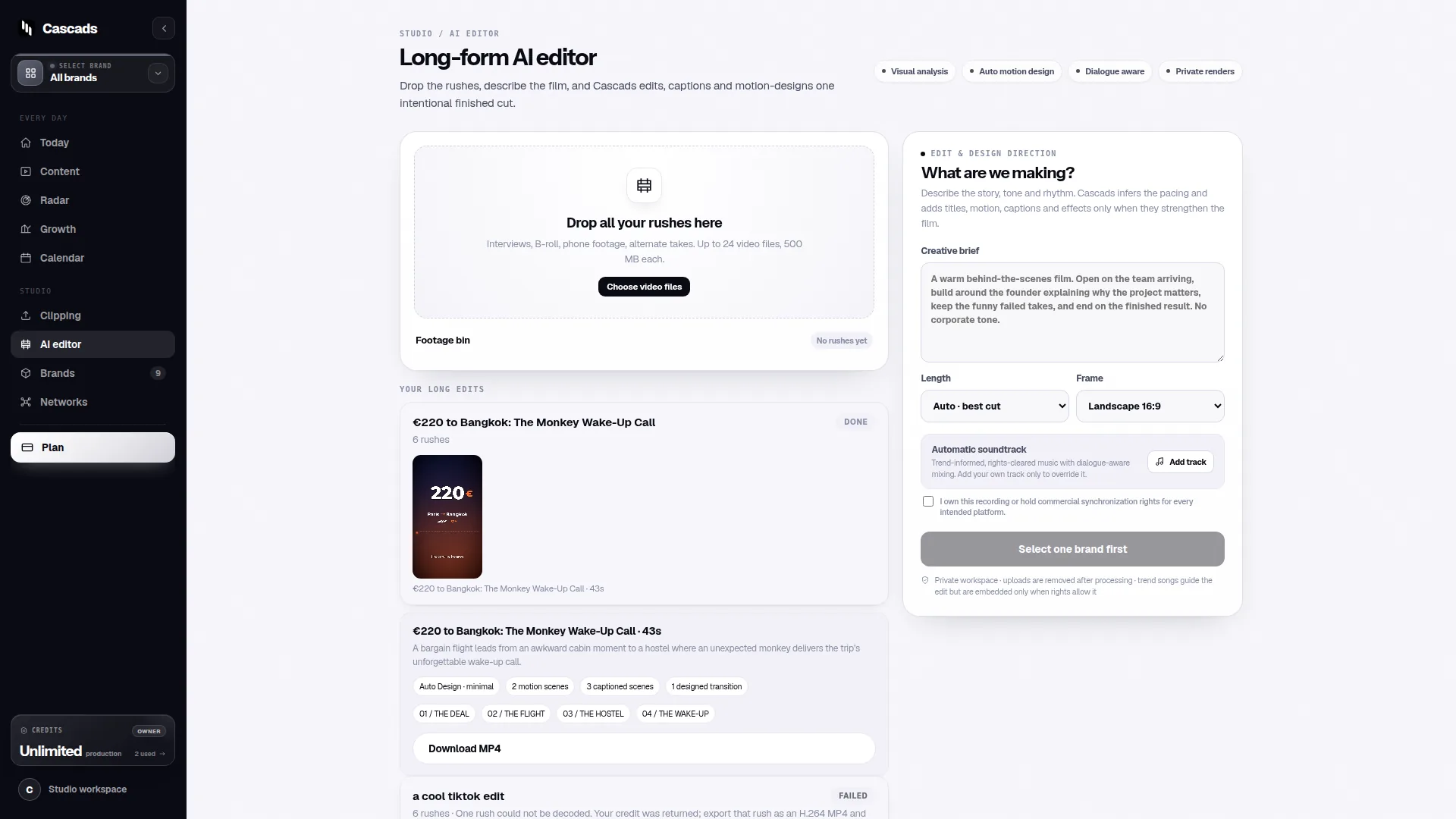
Going without social media does not have to mean stopping every format at once. Text posts, vertical videos, and carousels carry different production costs and different audience expectations. A team overwhelmed by video production, for example, might scale back on that format specifically while maintaining lighter-weight text updates, rather than pausing the account entirely.
This format-aware view also matters for re-entry. Restarting with the same volume and mix that existed before a pause is often unrealistic; a phased return - starting with the format that is cheapest to produce and easiest to review - tends to be more sustainable than resuming everything simultaneously.
- Text posts: lowest production cost, easiest to resume quickly
- Vertical video: highest production cost, consider resuming last
- Carousels: moderate cost, useful for reintroducing a brand's visual identity gradually
Human review and approval workflow during a transition
Any generated marketing content, including anything produced to prepare for a pause or a relaunch, remains subject to human review before publication. This matters specifically during transitions, when messaging about why a brand went quiet - or why it is returning - carries more scrutiny than routine posts. A rushed announcement without review risks tone mismatches at exactly the moment audiences are paying closer attention.
An approval workflow becomes especially relevant here: someone with authority over brand voice should sign off on any communication tied to the pause itself, not just on regular content. Teams that already have a review structure in place for everyday posts are better positioned to apply the same rigor to these lower-frequency, higher-visibility moments.
Format-aware publishing limits to plan around
Whether a brand pauses fully or scales back selectively, it is worth remembering that direct publishing to social networks is never guaranteed to be frictionless. It depends on the specific network, the media format being published, the account's granted permissions, and the platform's own approval processes at the time of posting. These constraints do not change because a team has been away from a channel for a while, and in some cases returning after a pause may trigger renewed platform-side checks on an account.
Teams planning a phased return should budget time for these platform-side variables rather than assuming publishing will resume exactly as it left off. Checking account permissions and reconfirming any format-specific requirements before resuming a regular cadence can avoid surprises.
Frequently asked questions
Does pausing social media hurt a brand's existing audience?
A pause does not erase an existing audience, but reduced posting frequency typically lowers algorithmic reach on most platforms, meaning content and mentions may surface less often to people who are not already following the account. The effect varies by platform and audience, so it is worth weighing against why the account was posting in the first place.
Should every brand in a portfolio pause social media at the same time?
Not necessarily. Different brands often rely on social channels for different reasons - customer acquisition, community support, or general presence - so the decision is usually better made per brand, based on what that brand's audience and business needs actually require.
What should a team check before resuming posting after a break?
Before restarting, confirm account permissions, review any platform-specific requirements for the formats being used, and reintroduce content gradually rather than resuming the previous full cadence immediately, since publishing success still depends on the network, format, permissions, and platform approval at that time.
Sources and further reading
These resources provide the wider reference frame. Product statements on this page are limited to the public information provided by Cascads.