Why people search for social media management recurpost
Someone researching social media management recurpost is usually trying to solve a specific operational problem: too many brands, too many networks, and not enough hours to plan, draft and schedule content by hand. RecurPost is one of several tools built around recurring post scheduling and content calendars, and it's a reasonable starting point for that search because scheduling is the visible, easy-to-compare part of the workflow.
But scheduling is only one link in a longer chain. Before a post reaches an audience, it has to be drafted in a way that matches the brand, reviewed by someone accountable for what gets published, and formatted correctly for the network it's going to. A tool search that stops at 'does it schedule posts' will miss the parts of the workflow that actually cause delays or mistakes.
This article isn't a feature-by-feature comparison. It's a guide to the questions worth answering about any social media management setup, RecurPost included, before you commit a team's workflow to it.
Start from brand context, not from the calendar
A common mistake in tool selection is evaluating scheduling first and brand setup second. In practice, the harder problem for teams managing several brands is keeping tone, visuals and messaging consistent without re-explaining the brand every time someone drafts a post.
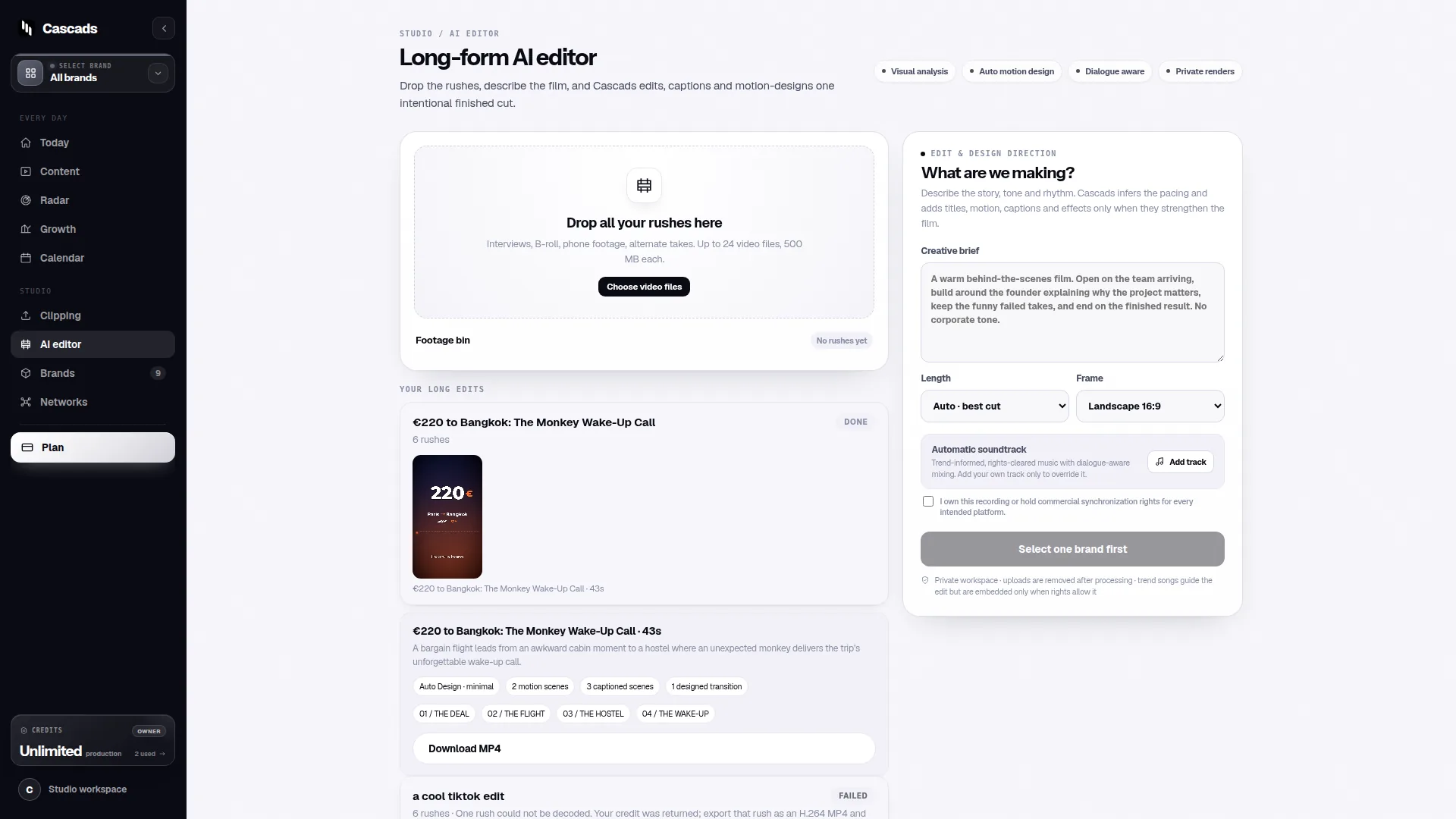
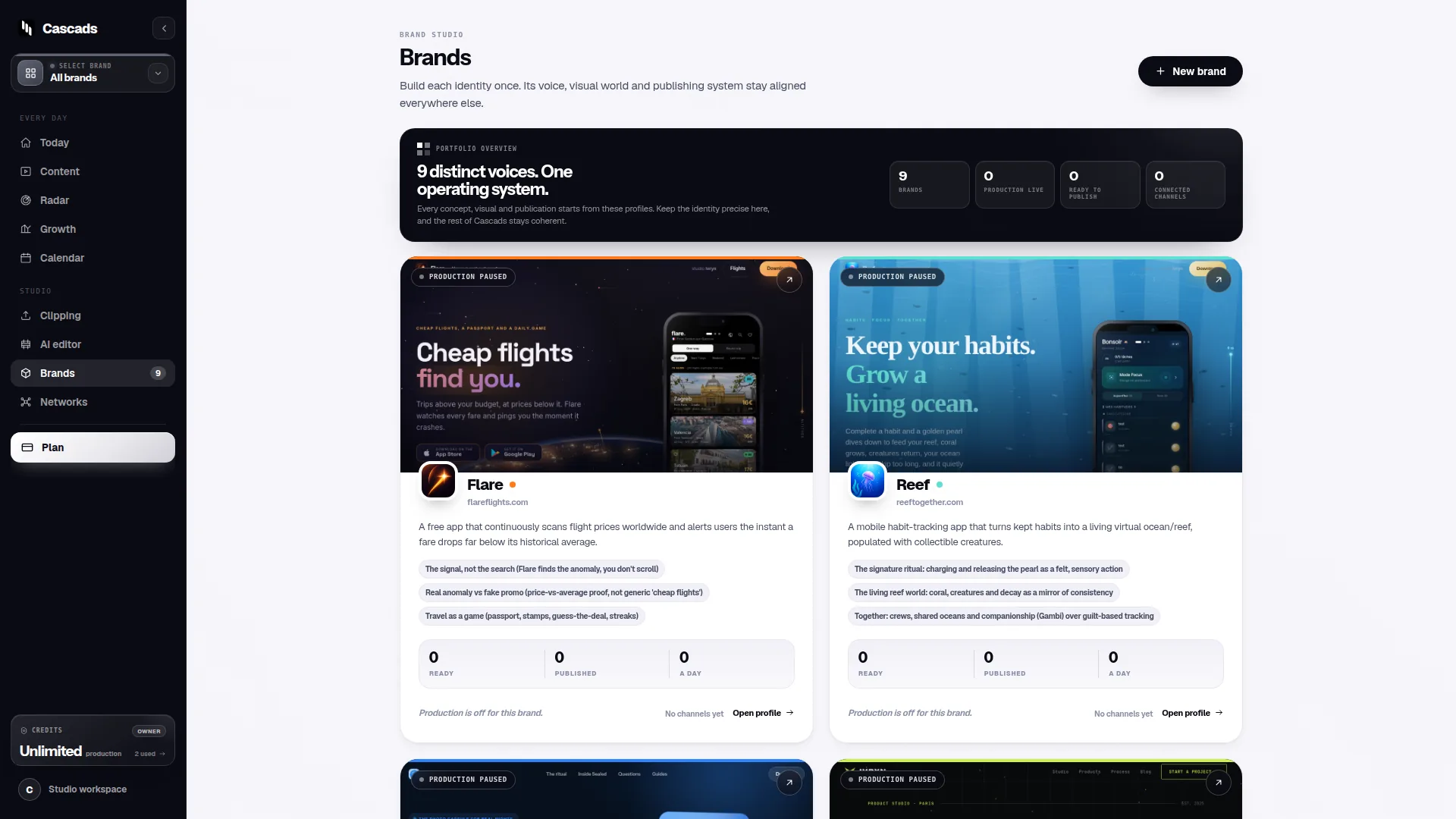
Cascads, an IVRYN product for social content production and scheduling, approaches this by building generated posts, vertical videos and carousels from a reusable profile kept for each brand. That means the starting point isn't a blank scheduling grid but a brand definition that content generation draws from, which reduces the chance of off-brand drafts reaching a reviewer's queue in the first place.
If you're comparing tools, ask how each one handles brand context specifically for agencies or teams running more than one account: is there a distinct profile per brand, or does everything default to one shared voice and set of assets? That answer matters more, long-term, than how many post types a scheduler supports.
Multi-format production changes what 'management' means
Social media management increasingly means producing text posts, short vertical video and carousels, not just writing captions for a static image. Each format has its own constraints: video needs pacing and captions that work with sound off, carousels need a narrative across slides, and text posts need to stand on their own without visual support.
A tool oriented purely around scheduling can queue any file you upload, but it won't necessarily help you produce the format itself. This is where generation-oriented tools differ from pure schedulers: they're built to draft the content in the target format from brand inputs, not just to time its release.
For a team evaluating recurpost-style tools, it's worth separating two questions that often get bundled together: how well does the tool help you make multi-format content, and how well does it help you schedule what you already made? A tool can be strong at one and weak at the other.
Human review is not optional, whatever the tool generates
Whether content is drafted by a person, assembled from templates, or generated with AI assistance, publishable output still depends on someone checking it before it goes live. This is true for Cascads as much as for any other system: generated marketing output remains subject to human review before publication, and that review step is where brand risk, factual accuracy and tone actually get caught.
An approval workflow (see Cascads's guide on social media approval workflow) is worth designing deliberately rather than treating as an afterthought bolted onto a scheduler. Questions to settle include who has final sign-off per brand, what happens when a reviewer is unavailable, and whether video and carousel content get reviewed differently than a short text post.
Teams sometimes assume that automation removes the need for review. It doesn't remove it, it changes where it sits in the process - usually earlier, since a generated draft can be checked before scheduling rather than proofread under time pressure right before it publishes.
Format-aware publishing and its real limits
A recurring source of frustration with any social scheduling tool, RecurPost or otherwise, is the gap between what the interface lets you schedule and what actually publishes successfully. Direct publishing depends on the network, the media format, the account's granted permissions, and the receiving platform's own approval or review process - factors outside any single tool's control.
This is a good reason to check a publishing integration checklist (Cascads publishes one covering exactly this) before assuming a given format will post automatically to a given network. Video length limits, aspect ratio requirements, and API permission scopes change over time and vary by platform, so it's worth verifying current requirements directly with the network rather than relying on a tool's marketing copy.
Practical implication: build slack into your schedule for formats or networks with known approval steps, and have a fallback manual-publish process for cases where an API integration can't complete the post automatically.
Worked example: a three-brand agency evaluating a switch
Consider a hypothetical agency running social accounts for three client brands across four networks, currently drafting content manually and scheduling it in a generic calendar tool. They're evaluating whether to adopt a recurpost-style tool.
In this example, the team's real bottleneck isn't scheduling - it's drafting brand-consistent content fast enough for three brands at once, and getting timely sign-off from each client before anything posts. A pure scheduler would remove some manual clicking but wouldn't touch the drafting bottleneck.
Working through this example, the agency would want to check: does the tool let each brand keep a separate profile so drafts start closer to on-brand? Does it support the video and carousel formats two of the three brands rely on? Is there a built-in review step each client can use for their own account, and does the tool clarify which formats and networks currently support direct publishing versus needing a manual step? Answering these questions concretely, rather than by feature checklist alone, is what actually determines fit.
Frequently asked questions
Is RecurPost the same kind of tool as Cascads?
They sit in the same broad category of social media management tools, but RecurPost is generally understood as a scheduling-focused tool, while Cascads is built around generating brand-specific text posts, vertical video and carousels from a reusable brand profile, with scheduling as part of that workflow. Anyone comparing tools should check current feature sets directly with each vendor, since capabilities change over time.
Can scheduled social posts always publish automatically without manual steps?
No. Direct publishing depends on the network, the media format, the account's granted permissions and the platform's own approval process, so some content will require manual posting or extra verification regardless of which scheduling tool is used.
Does using an AI-assisted content tool remove the need for someone to review posts before they go live?
No. Even when content is drafted or generated with tool assistance, a human review step before publication remains important for checking brand accuracy, tone and factual correctness, and this applies across generated marketing content generally, not to any one platform specifically.
Sources and further reading
These resources provide the wider reference frame. Product statements on this page are limited to the public information provided by Cascads.