What a social media management description should actually cover
When people search for a social media management description, they're often trying to figure out whether the term means something narrow (scheduling posts) or something broader (planning, producing, approving and publishing content across several brands and networks). In practice it's closer to the broader definition: a workflow that turns a brand's voice and visual identity into a repeatable stream of posts, checked by a person, and sent out through whatever channels a platform allows at a given time.
For a small team or agency juggling multiple accounts, the description matters because it sets expectations. If a tool or service is described as 'social media management' but only covers scheduling, teams will be surprised when they still have to write captions from scratch or manually resize video for each network. A useful description separates the parts that can be produced consistently (drafts, formats, brand-consistent copy) from the parts that stay variable (platform rules, account permissions, approval timing).
Brand context is the starting point, not an afterthought
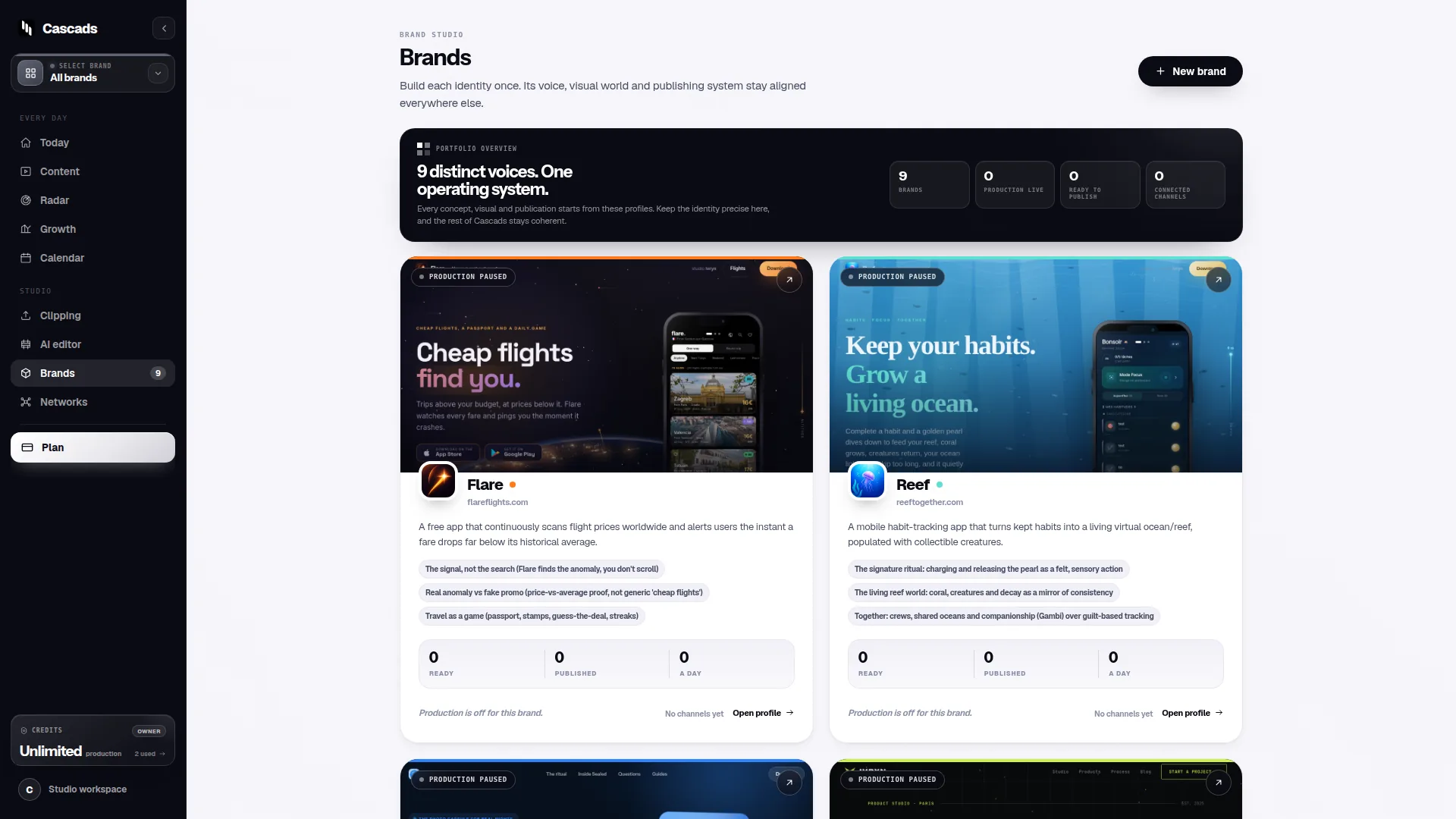
A social content description that skips brand context is incomplete. Every brand has a distinct voice, visual style and set of do's and don'ts, and any production process - human or software-assisted - needs a reference point to stay consistent. Cascads, an IVRYN product built for social content production and scheduling, works from a reusable profile for each brand, which is one way of keeping that context attached to every piece of content rather than re-explaining it each time.
For agencies specifically, this matters more than it might for a single in-house team, because the same person or system may be producing content for several unrelated brands in a single day. Without a clear per-brand reference, tone and formatting drift is almost inevitable over time, and that drift is often only caught after publication, when it's harder to fix.
Multi-format production: text, vertical video, carousels
Social media management description also needs to reflect the reality that a single piece of content rarely fits every network in one shape. A caption written for a feed post isn't automatically right for a short vertical video, and a carousel needs its own pacing across several slides. Treating format as a first-class part of the description - not a detail left to whoever happens to be posting - helps teams plan for the actual production work involved.
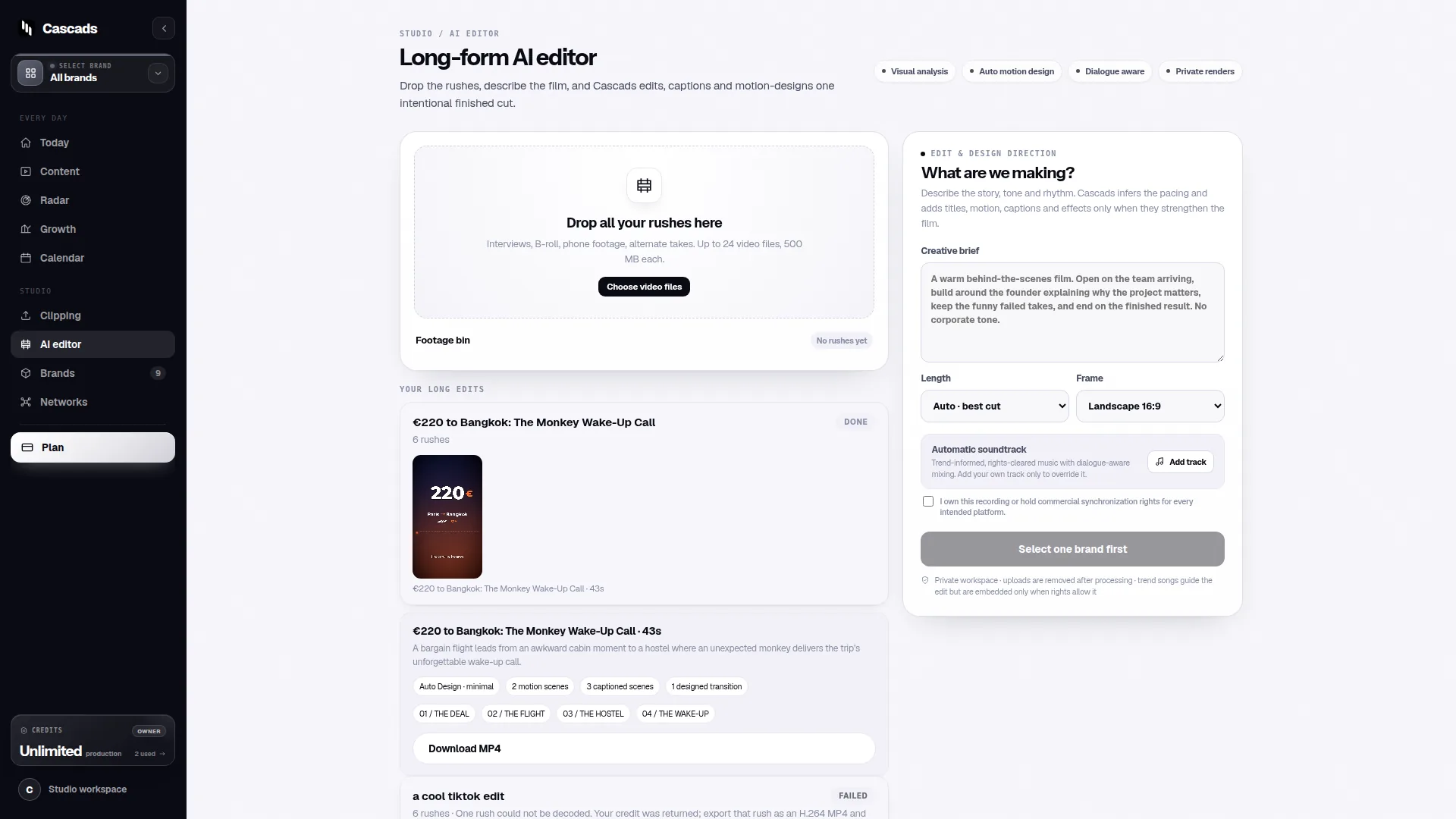
Cascads generates text posts, vertical videos and carousels from that same reusable brand profile, which is a practical way of keeping formats aligned to one source of brand truth instead of maintaining separate, drifting versions for each channel. That doesn't remove the judgment calls involved in adapting a message per format; it changes where that judgment gets applied.
A short worked example: imagine a two-person agency team managing four brand accounts across three networks. If each format for each brand has to be drafted independently, that's a large number of near-duplicate but format-specific decisions every week. Starting from one brand profile per brand, and generating format variants from it, doesn't eliminate the review work, but it does reduce the number of times someone has to re-establish tone, colors and message from scratch.
Human review is a limit, not a feature to skip
Any accurate social media management description has to state plainly that generated marketing output remains subject to human review before publication. This isn't a minor caveat - it's a structural part of how the work should be organized. Automated or software-assisted drafting can speed up the production of captions, video scripts and carousel copy, but it doesn't replace the judgment needed to catch tone mismatches, factual errors, or content that's technically on-brand but wrong for the moment.
Teams that build review into their workflow from the start tend to have fewer surprises. That means designating who approves what, setting a expectation for turnaround time, and treating the review step as part of the production timeline rather than an emergency check bolted on before a deadline. The approval workflow guide referenced below is one useful reference point for structuring that step.
- Assign a named reviewer per brand, not just per team
- Set a minimum review window before scheduled publish time
- Flag content that references time-sensitive claims for extra scrutiny
Format-aware publishing and its platform-dependent limits
The publishing step is where a social media management description most often oversells what's actually guaranteed. Direct publishing depends on the network, the media format, the account's granted permissions, and the external platform's own approval processes. None of that is under the control of a scheduling or production tool, and any description that implies otherwise is setting up teams for frustration.
In practice this means treating publishing as a step with its own checklist, separate from content creation. A video format accepted on one network may need adjustment for another; account permissions might need to be re-verified after a platform update; and some content types may require manual submission rather than automated posting, depending on current platform rules. The publishing integration checklist referenced below is a useful starting point for working through these dependencies systematically rather than discovering them one at a time.
For agencies managing several client accounts, it's worth building a standing habit of checking permission status and format requirements per platform on a regular cadence, since platform rules and account states can change independently of anything the content team does.
A simple decision aid for scoping the description
When writing or evaluating a social media management description for your own team, it can help to separate the claim into four questions and answer each honestly, rather than accepting a single blanket description of 'we handle social media.'
Example scoping table for a hypothetical small agency deciding whether a workflow description is accurate:
- Does it specify which formats are covered (text, video, carousel) or just imply 'content'?
- Does it name who reviews output before it goes live, and when?
- Does it state that publishing depends on platform approval and permissions, rather than promising guaranteed delivery?
- Does it explain how brand consistency is maintained across multiple accounts, rather than assuming one workflow fits all brands?
Frequently asked questions
What does a social media management description typically include?
It typically covers brand-consistent content planning, production across relevant formats (such as text posts, video and carousels), a human review step before anything is published, and the actual publishing step, which depends on each platform's own rules, permissions and approval process.
Why does publishing depend on the platform rather than the tool alone?
Each social network sets its own rules for account permissions, accepted media formats and content approval, and these can change independently of any production or scheduling tool. A description of the work has to account for that external dependency rather than presenting publishing as fully guaranteed.
Is human review still necessary if content is generated from a brand profile?
Yes. Using a consistent brand profile can make drafts more aligned to tone and format, but it doesn't remove the need for a person to check the output before it's published, since context, timing and accuracy still require human judgment.
Sources and further reading
These resources provide the wider reference frame. Product statements on this page are limited to the public information provided by Cascads.