What social media scheduling tools are for
Social media scheduling tools help a team prepare content, assign timing, coordinate reviewers, and publish or hand off posts across social networks. For small teams and agencies, their value is usually less about filling a calendar automatically and more about making the path from draft to approved post visible across several brands.
The phrase social media scheduling tools can cover very different workflows. Some tools focus on calendars and direct publishing, while others also help create assets, organize brand inputs, or collect approvals. Before choosing one, separate the work you need to control: producing content, adapting it by format, checking it, scheduling it, and confirming whether a network can accept it.
A scheduling tool does not remove the need for editorial judgment. A post may be technically ready for a date and still need a final check for brand voice, claims, links, accessibility, current events, or a campaign change. Treat the schedule as a coordination system, not as permission to publish unchecked material.
- Decide whether your immediate problem is content creation, approvals, scheduling, cross-brand visibility, or a combination of these.
- Map who drafts, who reviews, who owns each social account, and who has authority to make a final change.
- Define what a completed item means: approved copy, approved media, confirmed destination, scheduled time, and publication status.
How social media scheduling tools fit a real content workflow
A dependable workflow begins before the calendar. Teams need usable brand context: the audience, tone, campaign purpose, recurring themes, prohibited claims, approved calls to action, and account-specific conventions. Without that context, scheduling can make inconsistent content move faster rather than make the operation more reliable.
Production should also account for the fact that a single idea may become several different assets. Text posts, vertical video, and carousels have distinct editorial and production needs. The strongest workflow therefore keeps the core message consistent while allowing the copy, framing, pacing, captioning, dimensions, and calls to action to change for the destination format.
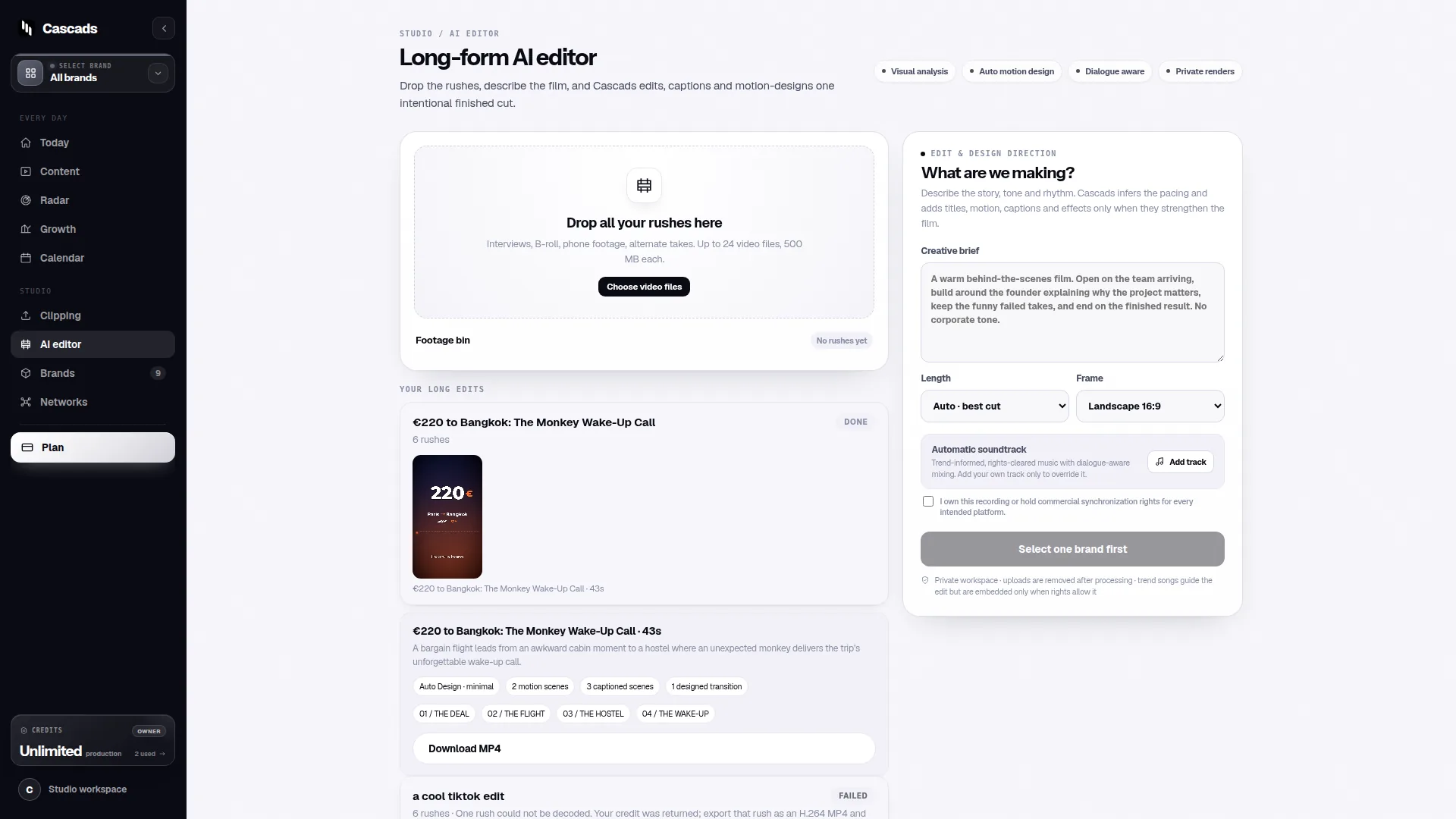
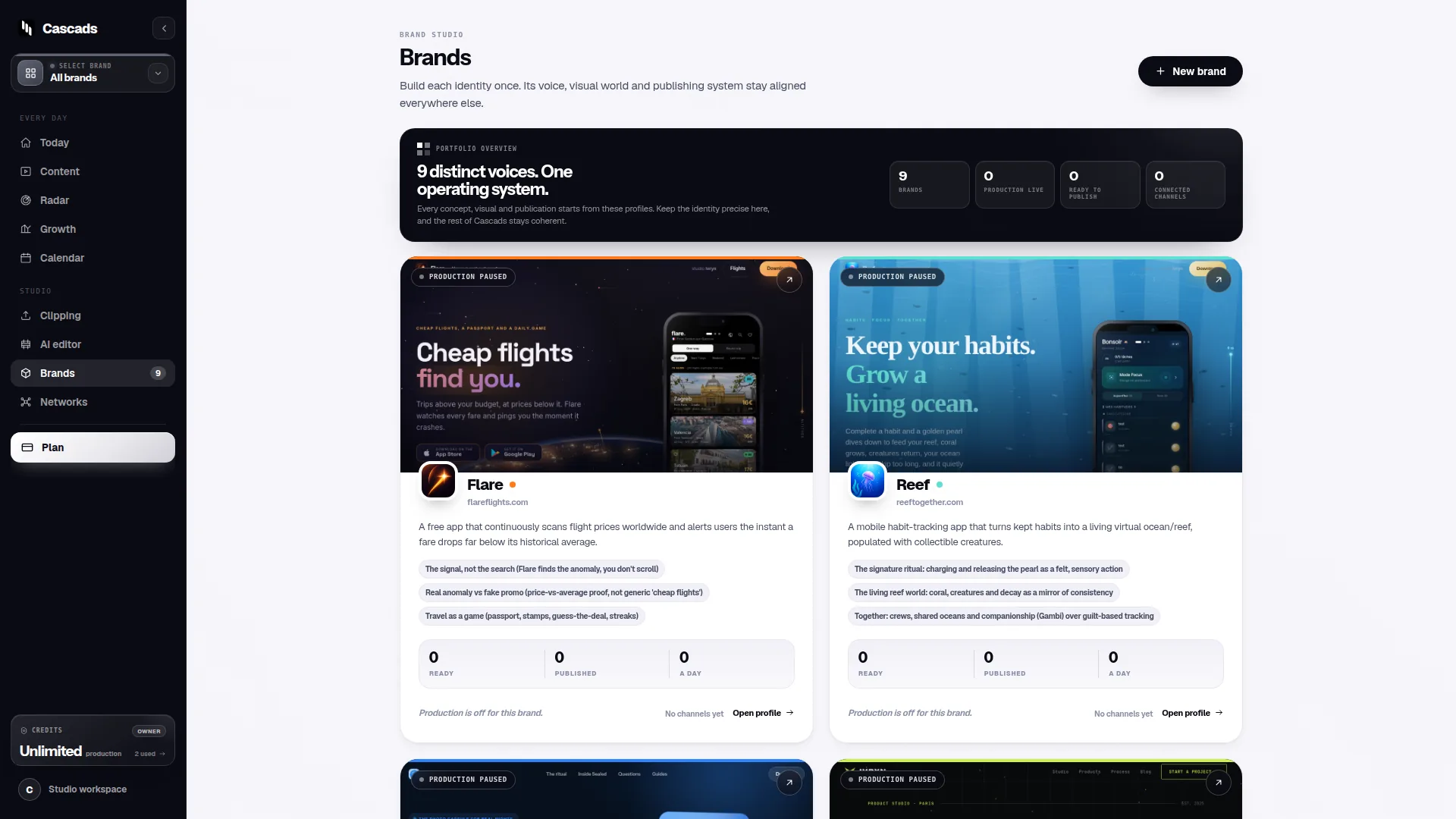
Cascads is an IVRYN product for creating and scheduling social content. Its public product context is relevant here because it can generate written posts, portrait-oriented videos, and carousel content from a reusable brand profile. That can help a team start from consistent brand material, but the resulting marketing material still needs a person to review it before anything is released.
- Store brand rules where creators and reviewers can use them before drafting.
- Plan a content concept first, then make format-specific versions rather than duplicating one asset everywhere.
- Give every planned post an identifiable owner and an explicit review state.
The limits behind format-aware publishing
Direct publishing is conditional, not universal. Whether a post can be sent from a scheduling tool to a network depends on the destination network, the media type, the permissions attached to the connected account, and the external platform's own approval of the publishing action. A calendar entry marked ready should not be mistaken for a promise that every format can publish directly.
Those constraints matter most when a team works across multiple brands and networks. A vertical video may require different handling from a text update or a carousel. A connected account may lack the needed role. A platform may require a final in-platform action, reject a media file, or change what an integration permits. Build the workflow so that these cases are expected and visible.
The practical response is to classify each planned post by delivery path. Use direct publication when the account, format, and platform permissions allow it. Use a reminder or handoff path when the final step belongs inside the network. In both cases, preserve the same editorial record so the team knows what was approved and what actually happened.
- Check destination account ownership and permissions before campaign day.
- Record the planned format and the intended delivery path for each post.
- Keep a handoff procedure for posts that need a final native-platform step.
- Check published status separately from scheduled status.
A decision aid for selecting social media scheduling tools
Choose a tool by testing whether it supports your operating constraints, rather than by looking for the longest feature list. Start with the brands and networks you must cover, then examine the workflow that connects content creation to a final publication decision. A smaller tool that clearly supports those steps can be more useful than a broad platform that leaves approvals and exceptions in scattered messages.
Ask whether the tool preserves context at the level your team needs. Agencies may need separate brand profiles, client reviewers, asset ownership, and calendars that can be viewed together without mixing approval authority. Small internal teams may need a lighter process, but they still benefit from knowing which version is current and who approved it.
Also evaluate exceptions in advance. A workflow is only as useful as its response to a post that cannot publish directly, a reviewer who requests a change near the deadline, or a format that must be recreated for another network. Look for a process that makes those situations manageable rather than hiding them behind a generic scheduled label.
- Coverage: Which brands, accounts, and networks must appear in one working view?
- Production: Can the team organize text, vertical video, and carousel work without losing the original content intent?
- Review: Can a human clearly approve, request changes, or block publication?
- Publishing: Does the process distinguish direct publishing from reminders or manual handoffs?
- Governance: Can the team identify the latest approved version and its owner?
Example: a four-brand agency workflow
Example: a small agency manages four local brands and plans a two-week campaign around one seasonal theme. The strategist writes a shared brief with the campaign message, target audience, approved offers, and brand-specific tone notes. Each brand then receives its own versions of the concept rather than a copied caption used everywhere.
For every brand, the team creates a text post, a vertical video concept, and a carousel outline. The editor checks the assets against the relevant brand context and marks changes before the client reviewer sees them. Only the final approved versions move into the scheduling queue. This prevents the calendar from becoming a mixed list of drafts, pending reviews, and supposedly finished work.
Next, the coordinator checks the delivery path for each item. Where a connected account and media type support direct publication, the item can be scheduled through that route. Where the platform, permissions, or format require a native action, the coordinator creates a named handoff with the final asset, caption, timing, and responsible person. After the planned time, the coordinator confirms publication rather than assuming the schedule completed it.
The result is a practical division of responsibility: reusable context guides production, people decide what is acceptable to publish, and the tool helps organize timing and delivery. The agency has not eliminated platform limits; it has made them part of the operating plan.
- Monday: confirm accounts, permissions, formats, campaign brief, and reviewers.
- Tuesday to Thursday: create brand-specific assets and complete internal review.
- Friday: obtain client approval and lock the publish-ready version.
- Publication days: follow direct or handoff paths, then record the final status.
A pre-publication checklist that reduces surprises
Use this checklist at the point where a post moves from approved content to scheduled delivery. It is intentionally practical: the goal is not to add bureaucracy, but to catch the kinds of details that can turn a sound content plan into a missed or unsuitable post.
First, confirm that the current asset matches the approved version and the correct brand. Then check that the destination network, account, date, time, and format are all explicitly assigned. Finally, identify whether the item can use direct publishing or needs a manual platform handoff. This is especially important when several people manage similar campaigns across several brands.
Human review remains the final safeguard. Generated or assisted marketing content can speed up preparation, but a reviewer should still assess whether the finished material is appropriate for publication in its actual context. If anything important changes, send it back to the relevant review step instead of treating the schedule as irreversible.
- Brand context and current campaign message are correct.
- Copy, media, captions, links, and calls to action match the approved version.
- The selected format is suitable for the destination network.
- Account permissions and publishing route have been checked.
- A named person owns any required manual handoff.
- Publication status will be confirmed after the intended time.
Frequently asked questions
What are social media scheduling tools?
Social media scheduling tools are systems that help teams organize social posts, assign dates and owners, coordinate review, and either publish through supported connections or prepare a manual handoff when direct publishing is unavailable.
Can a scheduling tool publish every social media format automatically?
No. Direct publishing can depend on the destination network, the media format, the connected account's permissions, and the external platform's approval. A reliable workflow includes a manual handoff for posts that cannot be sent directly.
Why is human review still needed for scheduled social content?
Human review checks that the final copy and media are accurate, appropriate for the brand and current context, and ready for publication. This remains necessary even when content was generated or prepared with reusable brand information.
Sources and further reading
These resources provide the wider reference frame. Product statements on this page are limited to the public information provided by Cascads.