What social media management Zimbabwe involves
Social media management Zimbabwe is the ongoing work of deciding what a brand should say, producing suitable content, arranging review, scheduling posts and confirming what can actually be published on each network. For small teams and agencies, the challenge is rarely just finding ideas. It is keeping several brands, audiences, approvers and channel requirements organised without letting the message become generic or inconsistent.
Before acting, define the practical scope. List the brands involved, the networks that matter, the people who can approve content and the formats each brand can reliably produce. A plan built around those operating realities is more useful than a broad promise to post everywhere.
Local relevance should come from deliberate editorial choices: the audience segment, language and tone, campaign dates, product availability, customer-support routes and the purpose of each post. Avoid treating a country-level keyword as a substitute for an actual audience definition. A Zimbabwe-focused campaign may still need different approaches for different cities, sectors or customer groups.
- Record the owner, reviewer, network and intended outcome for every planned post.
- Separate evergreen brand content from time-sensitive offers, announcements and event material.
- Confirm who can give final approval when a usual reviewer is unavailable.
Build the workflow around brand context
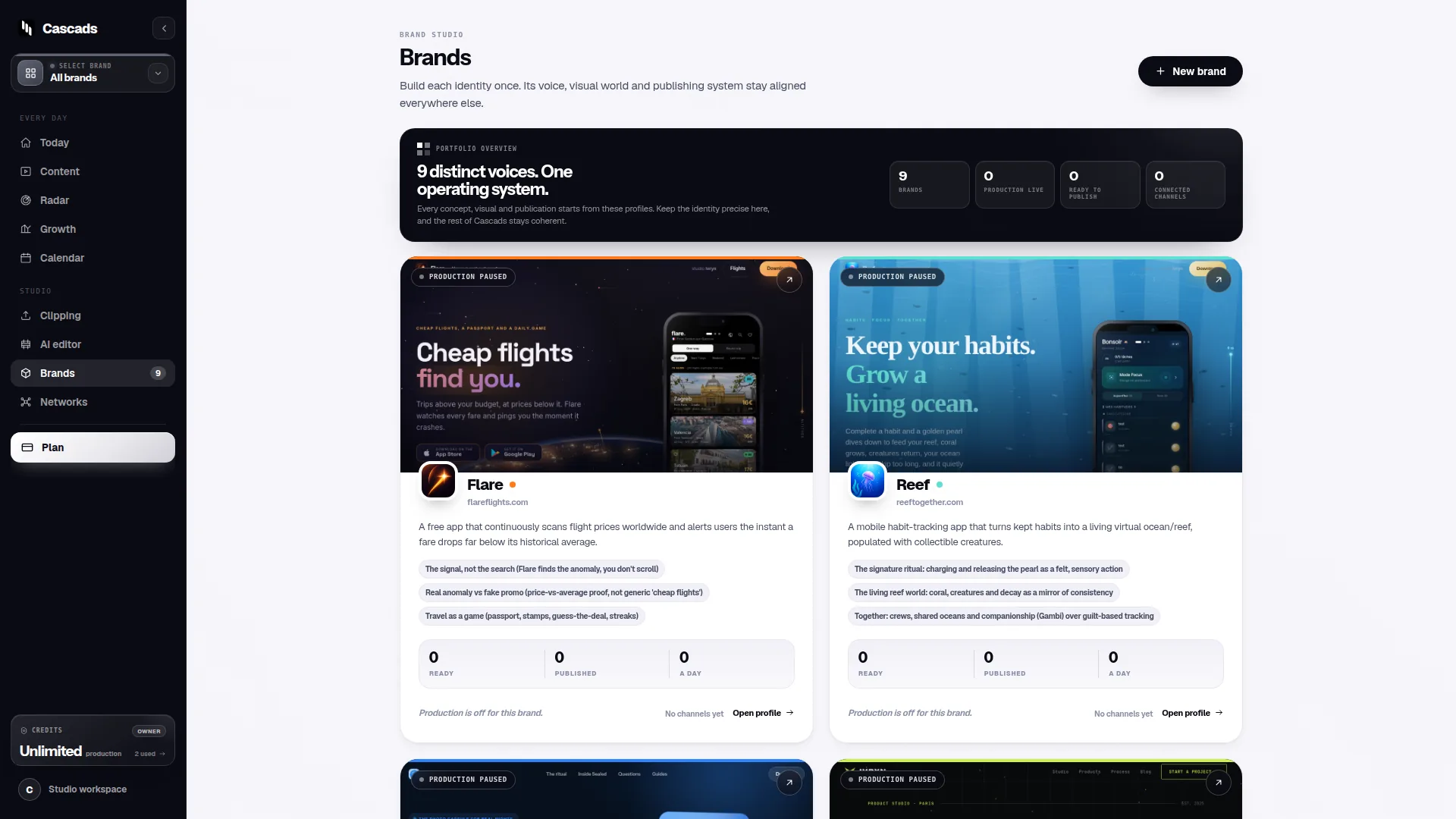
Brand context is the information that keeps repeated production useful rather than repetitive. It can include the brand voice, approved topics, audiences, visual direction, prohibited claims, current priorities and preferred calls to action. Teams handling multiple brands should keep this context distinct; blending it informally is a common source of off-brand posts and avoidable revision cycles.
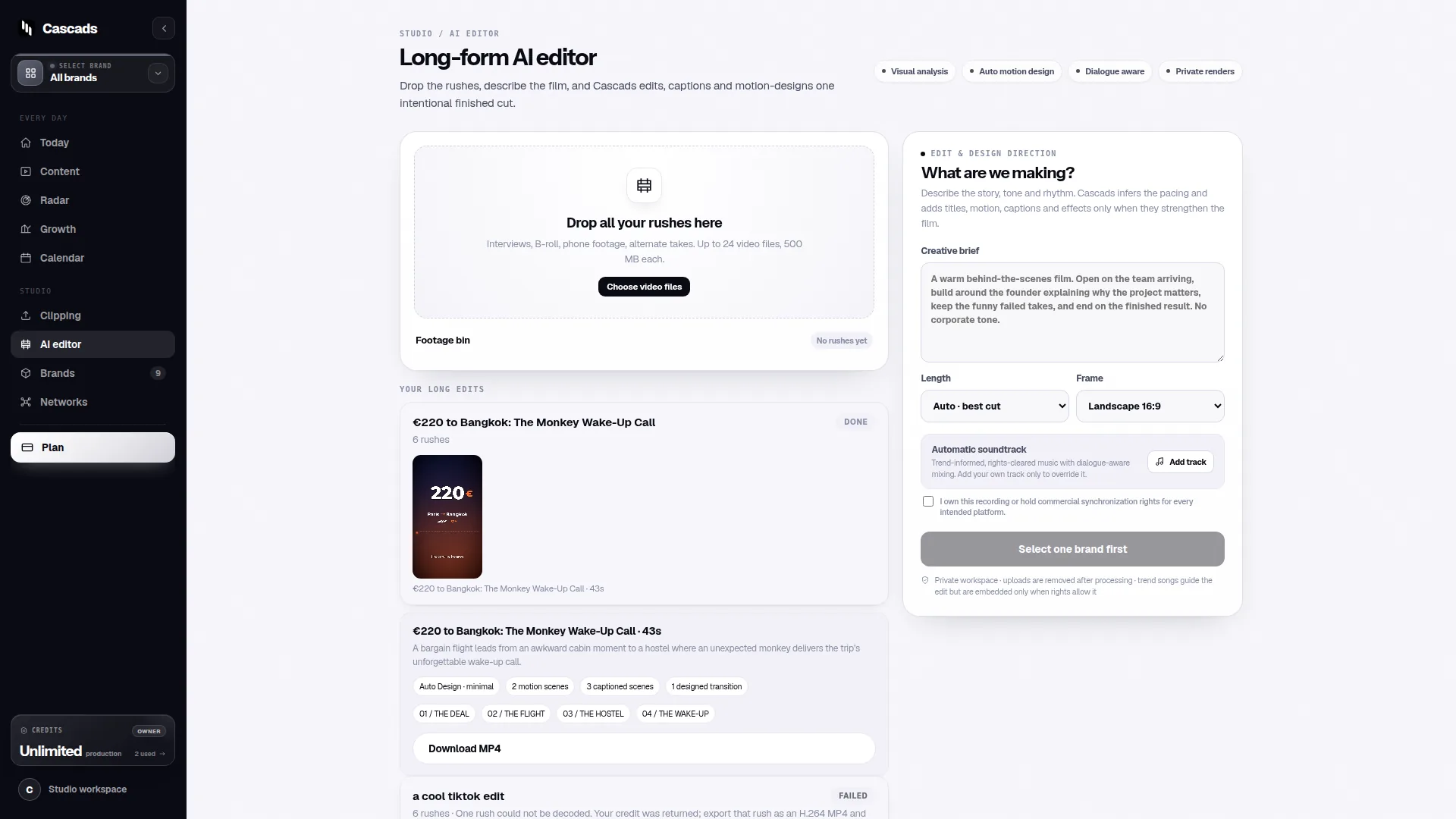
A reusable brand profile can make production more consistent when the same core information needs to inform many pieces of content. Cascads is an IVRYN product designed for producing and scheduling social content, and its public product context includes creating text posts, vertical video concepts and carousel material from a reusable profile for each brand. That capability is a workflow aid, not a replacement for the people responsible for the final message.
Human review remains an essential boundary. Generated or drafted material should be checked for accuracy, relevance, tone, rights, current campaign details and suitability for the intended network before it is released. This is particularly important when a post refers to pricing, regulated subjects, promotions, partnerships or fast-changing events.
- Keep approved brand language and prohibited claims in the same place as campaign briefs.
- Give reviewers a clear decision: approve, request changes or reject with a reason.
- Version time-sensitive copy so old drafts are not accidentally reused.
Plan content by format, not just by topic
A single campaign idea may work as a short text post, a vertical video and a carousel, but those are not interchangeable containers. A text post needs a clear opening and readable call to action. A vertical video needs a strong first moment, legible on-screen information and media that works on a phone. A carousel needs a sequence in which each panel earns the next.
Start with the reader or viewer action you want, then choose the format that best supports it. Use a concise text post for a timely update or question, a carousel for a step-by-step explanation, and vertical video when motion, demonstration or a human presence materially improves understanding. Reusing the same words unchanged across formats can make content feel copied rather than coordinated.
Production planning should also account for the assets behind the format. Check whether images, video, logos, music, captions and contributor permissions are ready before scheduling. If an asset is not cleared or a claim cannot be verified, it is better to revise the post than to treat the schedule as a reason to publish.
- Write one audience promise for each asset before drafting it.
- Create format-specific review checks for text, video and carousel content.
- Keep captions and essential information understandable without sound where possible.
Social media management Zimbabwe: publishing limits to confirm
Scheduling is not the same as guaranteed direct publication. Whether a post can publish directly can vary by social network, media type, connected-account permissions and approval by the external platform. These conditions can change, so the operational rule is to confirm the current pathway for the exact network, account and asset rather than assuming that a successful workflow elsewhere will transfer unchanged.
Use a publishing-integration checklist before promising an automated process to a client or team. Check that the intended account is correctly connected, that the person setting up access has the necessary authority, that the required permissions are present and that the selected content format is supported for the intended destination. Also determine what fallback will be used if direct publishing is unavailable: a notification, an exportable asset or a manual post prepared for a named owner.
The same discipline applies to approvals. A content approval workflow should make status visible, identify the accountable reviewer and retain the context needed to understand what was approved. Approval should happen before publication, not as an informal assumption after a post enters a calendar.
- Verify direct-publication eligibility for each network and format before campaign launch.
- Assign a manual publishing fallback and deadline for every critical post.
- Recheck permissions after account, team-role or platform-policy changes.
Example decision aid: a two-brand agency campaign
Example: an agency is preparing one week of content for a local service business and a consumer brand. The agency first creates separate brand contexts, including voice, audience, approved themes and review contacts. It then chooses a small set of format-appropriate assets: explanatory carousels for the service business, short text updates for timely news and vertical videos where visual demonstration is useful.
For every asset, the agency creates a simple decision record: what the post is trying to achieve, who has checked it, which network it is intended for, which format it uses and whether direct publishing is confirmed. If a video is suitable creatively but its proposed destination cannot accept it through the available publishing connection, the team does not represent it as automatically publishable. It assigns a person to publish manually or adapts the asset for a supported route.
This example is a planning method, not a claim that any workflow will produce a particular reach, engagement or sales result. Its value is risk reduction: it surfaces missing approvals, unclear ownership and format constraints while there is still time to adjust.
- Decision record: brand, audience, objective, format, network, reviewer, status and publication route.
- Go/no-go question: is the content accurate, approved and technically ready for this exact destination?
- Fallback question: who will post it, and how, if direct publishing cannot proceed?
A practical next step for small teams
Begin with a short pilot rather than rebuilding every process at once. Choose one brand, one campaign and a limited number of networks. Document the brand context, produce a small group of assets in the formats that genuinely fit the campaign, run them through review and validate the publishing route before the scheduled date.
At the end of the pilot, assess the process itself. Were responsibilities clear? Did reviewers receive enough context? Were media files and permissions ready? Did each network accept the planned format through the available route? These questions are more reliable starting points than broad assumptions about automation.
Cascads can be considered where a team wants a reusable per-brand basis for generating social copy, vertical-video and carousel content, alongside scheduling. Its published product boundaries still apply: people should review material before release, and direct publishing depends on the destination network, asset type, account access and external approval.
Frequently asked questions
What is social media management in Zimbabwe?
Social media management in Zimbabwe is the process of planning, creating, reviewing, scheduling and publishing social content for relevant audiences and networks, while adapting the workflow to each brand, content format and available publishing route.
Can every scheduled social media post publish automatically?
No. Direct publishing can depend on the network, the type of media, permissions on the connected account and approval or support from the external platform. Confirm the route for each destination and keep a manual fallback.
Why is human review important for generated social content?
Human review helps ensure that drafted or generated content is accurate, appropriate to the brand, current, compliant with internal requirements and suitable for the specific network before it is published.
Sources and further reading
These resources provide the wider reference frame. Product statements on this page are limited to the public information provided by Cascads.