What social media management on Upwork can cover
Social media management on Upwork can mean very different assignments: writing post copy, planning a calendar, creating assets, editing vertical video, responding to community messages, preparing reports or coordinating publishing. Before you search for a freelancer, decide which of these outcomes you actually need. A broad request for “social media management” can attract capable people, but it can also hide important differences in workload, approval responsibility and access requirements.
For a small team or agency handling several brands, the central question is usually not whether one person can make posts. It is whether the work can move reliably from brand context to approved, channel-appropriate output. A freelancer may be a strong writer yet not be the right fit for video editing, carousel design, scheduling coordination or account administration. A narrowly defined first engagement is often a clearer way to assess fit than assigning every social task at once.
- Define the deliverables: text posts, vertical videos, carousels, scheduling support or a combination.
- State the brands, channels, posting cadence and languages involved.
- Separate content creation, review, publishing and community management responsibilities.
Set a brief that protects brand context
The quality of outsourced social work depends heavily on the information that travels with the assignment. Give the freelancer a usable brand brief: audience, voice, positioning, approved terminology, topics to avoid, examples of prior work, campaign goals and the people who can approve final material. This reduces the risk that a contractor fills gaps with assumptions that are unsuitable for one of your brands.
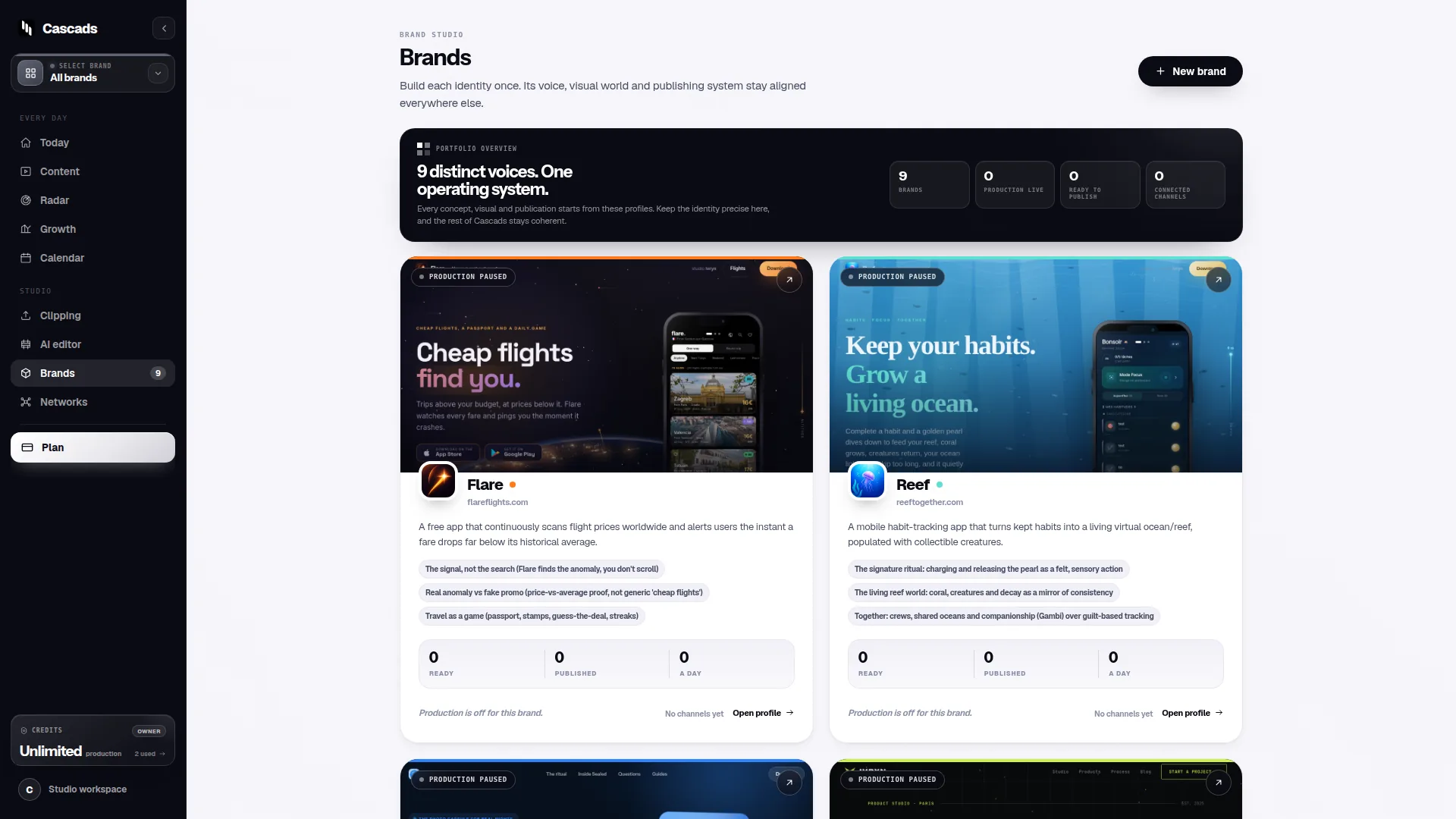
If you work across several client brands, do not rely on a single generic instruction sheet. Keep each brand’s context distinct and make it clear which account, audience and objective applies to every content request. Reusable brand profiles can help a team keep recurring inputs together; Cascads is an IVRYN product designed for producing and scheduling social content from a saved profile for each brand. That context does not replace editorial judgment, but it can make handoffs more consistent.
A good brief also distinguishes facts from creative direction. Provide verified claims and required disclosures separately from tone suggestions. Ask the freelancer to flag missing information rather than invent a statement, especially for regulated sectors, promotions or claims about performance.
- Include a short “must say / must not say” list for each brand.
- Provide source links or internal references for factual claims.
- Name one decision-maker for routine approvals and one backup.
Plan multi-format production before you hire
A monthly posting target is not enough to estimate the work. One idea may need a short text post, a vertical video script and edit, and a carousel with slide-level copy and design direction. Each format has its own production steps, feedback points and technical constraints. Spell out whether the freelancer is expected to create concepts only, finished assets, source files, captions, alt text or all of the above.
Ask candidates to explain their proposed workflow for turning one campaign theme into several formats. The aim is not to demand a particular tool or process; it is to find out whether they understand that a reused message still needs adaptation. A carousel may need a clear slide sequence, while a vertical video needs a hook, pacing, visual footage or graphics, captions and a final export suitable for the intended channel.
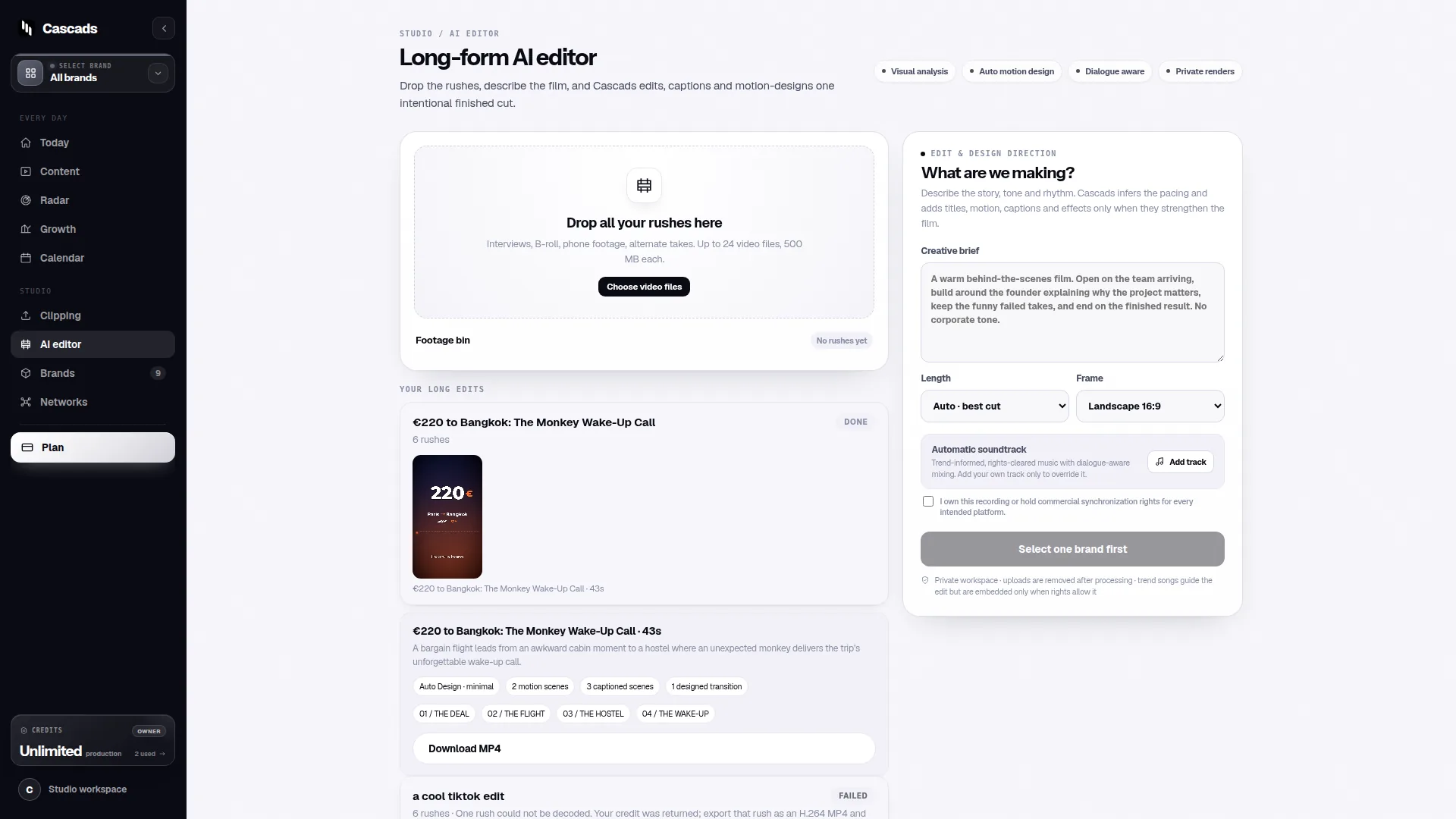
Cascads can generate written posts, short vertical video material and carousel content from a stored brand profile, but generated material still needs a person to examine it before it goes live. If a freelancer uses AI-assisted drafting or your team supplies drafts from a workflow tool, agree in advance who checks factual accuracy, brand fit, accessibility and final wording.
- Request deliverables by format, not only by number of posts.
- Specify whether revisions include copy, visual direction, editing or all three.
- Decide who owns source files and where approved assets are stored.
Social media management on Upwork: evaluate proposals with a practical test
Compare proposals against your operating needs rather than choosing solely from a portfolio or headline rate. A portfolio can show aesthetic ability, but it may not show how someone handles a late approval, a missing asset, several brand voices or a platform-specific publishing restriction. Ask candidates focused questions about their handoff process and how they document revisions.
A paid, limited trial can make expectations observable without pretending it proves long-term results. Use a realistic but contained brief: one brand, one campaign theme and a small set of formats. Review not only the finished work but also whether the contractor asks useful questions, follows the brief, labels assumptions and incorporates feedback cleanly.
Example: An agency needs content for two local service brands. It assigns a trial of three deliverables for one brand: two text posts, one six-slide carousel and a vertical-video script with a shot list. The agency supplies approved service details, brand voice notes and examples. The contractor returns drafts in a shared review space, identifies one unsupported claim in the source material and revises after a single consolidated feedback round. The agency can then judge workflow compatibility before expanding scope to both brands.
- Ask how the candidate tracks versions and approval status.
- Use one consolidated feedback round during a trial.
- Evaluate questions, documentation and reliability alongside creative output.
Keep approval and publishing responsibilities explicit
Content approval and direct publishing are different responsibilities. A draft can be ready from a creative standpoint while still requiring review for accuracy, brand tone, rights, campaign timing or client approval. Establish a visible status system such as draft, internal review, client review, approved, scheduled and published. The approval workflow should identify who can change copy, who can approve it and what happens when feedback conflicts.
Do not assume that an approved post can automatically be sent to every network in the same way. Direct publishing is shaped by the destination network, the media type, the permissions on the account and the external platform’s approval of the connection. A format that is ready for one channel may need a different export, caption treatment, permission level or manual publishing step for another.
The publishing integration checklist and approval workflow guidance are useful boundaries here: check account access and platform requirements early, and avoid treating scheduling as a substitute for review. Give a contractor only the level of access required for the assigned task, and retain a clear internal owner for final publication decisions.
- Confirm account roles and connection approvals before a publishing deadline.
- Check every planned format against the intended network.
- Keep final approval separate from a contractor’s ability to schedule or publish.
Use a decision aid before committing to a larger engagement
Choose the scope that matches your bottleneck. If your team already has a clear strategy but lacks production capacity, commission defined batches of posts, videos or carousels. If the bottleneck is coordination, prioritize a contractor who can maintain calendars, route drafts and record decisions. If your brand context is incomplete, fix that first; outsourcing cannot reliably compensate for missing positioning or unverified claims.
A recurring arrangement becomes easier to manage when it has a cadence: a planning session, a production window, a review deadline, a publication check and a short retrospective. The purpose is not bureaucracy. It is to make content quality and publishing readiness visible before the deadline, particularly when several brands and networks are involved.
Before acting, write down the scope, access boundaries, turnaround expectations, revision rules, approval owner and publishing path. Those details give both sides a practical basis for deciding whether social media management on Upwork is the right way to extend your team.
- Choose production support when strategy and approvals are already clear.
- Choose coordination support when content is being delayed by handoffs.
- Pause the hire if brand facts, ownership or publishing permissions are unresolved.
Frequently asked questions
What should I include in an Upwork brief for social media management?
Include the exact deliverables, brands, networks, audience, voice, approved claims, posting cadence, revision process, approval owner, access needs and whether publishing is part of the assignment. Separate content creation from final approval and account administration.
Can a freelancer publish directly to my social accounts?
Possibly, but direct publishing depends on the social network, media format, account permissions and the external platform’s approval of the connection. Confirm those conditions before assigning a deadline, and give only the access needed for the task.
Who should review AI-generated or freelancer-created social posts?
A designated human reviewer should check content before publication for factual accuracy, brand fit, rights, timing and channel suitability. Generated drafts and outsourced work can speed production, but review remains a separate responsibility.
Sources and further reading
These resources provide the wider reference frame. Product statements on this page are limited to the public information provided by Cascads.