Why a social media management quotation is hard to compare at face value
When a small team or agency asks for a social media management quotation, the number on the page rarely tells the whole story. Two quotes for what looks like the same scope can differ widely because one assumes manual posting and the other assumes a tool that generates drafts automatically, or because one includes review cycles and the other treats every revision as billable extra.
Before comparing prices, it helps to separate three things that quotations often blend together: the cost of producing content (writing, filming, designing), the cost of adapting that content per brand and per format, and the cost of getting it published and approved. A quotation that looks cheap on production can turn expensive once you add the coordination work of adapting one campaign across several brand accounts and networks.
Brand context changes what a fair quote looks like
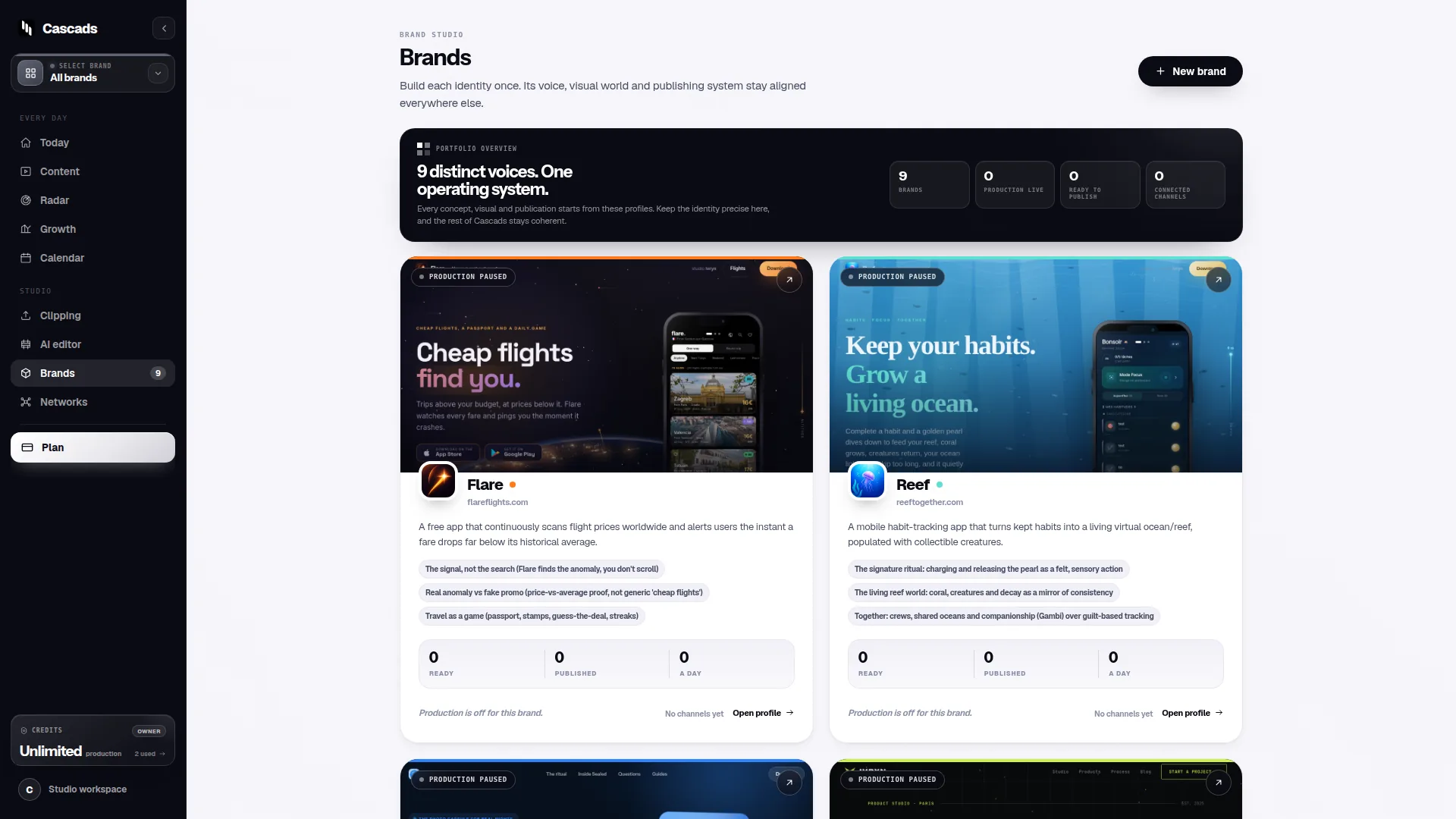
Agencies and small teams managing several brands know that content rarely starts from zero for each client. A reusable brand profile - tone, visual identity, past examples, approved claims - lets a producer or a tool generate new posts faster because the groundwork doesn't need to be rebuilt every time. When you request a quotation, it's worth asking explicitly whether the pricing accounts for this kind of reusable setup or whether every deliverable is priced as a one-off.
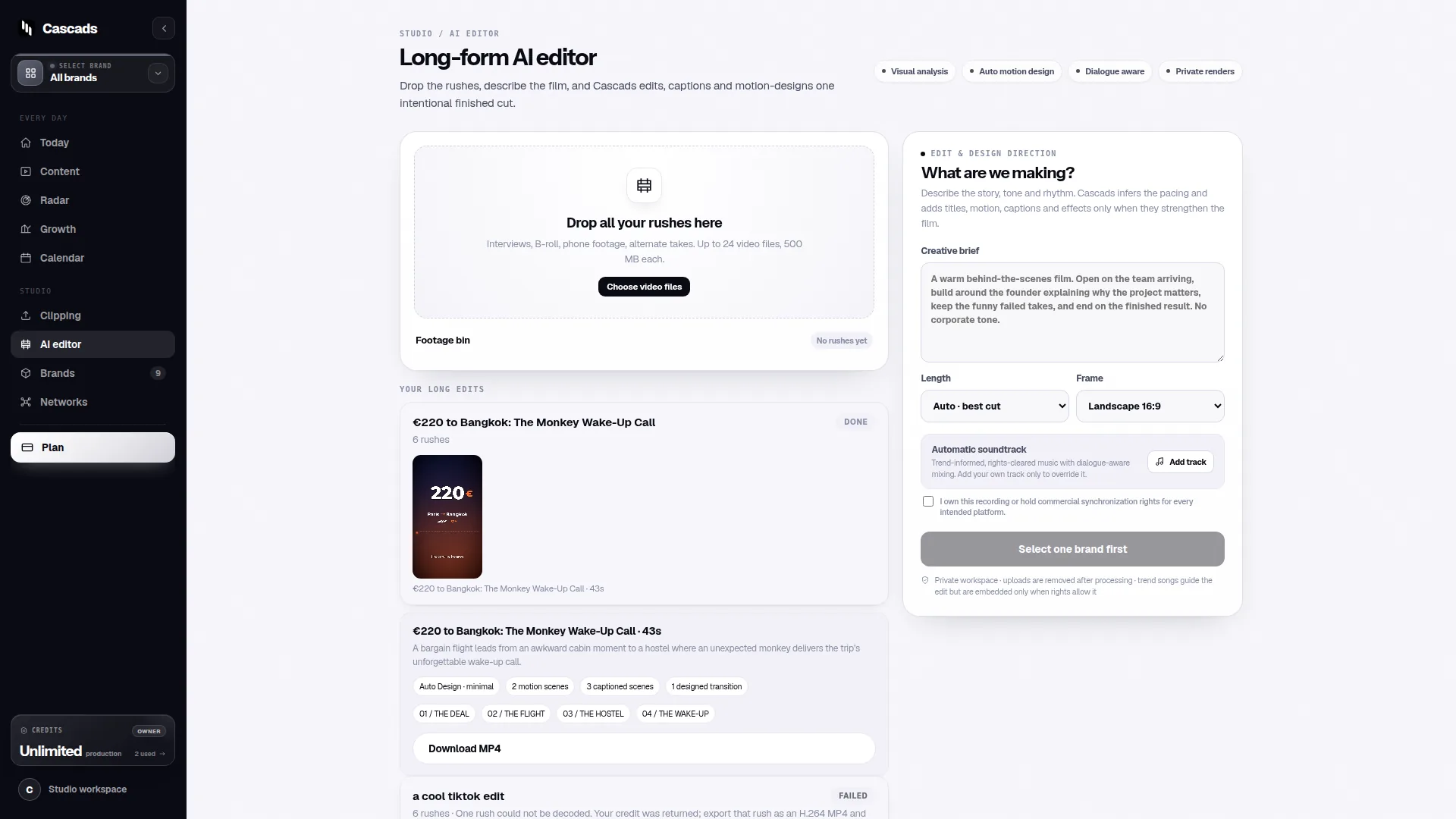
This is one area where a platform like Cascads, an IVRYN product built for producing and scheduling social content across brands, illustrates the distinction: it works from a profile kept per brand so that text posts, vertical videos and carousels can be generated without re-explaining brand context each time. That doesn't replace human judgment about what to post, but it does change where the effort in a quotation should go - less on repetitive setup, more on review and strategy.
Multi-format production and its effect on scope
A social media management quotation for text posts only is a different proposition than one covering vertical video, carousels, and text together. Formats have different production costs, different review needs, and different platform requirements. When comparing quotations, check whether format coverage is spelled out explicitly rather than left as an assumption that could later become a scope dispute.
If a quote or proposal claims a single tool or team can produce all formats at the same speed and quality, treat that as a claim to verify rather than accept outright, since production complexity genuinely varies by format and by network. A vertical video intended for one platform's short-form feed may need re-cutting or re-formatting before it works elsewhere; asking how a provider handles this before signing is a reasonable part of any evaluation.
- Ask which formats (text, video, carousel) are included, not just "social content"
- Ask whether adaptation across brands is priced separately or bundled
- Confirm whether revisions or review rounds are included in the quoted price
Human review belongs in the quotation, not as an afterthought
Any serious quotation for social media management should account for the fact that generated or drafted content is not meant to go out unreviewed. This is true regardless of whether content is produced manually or with the help of generation tools: someone with brand and compliance knowledge needs to check drafts before they're scheduled or published. If a quotation has no line item or step for review, that's worth raising directly with the provider.
Cascads treats this as a built-in step rather than an optional add-on: generated marketing output is subject to human review before publication. That framing is useful context for evaluating any quotation, since it signals that faster content generation is meant to shift time toward review and approval, not eliminate that step. A workflow that skips review to save cost is trading a real safeguard for a marginal time saving.
Format-aware publishing and platform limits that a quotation should acknowledge
A recurring gap in social media management quotations is the assumption that publishing directly to every network, for every format, is always possible on request. In practice, direct publishing depends on the network involved, the media format, the account's permissions, and the external platform's own approval processes. A quotation that promises unconditional direct publishing to any platform overstates what any provider - including Cascads - can guarantee, because the constraint sits partly outside any single tool's control.
Cascads' own guidance on this, in its social media publishing integration checklist and its approval workflow guide, frames the sequence as: content is prepared and reviewed internally, then published where the target network's account setup and approval status allow it. When you're evaluating a quotation, ask the provider to be specific about which networks and formats they can publish to directly today, and which require manual steps or platform-side approval, rather than accepting a blanket claim.
- Ask which networks support direct publishing versus manual export
- Ask what happens if a platform's approval process delays a post
- Check whether account permission issues are the client's responsibility or the provider's
A worked example: comparing two quotations for a three-brand agency
Example only, not a real case. Suppose a small agency manages three brands and receives two quotations for social media management covering text posts, short vertical videos, and carousels across two networks per brand.
Quotation A prices each brand's monthly content as a flat fee that includes drafting, one round of review, and manual scheduling, with no mention of reusable brand setup. Quotation B is initially higher per brand but explains that a reusable brand profile is set up once, that draft generation across formats draws on that profile, and that human review is a defined step before anything is scheduled - with direct publishing offered only where the network and account permissions support it, and manual export as the fallback elsewhere.
On paper, Quotation A looks cheaper. But if the agency expects to run campaigns monthly across all three brands, the setup cost embedded in Quotation B is paid once, while Quotation A's per-brand rebuilding cost recurs every cycle. The lesson from this example isn't that either structure is inherently better, but that a quotation's price only means something once you know whether setup, review and publishing constraints are priced in or left implicit.
Questions to ask before accepting a social media management quotation
Before signing off on a quotation, it's reasonable to request written answers to a short list of questions covering scope, review, and publishing limits. Providers who can answer these plainly are generally easier to work with over time, because expectations are set before work begins rather than renegotiated after a missed deadline or a rejected post.
None of this replaces your own judgment about budget and fit - a quotation is a starting point for a conversation, not a guarantee of outcomes, and any provider's public product description, including Cascads', should be read as a description of current capability rather than a promise about your specific results.
- Which formats and how many pieces per format are included per billing cycle?
- Is brand profile setup (tone, visuals, examples) a one-time or recurring cost?
- How many review rounds are included, and who approves final content before it's scheduled?
- Which networks allow direct publishing today, and what's the fallback when they don't?
Frequently asked questions
What should be included in a social media management quotation besides content creation?
A complete quotation should also account for brand setup or profile work, the number of review rounds before publishing, and how publishing is handled across different networks and formats, since these steps affect both cost and turnaround time even when they aren't itemized as separate line items.
Can a social media management provider guarantee direct publishing to every platform?
No. Direct publishing depends on the network, the media format, the account's permissions, and the external platform's own approval process, so any quotation promising unconditional direct publishing everywhere should be questioned rather than taken at face value.
Does using content generation tools remove the need for human review in a quotation?
No. Generated marketing content, whether drafted manually or produced with the help of a tool, should still go through human review before it is published, and a quotation that omits this step is skipping a meaningful safeguard rather than saving genuinely unnecessary work.
Sources and further reading
These resources provide the wider reference frame. Product statements on this page are limited to the public information provided by Cascads.