What social media management qualification actually covers
Social media management qualification is not a single credential you either have or lack. In practice, for a small team or agency, it means having a repeatable way to represent each brand accurately, produce content across formats, get it checked by a person, and get it published in a way each network will accept. Treating it as a checklist of competencies rather than a certificate is more useful when you're deciding whether your workflow is actually ready to scale.
This framing matters because the term gets used loosely. Some people mean 'can this person write good captions,' others mean 'does this team have the operational controls to avoid mistakes across ten client accounts.' For agencies managing multiple brands, the operational reading is the one that determines whether growth is safe or reckless.
Brand context as the foundation
A qualified social media operation starts with a clear, reusable representation of each brand: tone, visual identity, audience, and constraints. Without that, every piece of content is produced from scratch, which is slow and inconsistent, and it's harder to catch off-brand output before it goes live.
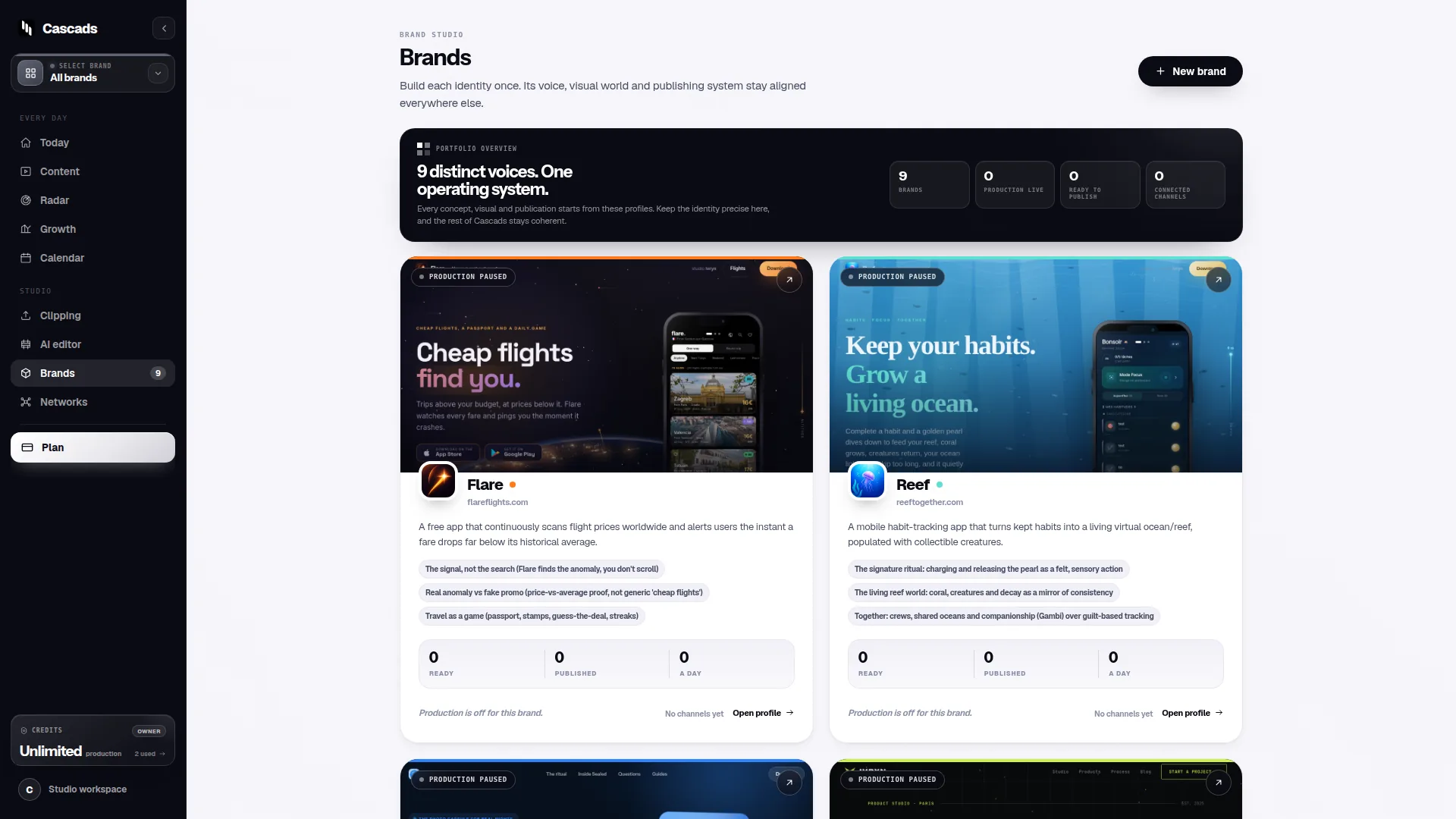
Cascads approaches this by letting a brand's context be captured once, in a reusable profile, and then drawn on when generating content, rather than re-briefing from zero each time. That's a practical convenience, not a substitute for someone on the team actually knowing the brand well enough to judge whether the output fits.
Multi-format production and its limits
Qualification also means understanding that different formats carry different risks and different production needs. A text post, a vertical video and a carousel are not interchangeable outputs of the 'same idea' - each has its own pacing, length constraints, and platform expectations, and a team that only knows how to produce one format well is under-equipped for a genuinely multi-network presence.
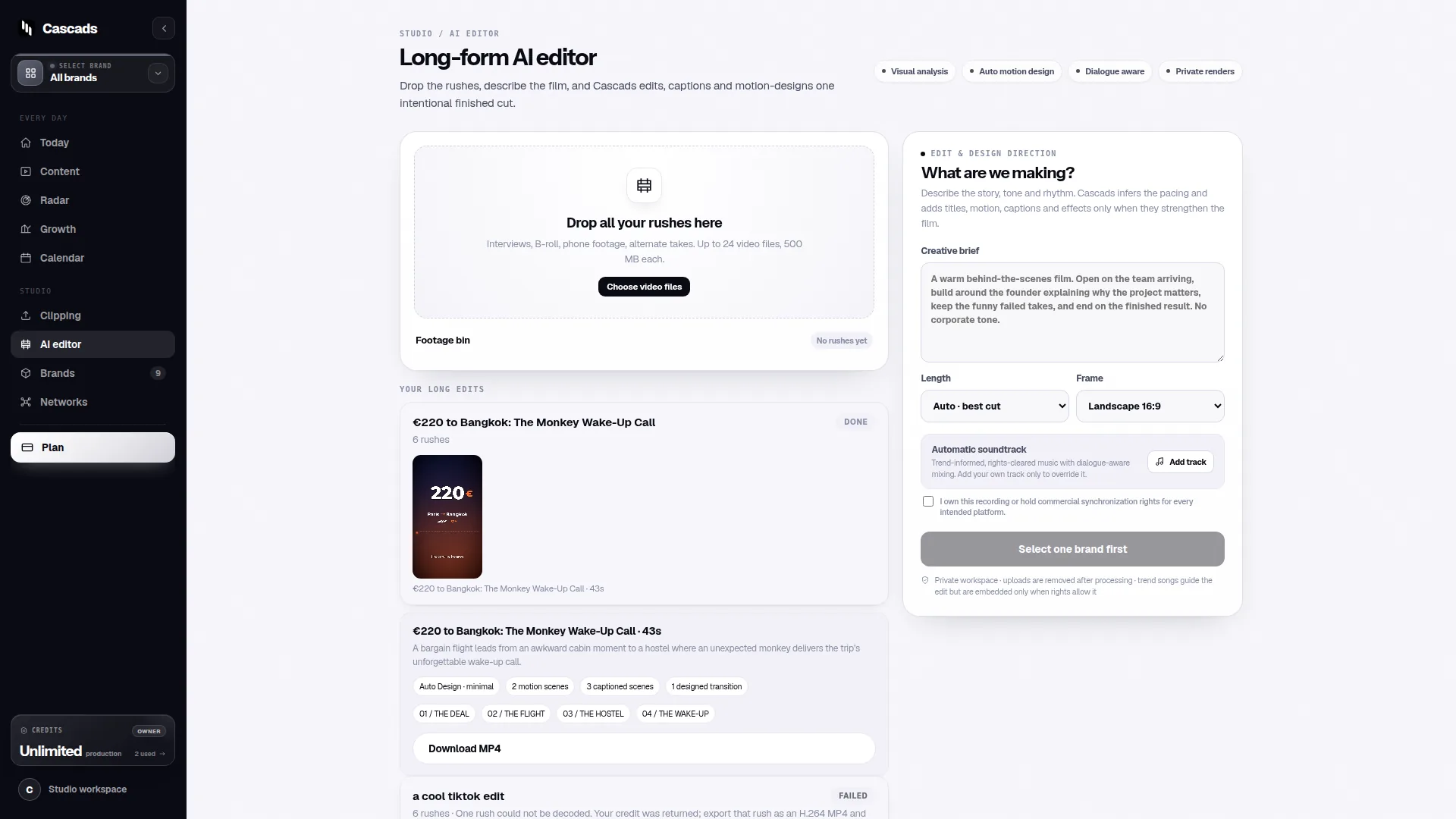
Tools that generate across formats from a shared brand profile, as Cascads does for text posts, vertical videos and carousels, can reduce the production burden, but they don't remove the need for someone to judge whether a given format is right for a given message and audience. Generation speed is not the same as editorial judgment.
Why human review remains non-negotiable
This is arguably the core of qualification: recognizing that generated marketing output, however produced, still needs human review before it goes out. That review checks for accuracy, tone drift, sensitive topics, timing conflicts, and anything that reads well in isolation but poorly in context.
Cascads' own approach reflects this: generated content is treated as a draft that a human is expected to check, not a finished asset. A useful reference point here is a structured approval workflow - see the social media approval workflow guide - which lays out how review steps can be organized so nothing skips the check by accident.
Skipping this step is the single most common way otherwise-qualified teams get into trouble. Automation can produce volume; it cannot substitute for someone deciding whether a specific post should exist.
Format-aware publishing: the search query in practice
Part of social media management qualification is understanding that publishing is not uniform across networks. Whether content can be pushed directly to a platform depends on the network itself, the media format, the permissions granted on the connected account, and the platform's own approval process at the time. None of these are fixed; they shift as platforms change their rules and integrations.
This is a place where teams often overestimate their own readiness. Having content approved internally is not the same as having a working, permissioned connection to every network you intend to post on. The social media publishing integration checklist is a useful reference for working through what a given connection actually requires before you assume direct publishing will work.
A qualified operation treats publishing as a step with its own prerequisites, not an automatic final click after content is approved.
A worked example: assessing a small agency's readiness
Consider a hypothetical three-person agency managing five client brands across four networks. To assess whether they meet a reasonable bar for social media management qualification, they might walk through a short internal audit, illustrated below purely as an example and not as a claim about any real team.
Example checklist:
- Does each brand have a documented, reusable reference for tone, visuals and constraints, or is it re-explained each time?
- Can the team produce in at least the formats their audience actually consumes (text, short video, carousel), not just one?
- Is there a defined human review step before anything is published, with a named person responsible?
- For each network, has someone verified account permissions and the platform's current approval requirements, rather than assuming direct posting will work?
- Is there a record of who approved what, so mistakes can be traced and corrected?
- If most of these are 'no' or 'unsure,' the gap isn't talent, it's process. Closing it usually means formalizing brand references, adding a review checkpoint, and checking publishing permissions per network before scaling volume.
Where tools like Cascads fit, and where they don't
It's worth being explicit about the boundary. Cascads is built for social content production and scheduling: turning a brand profile into text posts, videos and carousels, and helping route them into a review and publishing process. That's a meaningful piece of the qualification puzzle, but it's the production and workflow layer, not a replacement for brand judgment or for understanding each network's rules.
Anyone evaluating a tool as part of building qualified internal processes should treat it the same way: useful for consistency and speed, still dependent on human review and on the realities of each platform's permissions and approval steps.
Frequently asked questions
Is there a formal certification for social media management qualification?
There is no single universal certification that defines social media management qualification. It's better understood as a set of practical capabilities - consistent brand representation, multi-format production, a human review step, and an accurate understanding of each network's publishing requirements - rather than one credential.
Can generated social content be published automatically without review?
Generated marketing content should go through human review before publication, regardless of how it was produced. Review catches accuracy issues, tone mismatches and context problems that automated generation can't reliably self-check.
Why can't all approved content be published directly to every network?
Direct publishing depends on the specific network, the media format involved, the permissions granted on the connected account, and that platform's own approval process, all of which can vary and change over time. Approval of the content itself is a separate step from having a working, permissioned connection to post it.
Sources and further reading
These resources provide the wider reference frame. Product statements on this page are limited to the public information provided by Cascads.