What social media automation with ai actually changes
Social media automation with ai is often described as if it removes work entirely, but a more accurate description is that it shifts where the work happens. Instead of writing each caption or storyboarding each video from a blank page, a team defines a brand's voice, visual style and recurring themes once, and then draws on that reference repeatedly to produce new posts. The effort moves upstream, into setting up and maintaining that reference material, and downstream, into reviewing what comes out.
This matters for small teams and agencies managing several brands because the bottleneck is rarely idea generation. It is usually the repetitive translation of an established brand voice into dozens of individual posts, across text, vertical video and carousel formats, week after week. Automation tools built around a reusable brand profile are aimed squarely at that repetitive translation step, not at replacing brand strategy or judgment.
Where the brand profile does the real work
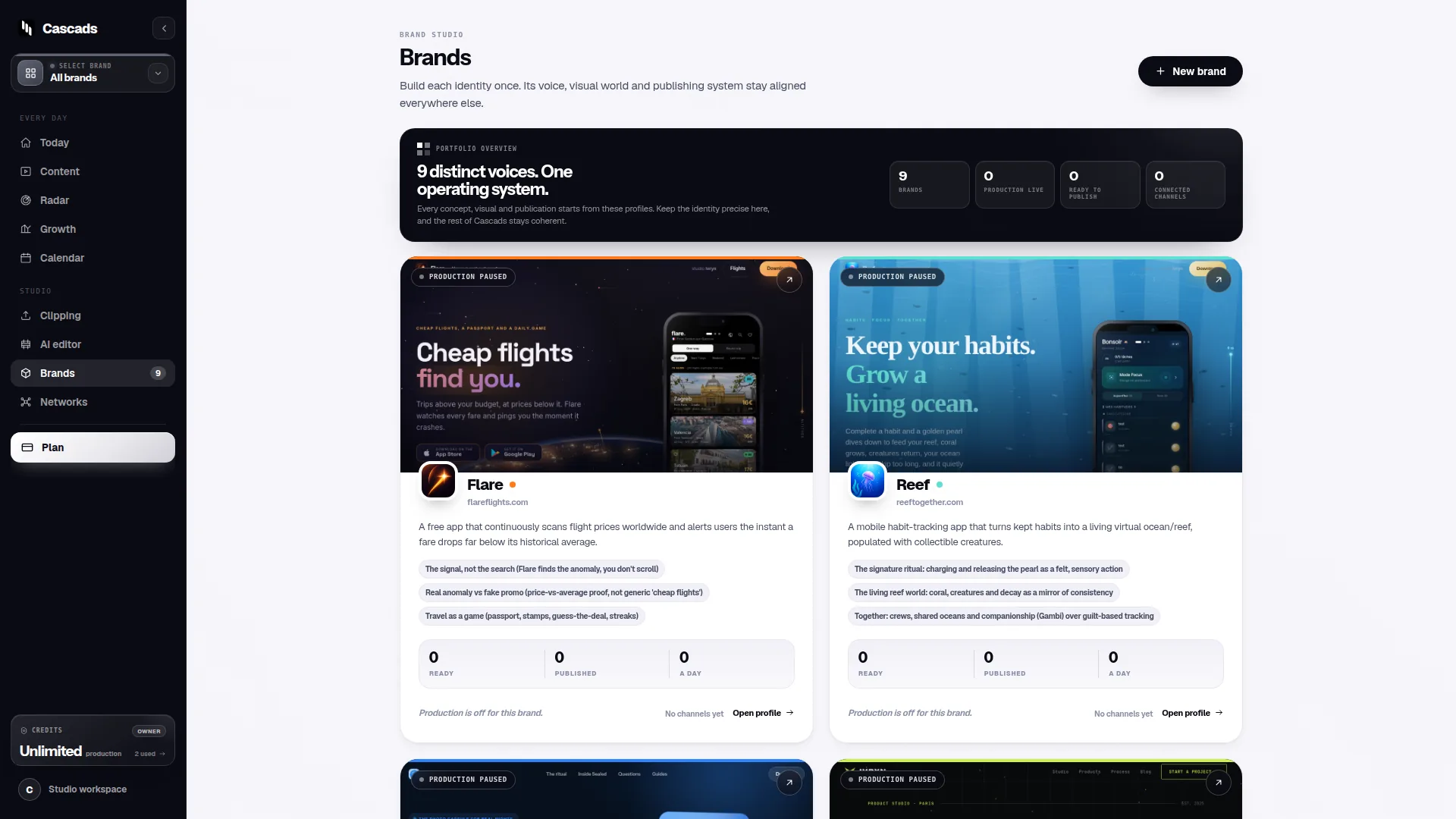
The quality of anything produced through social media automation with ai depends heavily on how well the underlying brand profile is built. A thin profile, with only a logo and a one-line description, will produce generic output regardless of how sophisticated the generation engine is. A profile that includes tone examples, product specifics, audience notes and past high-performing formats gives the system far more to work with.
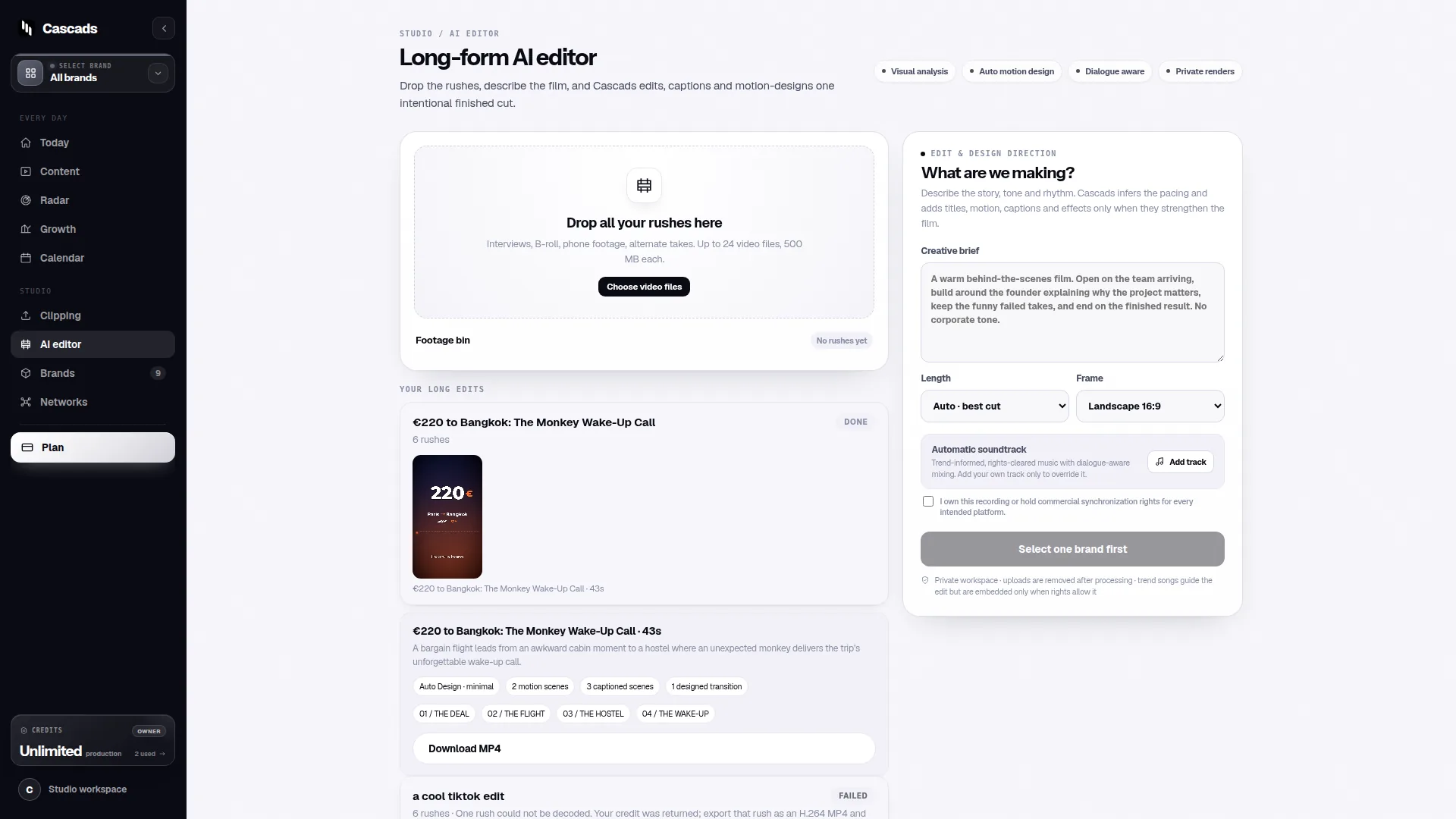
Cascads, an IVRYN product for social content production and scheduling, is built around this idea: a reusable profile per brand feeds generation of text posts, vertical videos and carousels, so a team producing content for multiple clients or brand lines does not have to restate context every time. That structure is useful precisely because agencies and multi-brand teams need to keep separate identities distinct while still benefiting from shared tooling.
In practice, this means the setup phase deserves real time investment. Treating the brand profile as a living document, revisited when a brand's positioning shifts or a campaign introduces new terminology, keeps output aligned rather than stale.
Multi-format production and its practical limits
One of the more useful aspects of modern social automation is generating a single idea across multiple formats: a text post, a vertical video script or storyboard, and a carousel, from the same underlying brief. This saves the redundant work of separately conceiving three versions of the same message.
It is worth being clear-eyed about what multi-format generation does not solve. Each format still has its own constraints, aspect ratios, pacing expectations, caption length norms, that a generated draft may only partially respect. Treating the output as a strong starting draft rather than a finished asset avoids the common mistake of publishing something that is technically on-brand but poorly fitted to the platform it is going on.
Why human review before publication is not optional
Every serious approach to social media automation with ai keeps a human review step before anything goes live, and this is not a limitation to work around but a structural part of a responsible workflow. Generated marketing output can misjudge tone, misuse a fact, or simply miss a nuance that a person on the team would catch instantly. A review step catches these issues before they reach an audience, and it also gives the team a chance to adjust for anything happening in the news cycle or a client's current situation that automated generation would have no way to know about.
A practical approval workflow assigns clear responsibility: who reviews, what they are checking for (accuracy, tone, compliance, formatting), and how quickly a piece can move from draft to approved. Cascads' approach to this, outlined in its social media approval workflow guide (https://cascads.com/guides/social-media-approval-workflow/), reflects this same principle: generated content sits in a review state rather than publishing automatically, so a person confirms it before it goes out.
For agencies managing multiple client accounts, this review step also functions as a client relationship safeguard. Clients generally want visibility into what is being posted on their behalf, and a review stage gives them, or an internal account lead, that checkpoint without slowing the whole pipeline to a crawl.
Format-aware publishing and platform-side limits
Even once content is approved, getting it live is not guaranteed to be instant or fully automated. Direct publishing to a given network depends on several factors outside any tool's control: which network it is, what media format is involved, what permissions the connected account actually has, and whether the platform's own approval or API process allows it. A team that assumes every approved post will publish itself, on schedule, without exception, is setting itself up for a surprise.
This is where a publishing integration checklist becomes genuinely useful rather than a formality. Cascads' social media publishing integration checklist (https://cascads.com/guides/social-media-publishing-integration-checklist/) walks through account permission checks, media format compatibility and platform-specific quirks that determine whether a scheduled post actually goes out as planned. Running through this kind of checklist before relying on automated scheduling for a campaign reduces the chance of a failed or delayed publish going unnoticed.
Because platform rules, permissions and API behavior change over time and vary by network, treating any given publishing capability as permanently fixed is a mistake. What is possible on one network today may require an extra permission step tomorrow, so periodic re-checking, rather than a one-time setup, is the more realistic posture.
A worked example: setting up a two-brand agency workflow
Example, not a case study: imagine a three-person agency handling social content for two client brands, one a skincare line and one a local restaurant group. The team would first build a brand profile for each, including tone examples, product or menu details, and a handful of past posts that performed well. From there, they would generate a week's worth of draft posts across text, vertical video scripts and carousels for each brand, using the shared brand profile so the drafts stay consistent without needing to be re-briefed each time.
Before anything is scheduled, one team member reviews every draft for accuracy and tone, flags anything that needs a human rewrite, and approves the rest. Separately, someone checks that each client's connected accounts have the right permissions for the formats being posted, since a vertical video might need a different permission than a static image carousel. Only after both the content review and the permission check are the posts scheduled, and even then the team spot-checks that scheduled posts actually went live, since platform-side approval can still intervene.
This sequence, brand profile, multi-format draft, human review, format-and-permission check, scheduling, spot-check, is a reasonable template rather than a fixed recipe. Teams should adapt the order and rigor of each step to their own client base and risk tolerance.
Frequently asked questions
Does social media automation with ai remove the need for a human to review posts before they go live?
No. Generated marketing output should be treated as a draft, and a human review step before publication is a standard part of a responsible workflow, not an optional extra.
Why might a scheduled post fail to publish automatically even after it's approved?
Direct publishing depends on factors outside the content itself, including which network is involved, the media format, the connected account's permissions, and the platform's own approval processes, any of which can block or delay a post.
What makes a brand profile useful for multi-brand content generation?
A brand profile that includes concrete tone examples, product or service specifics, audience context and examples of past content gives generation tools enough material to produce on-brand drafts, whereas a thin profile tends to produce generic output regardless of the brand.
Sources and further reading
These resources provide the wider reference frame. Product statements on this page are limited to the public information provided by Cascads.