Why a social media management vacancy is rarely a simple hire
When a team opens a social media management vacancy, the job posting often undersells what the role actually involves. It is rarely just writing captions or picking hashtags. In practice the person filling this vacancy needs to juggle brand voice across multiple accounts, adapt content to different formats (text posts, short video, carousels), track approval steps, and stay current on each network's publishing rules. Before writing the job description or briefing an agency, it helps to map out these responsibilities explicitly rather than assuming they are self-evident.
A useful first step is separating the role into two layers: production (creating content that fits the brand) and operations (scheduling, approvals, platform compliance). Some teams hire one person to do both; others split the work between a strategist and a coordinator, or lean on software to absorb part of the production layer so the hire can focus on judgment calls and relationships. Being clear about which layer the vacancy is meant to cover will shape both the job description and the candidate's day-to-day tooling needs.
Defining the scope before you post the role
A social media management vacancy description should specify how many brands or accounts the person will handle, since workload scales non-linearly with brand count. Managing one brand's Instagram and LinkedIn is a different job than managing five client brands across four networks, each with its own tone, audience and approval chain. If the hire is expected to work across brands, it is worth asking during interviews how candidates have kept brand voice consistent when switching contexts frequently, since this is often where quality slips.
It also matters whether the role includes final publishing authority or only content preparation. Some organizations require every post to pass through a second reviewer, whether for legal, brand or compliance reasons; others allow the social media manager to publish directly once trained. Clarifying this upfront avoids friction later and helps set realistic expectations about turnaround time.
Finally, consider whether the vacancy assumes manual, one-by-one content creation or whether the hire will work alongside tools that generate first drafts of posts, video or carousels from a defined brand profile. This changes what skills matter most: prompt refinement and editorial judgment tend to become more valuable than raw production speed.
Multi-format production as a core part of the job
Modern social feeds mix text posts, vertical video and carousels, often within the same week for the same brand. A social media management vacancy that only tests writing skills may miss candidates' ability to think in formats, since a message that works as a caption does not automatically translate into a script for a 15-second video or a slide sequence for a carousel. When screening candidates, it can help to ask them to reformat a single message across all three formats and evaluate how well they preserve the core point while adapting pacing and structure.
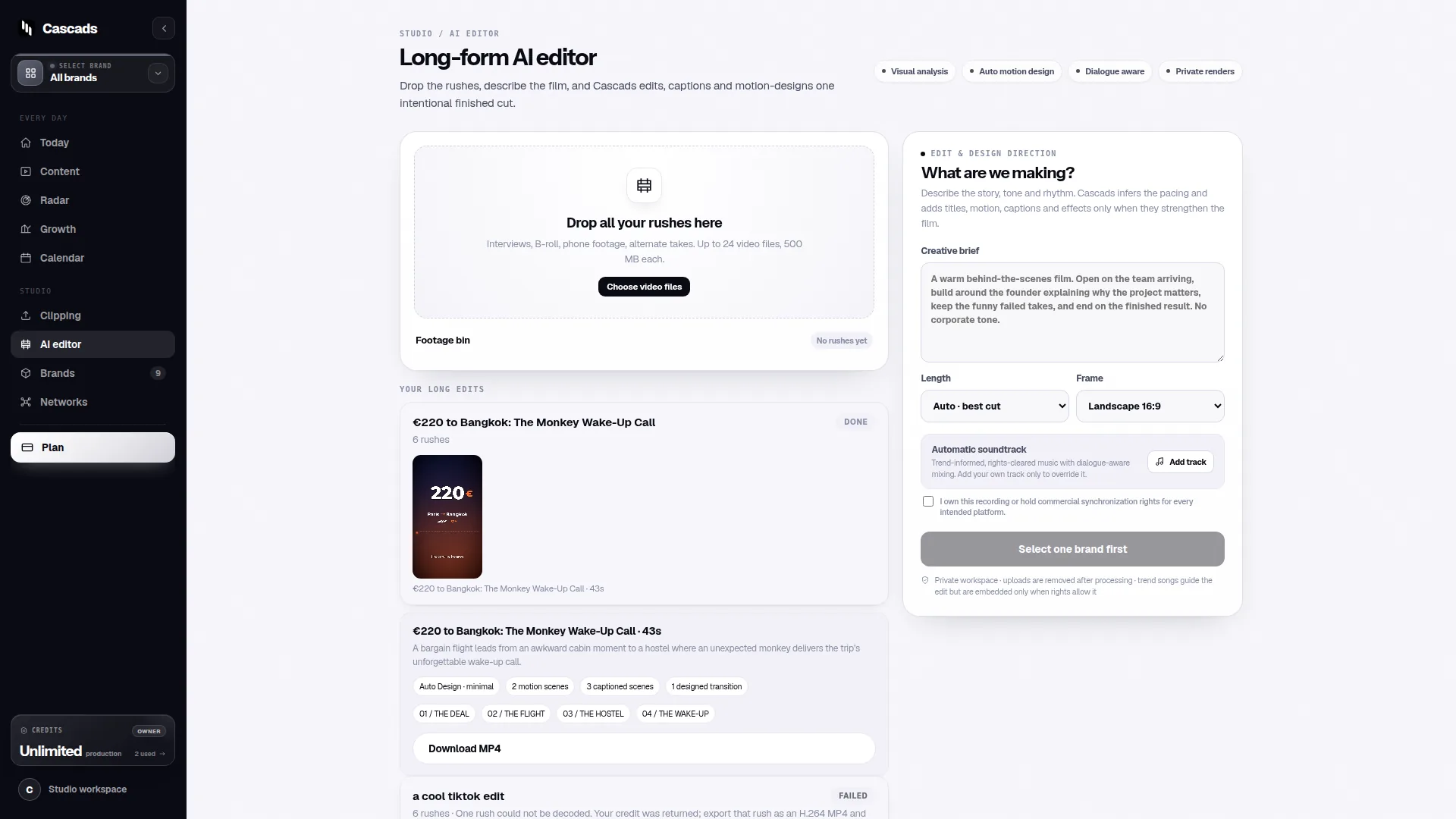
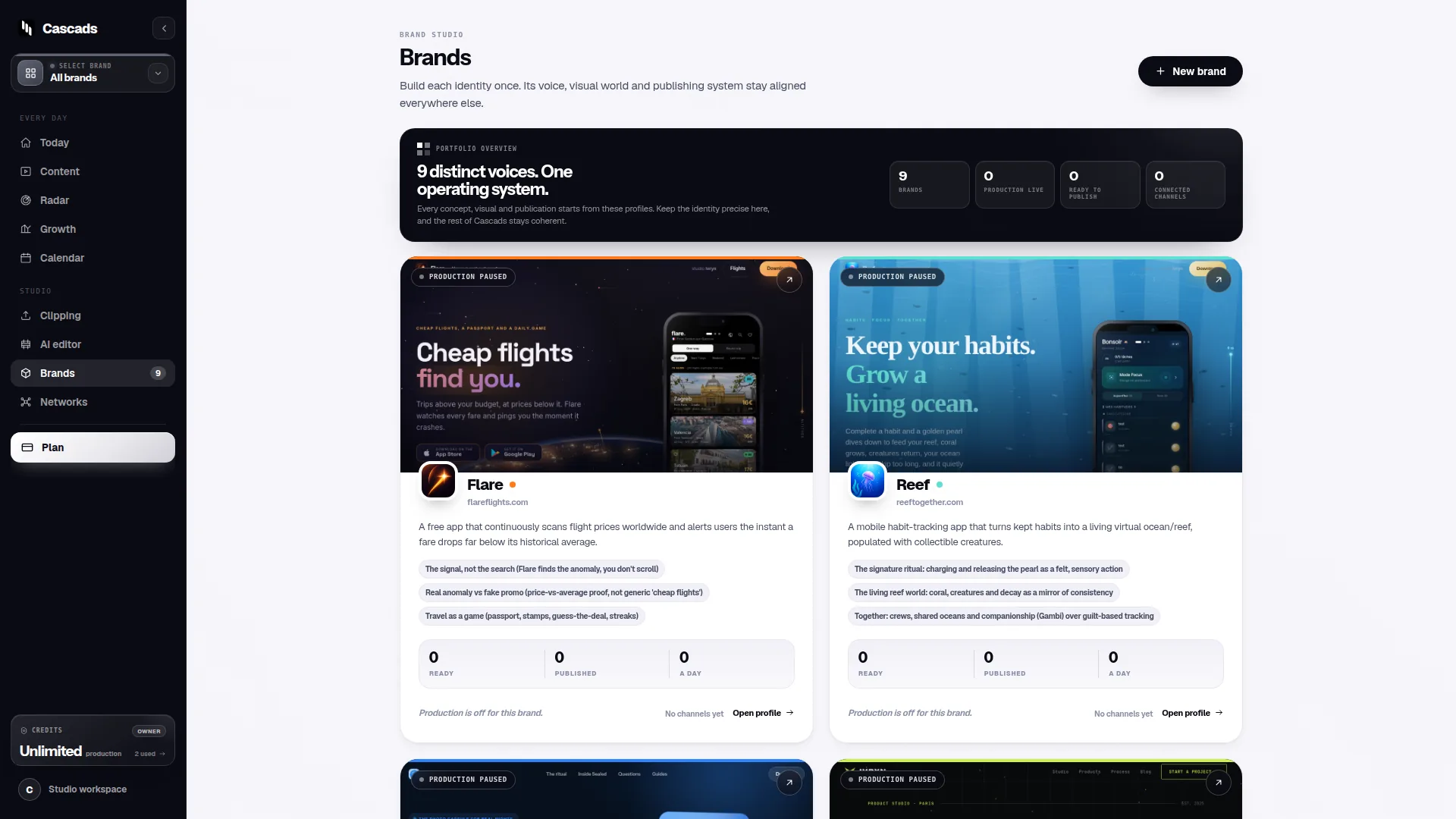
This is also where software can meaningfully change the job. Cascads, an IVRYN product built for social content production and scheduling, generates text posts, vertical videos and carousels from a reusable brand profile, which means a new hire does not have to rebuild brand guidelines from scratch for each format. That can shorten ramp-up time, but it does not remove the need for a person who understands the brand and can judge whether generated drafts actually fit the intended message and audience.
Human review is not optional, even with automation
Whatever the vacancy's scope, any output produced with the help of generation tools still needs a human review step before publication. This is true regardless of how polished a draft looks, because tools do not carry accountability for tone missteps, factual errors or timing issues (posting a promotional message during a sensitive news cycle, for example). Building this expectation into the job description, rather than treating review as a nice-to-have, sets a more accurate picture of the role's actual responsibilities.
A practical way to structure this is to define who reviews what: the social media manager might review AI-assisted drafts for brand fit, while a separate stakeholder (legal, a client, a founder) signs off on anything with regulatory or reputational risk. Cascads' approach to approval workflows reflects this layered structure, and a candidate's comfort working within a defined review chain, rather than publishing solo, is worth probing in interviews.
Format-aware publishing and platform limits the hire will face
One thing many job postings leave out: direct publishing to a network is not guaranteed to work the same way everywhere. Whether a piece of content can be scheduled and pushed automatically depends on the network itself, the media format, the account's granted permissions, and whether the platform has approved the integration being used. A social media manager stepping into a new role should expect some accounts to require manual posting, at least until API access or permissions are confirmed.
This matters for how you set expectations with a new hire during onboarding. If leadership assumes every post can be auto-scheduled everywhere from day one, the new manager may be blamed for delays that are actually platform-side constraints. Walking through an integration checklist, like the one Cascads maintains for social media publishing, during onboarding can surface which accounts are fully connected and which will need manual intervention, so the new hire isn't troubleshooting this alone under deadline pressure.
- Confirm which accounts have granted the needed publishing permissions before the hire's start date
- Identify which formats (video, carousel, text) are supported for automatic publishing on each network
- Flag any accounts still pending platform approval so the new manager knows to plan manual posting
A worked example: scoping a vacancy for a five-brand agency
Consider a hypothetical small agency managing social accounts for five client brands across Instagram, LinkedIn and TikTok. Before posting the vacancy, the agency lead sketches the role: the hire will use a brand-profile-based tool to draft weekly content, but every draft passes through the lead for review before scheduling. Some client accounts allow direct publishing; two are still pending platform approval, so those will need manual posting for now.
With this scoped out, the job description can honestly state that the role involves drafting and adapting content across formats, working within an approval process rather than publishing solo, and coordinating manual posting for a subset of accounts. A candidate reading this has a realistic sense of the job, rather than discovering these constraints in week one. This kind of scoping exercise, done before the posting goes live, tends to reduce early turnover because expectations match reality on both sides.
What this means for candidates and hiring teams
For candidates evaluating a social media management vacancy, it is reasonable to ask during interviews how many brands or accounts they would manage, whether the role includes publishing authority or only drafting, and what review process exists for generated or drafted content. These questions reveal a lot about day-to-day workload and accountability that job postings rarely spell out.
For hiring teams, the clearest way to write a fair and accurate vacancy is to separate strategy, production and publishing operations, decide which of these the new hire owns, and be upfront about platform-dependent limits on automatic publishing. None of this replaces sound judgment: software can support multi-format drafting and streamline review, but the vacancy still exists because a person is needed to make brand-specific calls, manage relationships, and take responsibility for what ultimately goes out.
Frequently asked questions
What should a social media management job description include beyond writing skills?
It should specify the number of brands or accounts involved, whether the hire has direct publishing authority or works within an approval chain, which content formats (text, video, carousel) are expected, and whether any platform accounts have publishing limitations due to permissions or pending approvals.
Does using content generation tools reduce the need for a dedicated social media manager?
No. Tools can speed up drafting content across formats from a brand profile, but generated output still requires human review for accuracy, tone and timing before publication, and someone needs to own brand judgment and stakeholder relationships regardless of what tooling is in place.
Why might a new social media hire be unable to auto-publish to every account immediately?
Automatic publishing depends on the specific network, the content format, the permissions granted on that account, and whether the platform has approved the publishing integration being used, so some accounts may require manual posting until those conditions are met.
Sources and further reading
These resources provide the wider reference frame. Product statements on this page are limited to the public information provided by Cascads.