Social media management how to: start with a decision, not a tool
When people ask about social media management how to, they usually mean two different things at once: how to organize the work, and how to pick software to help with it. Separating these questions first makes the rest of the decision easier. The organizational question comes down to who defines what a brand sounds like, who produces drafts, who checks them, and who is allowed to publish where. The tooling question only matters once those roles are clear, because software that automates an undefined process just automates confusion faster.
A useful starting point is to write down, in plain language, what your brand is allowed to say and where it is allowed to say it. This is not a branding exercise; it is an operational one. Teams that skip it tend to discover the gaps only after a post goes out with the wrong tone or on a network where it doesn't fit.
Build a reusable brand context instead of restarting each time
A recurring failure mode in social content production is treating every post as a one-off creative task. This works for a single brand with one person writing, but it breaks down for small teams or agencies managing several brands, because tone, vocabulary and constraints have to be re-explained constantly, usually inconsistently.
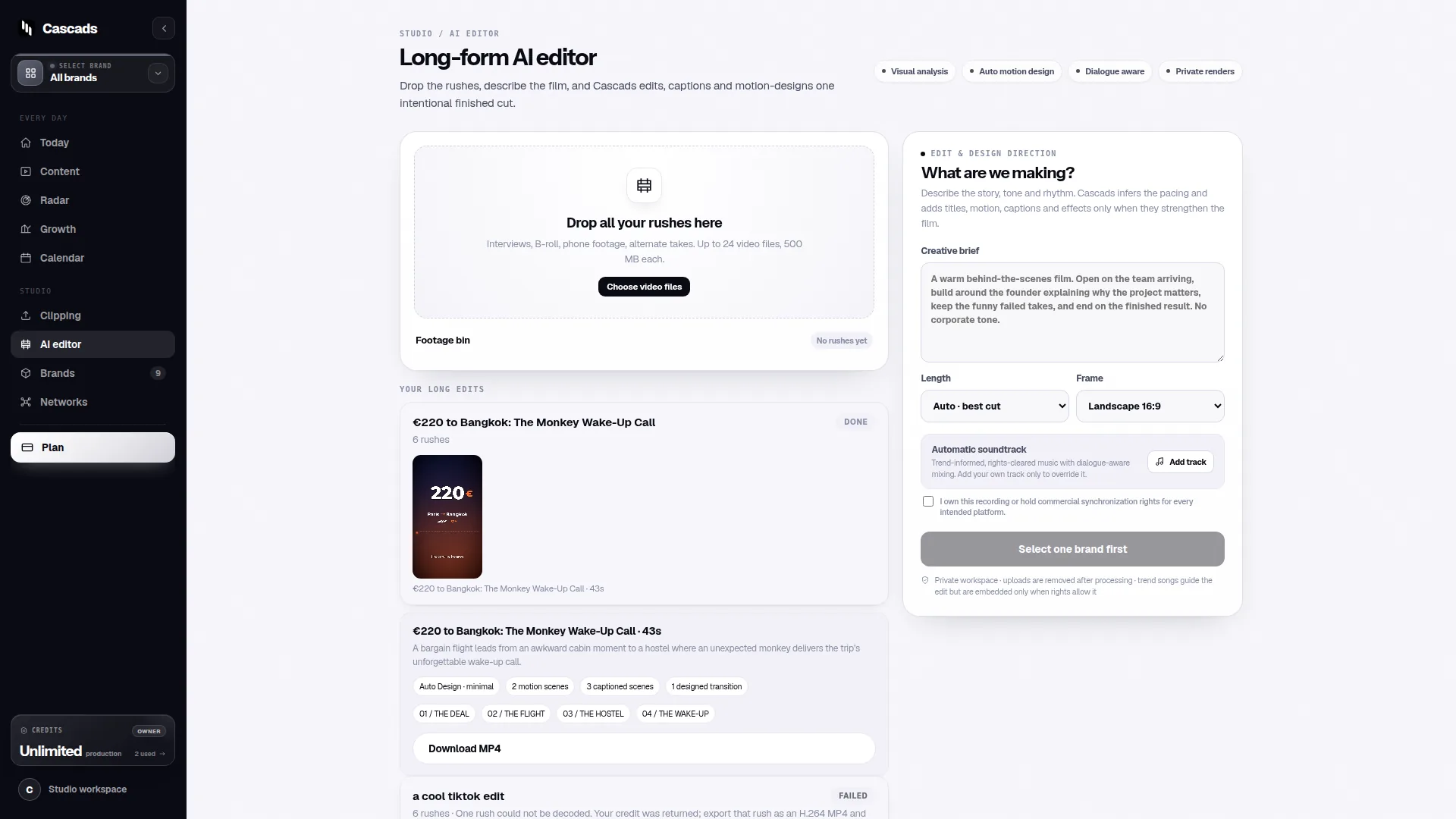
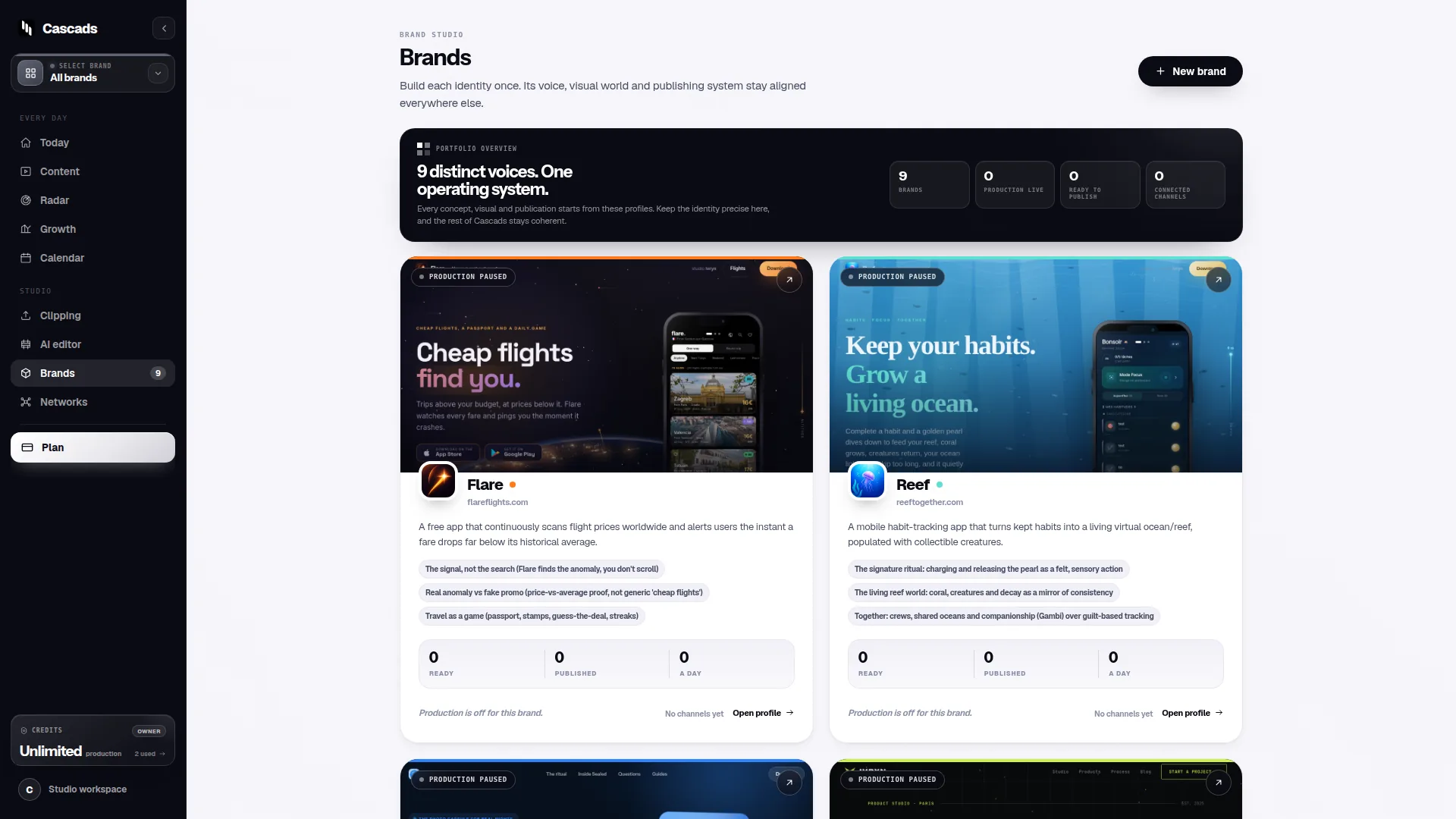
Cascads, an IVRYN product for social content production and scheduling, is built around the opposite approach: a reusable profile per brand that captures the context once so it can inform text posts, vertical videos and carousels generated afterward. This is a product-level design choice, not a universal rule for all tools, but the underlying principle applies regardless of what you use: define brand context once, reuse it deliberately, and revisit it on a schedule rather than reactively after a mistake.
- Write the brand's voice, do-not-say list and preferred formats in one place teams can reference
- Assign one owner per brand context so updates don't fragment across people
- Review the context periodically, not only after an error surfaces
Match production to format, not the other way around
A second common mistake is producing one piece of content and reshaping it for every network afterward. This inverts the more efficient order: start from the format the platform and audience expect, then produce for that format directly. Vertical video, carousels and text posts have different pacing, length and structural conventions, and content that is merely resized rather than rebuilt often reads as an afterthought.
Multi-format production, where a single reusable brand profile can generate text, video and carousel content directly, reduces the manual reshaping step. That doesn't eliminate the judgment calls about which format suits which message; it just moves that decision earlier, before content is drafted, instead of after.
Human review is not optional, even with generated content
Whatever combination of tools or manual work you use, generated marketing output should remain subject to human review before publication. This is true independent of how sophisticated the generation step is: review catches context that automated production cannot fully anticipate, such as a timing conflict with unrelated news, a phrase that reads differently in a specific market, or a claim that needs a second look before it goes out under the brand's name.
Cascads' approval workflow reflects this by keeping a human checkpoint between generation and publishing (see the social media approval workflow guide). For a small team or agency, the practical takeaway is to design your own review step deliberately rather than treating it as a formality: decide who reviews, what they're checking for, and what happens when something is flagged.
Publishing limits: what format-aware means in practice
A part of social media management how to that is easy to underestimate is the mechanics of publishing itself. Direct publishing depends on the network, the media format, the account's permissions and external platform approval - none of which a content tool fully controls. This means a workflow that looks smooth in planning can stall at the last step if, for example, a network doesn't support automated posting of a given video format, or an account lacks the right permission level, or the platform's own review process delays a post.
The social media publishing integration checklist frames this as something to check per network and per format before it becomes a blocker, rather than something to discover mid-campaign. For teams managing multiple brands and networks, building this check into the workflow (not just the initial setup) matters, because permissions and platform requirements can change over time even when your own process hasn't.
- Confirm account permissions per network before scheduling a campaign
- Check whether the specific format (e.g., a given video length or carousel structure) is supported for automated publishing on each network
- Build in time for platform-side approval where it applies, rather than assuming instant publishing
A worked example: three brands, one small team
Consider a hypothetical: an agency of three people manages social accounts for three separate small brands. Without a shared structure, each person re-explains brand tone from memory for every post, formats are adjusted after the fact for each network, and review happens inconsistently because there's no fixed checkpoint.
A more workable structure looks like this: each brand gets a written profile covering voice, constraints and preferred formats, maintained by one named owner. Content is produced directly for the target format rather than reshaped afterward. Every piece passes through a defined review step before scheduling. And before any campaign goes live on a new network or with a new format, someone confirms account permissions and platform support rather than assuming it will just work.
This example is illustrative, not a claim about outcomes any team will achieve - the point is the structure, not a guarantee of results. The same logic scales down to a single-brand team or up to an agency managing many more accounts; the core moves (reusable context, format-first production, human review, permission checks) don't change.
Keeping the process honest over time
Social media management how to isn't a one-time setup task. Brand context drifts as a business changes, platforms adjust their format support and approval requirements, and team roles shift as people join or leave. A process that worked at launch can quietly stop matching reality within months if nobody revisits it.
The practical discipline is to schedule a periodic check: is the brand profile still accurate, is the review step still catching what it should, and are the publishing permissions and format support still what you assumed. None of this requires new tooling - it requires treating the workflow as something that needs occasional maintenance, not a one-time decision.
Frequently asked questions
What is the first thing to set up when starting social media management for multiple brands?
Start by writing down each brand's voice, constraints and preferred content formats in one reusable place, with a single owner responsible for keeping it accurate. This reduces the need to re-explain brand context for every individual post and gives production and review a shared reference point.
Why does generated social content still need human review before publishing?
Automated production can't fully anticipate situational context, such as unrelated news timing, market-specific phrasing, or claims that need a second look. A defined human review checkpoint before publishing catches these issues regardless of how the content was produced, and generated marketing output should always remain subject to that review.
Why can't every post be published automatically to every network?
Direct publishing depends on factors outside a content tool's control, including the network's supported formats, the connected account's permissions, and the platform's own approval process. Checking permissions and format support per network before a campaign goes live helps avoid last-minute publishing blockers.
Sources and further reading
These resources provide the wider reference frame. Product statements on this page are limited to the public information provided by Cascads.