What social media scheduling software is actually for
Social media scheduling software exists to remove the manual overhead of posting content across multiple networks at specific times. For a team running several brands, that overhead compounds quickly: different accounts, different formats, different cadences, and different reviewers. The core value is not the calendar view itself but the reliability of getting the right content, in the right format, in front of the right account without someone re-uploading it by hand every day.
Understanding this framing matters before comparing tools, because scheduling software is often marketed as a single capability when it actually bundles several distinct jobs: content generation or import, brand-specific formatting, a review step, and the technical publishing connection to each network. A team evaluating options should separate these jobs mentally, because a tool can be strong in one and weak in another.
Brand context changes what 'ready to post' means
For agencies or teams managing several brands, content is rarely interchangeable. A caption tone, hashtag set, or visual style that works for one brand can be wrong for another, even if the underlying message is similar. This is where a reusable brand profile becomes practical rather than cosmetic: it lets a workflow apply consistent voice and formatting rules without someone rebuilding those rules for every post.
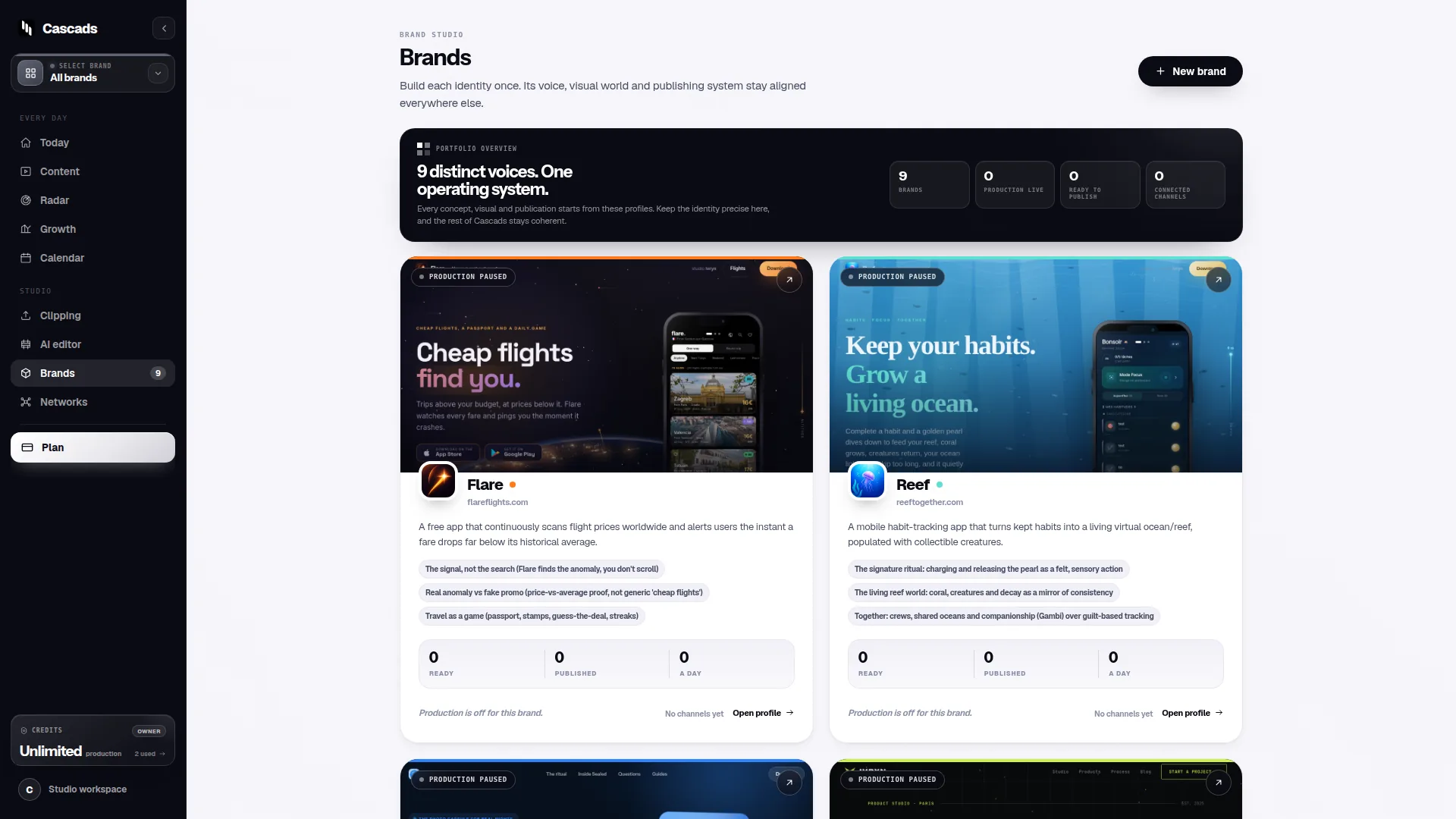
Cascads, an IVRYN product, is built around this idea directly: it generates text posts, vertical videos, and carousels from a reusable profile defined per brand. That means the starting point for a batch of content already reflects brand-specific defaults, which reduces the manual correction work later in the process, though it does not remove the need to check the output before it goes live.
When evaluating any scheduling tool for multi-brand use, it's worth asking a concrete question: does the tool store brand-specific settings as a reusable object, or does it rely on the user to reapply brand rules manually each time? The answer changes how much repetitive work a team absorbs at scale.
Multi-format production and why it matters for scheduling
Scheduling software is often evaluated on how many networks it connects to, but the format mix matters just as much. Text posts, vertical video, and carousels each have different production and review needs. A tool that only handles static images well but treats video as an afterthought will create scheduling gaps precisely where a brand's most engaging content lives.
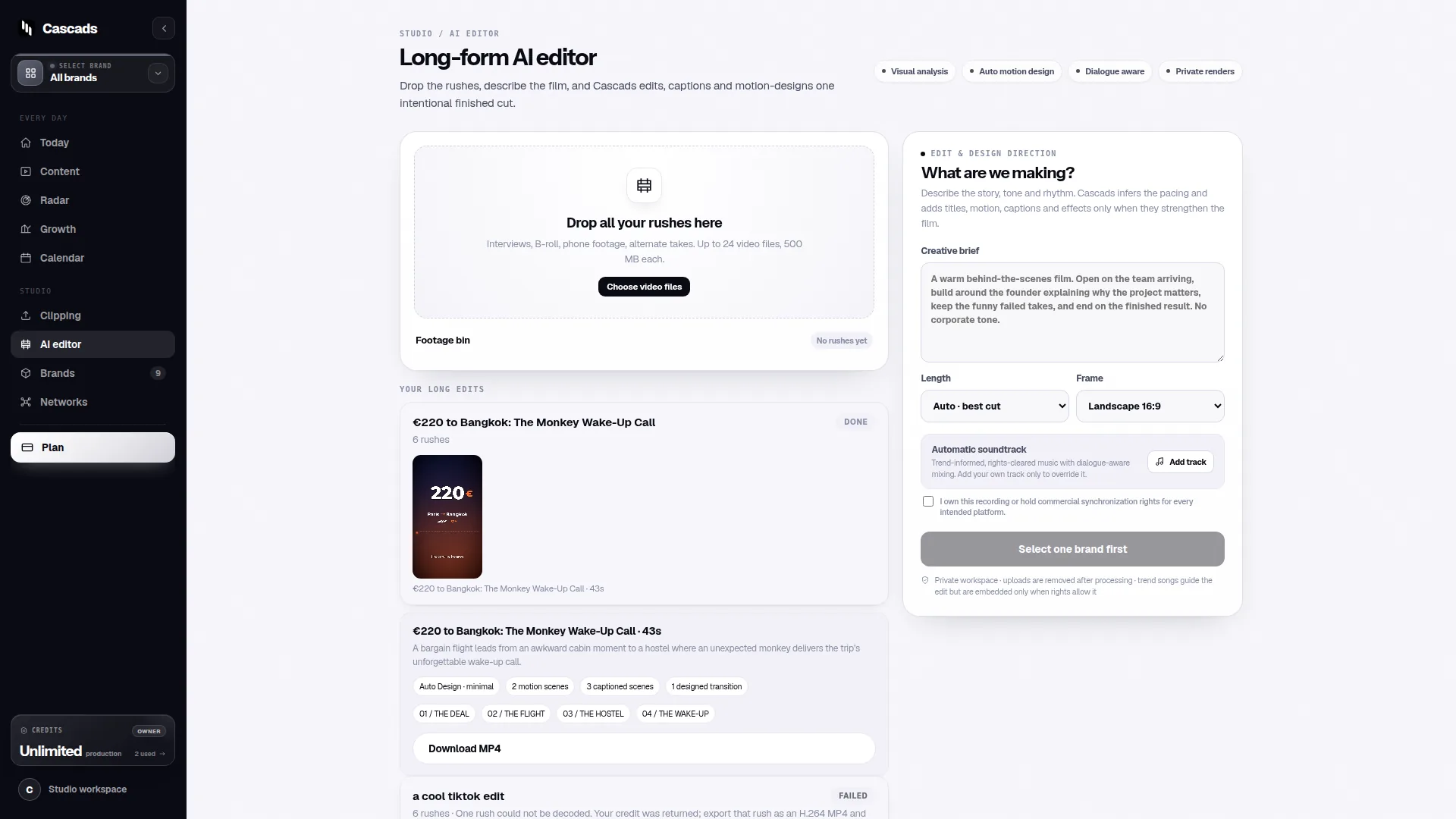
Producing multiple formats from one reusable brand profile, as Cascads does, is a practical way to reduce the fragmentation that happens when a team uses separate tools for video editing, carousel design, and text drafting, then stitches the output together manually before scheduling. That said, format support does not guarantee publishing support: a network may accept a format in principle but restrict how, or whether, it can be posted automatically through an API connection.
This is a useful distinction to hold onto: content production capability and publishing capability are not the same thing, and conflating them leads to disappointment when a generated video is ready but cannot be auto-published the way a text post can.
Human review is not optional, regardless of the tool
No scheduling software, including Cascads, removes the need for human review before publication. Generated marketing output should be checked for accuracy, tone, and appropriateness before it reaches an audience, particularly for a brand managing reputation across many channels at once. This is a structural fact about the category, not a limitation specific to any one vendor.
A practical approval workflow typically involves a defined checkpoint between content generation and scheduling, where someone with brand authority reviews drafts in batches rather than one at a time. Cascads' own guidance on this is documented in its social media approval workflow resource, which describes how a review step can be built into the production pipeline rather than treated as a separate manual task bolted on afterward.
Teams sometimes try to skip or shorten this step to save time, especially when producing content at volume across multiple brands. The trade-off is real: skipping review reduces short-term effort but increases the risk of a brand-inconsistent or factually wrong post reaching a live audience. For teams operating several brand accounts, that risk is multiplied by the number of brands in the pipeline.
Format-aware publishing: the constraint teams underestimate
Whether a piece of content can actually be published directly, rather than exported for manual posting, depends on several factors outside the scheduling tool's control: the network's current API rules, the specific media format, the permissions granted to the connected account, and the platform's own approval process for third-party publishing access. This is true across the category, not a caveat unique to one product.
Cascads' social media publishing integration checklist lays out this dependency explicitly, and it's a useful reference point for any team evaluating a scheduling tool, not just Cascads' own. Before assuming a tool will auto-publish every content type to every connected account, it's worth checking which combinations of network, format, and permission level are actually supported at the time of evaluation, since these details can change as platforms update their own policies.
Worked example: Imagine an agency managing three client brands, each posting text updates, short vertical videos, and occasional carousels across two networks. In this hypothetical, text posts to both networks might publish directly once approved, vertical video might publish directly on one network but require manual upload on the other due to a permissions restriction, and carousels might need manual posting entirely if the account hasn't been granted that publishing scope. The lesson from this example isn't about any specific network's rules - it's that a team should map format-by-network-by-account publishing capability before committing to a workflow, rather than discovering the gaps during a live campaign.
A decision checklist for evaluating scheduling software
Rather than comparing tools solely on the number of supported networks, teams managing multiple brands can use a shorter, more concrete checklist focused on the workflow steps that actually cause friction in practice.
This checklist is meant as a starting point for internal evaluation, not a guarantee that any specific tool, including Cascads, will satisfy every item for every account configuration.
- Does the tool store a reusable, per-brand profile, or does brand context need to be reapplied manually each time?
- Which content formats (text, vertical video, carousel) does it generate or accept, and does that match the brand's actual content mix?
- Is there a built-in review checkpoint before publishing, or does review happen outside the tool entirely?
- For each network and account in use, is direct publishing actually supported for every format needed, or does some content require manual export and upload?
- How are account permission and platform approval requirements checked before a campaign launches, rather than discovered afterward?
Setting realistic expectations before adopting a tool
The search for social media scheduling software often starts with the assumption that a good tool will make publishing fully automatic across every network and format. In practice, the more accurate expectation is that scheduling software reduces manual, repetitive work while leaving certain steps - human review and, for some format-network-permission combinations, manual publishing - as ongoing parts of the process.
Setting this expectation early avoids two common failure modes: choosing a tool based on marketing claims that overstate automatic publishing, and skipping human review because a tool made content generation fast. Neither failure mode is really about the software; both come from misunderstanding what scheduling tools can and cannot guarantee once external platform rules are involved.
For a small team or agency handling several brands, the practical goal is a workflow where brand-specific content generation, review, and publishing each have a clear owner and a clear checkpoint - with the scheduling tool supporting that structure rather than replacing the judgment calls it still requires.
Frequently asked questions
Does social media scheduling software guarantee that content will be published automatically on every network?
No. Direct publishing depends on the specific network's rules, the content's media format, the permissions granted to the connected account, and the platform's own approval process for third-party publishing access. Some combinations may require manual export and upload instead of automatic posting.
Can scheduling software replace human review of generated content before it's posted?
No. Generated marketing content, including text posts, videos, and carousels, should go through human review for accuracy, tone, and brand appropriateness before publication, regardless of which scheduling tool is used.
Why does having a reusable brand profile matter for teams managing multiple brands?
A reusable brand profile lets content generation apply consistent voice, formatting, and style rules for each brand automatically, reducing the manual work of reapplying those rules to every individual post and helping keep output consistent across a larger content volume.
Sources and further reading
These resources provide the wider reference frame. Product statements on this page are limited to the public information provided by Cascads.