Start with the operating reality, not a content calendar
Social media management best practices begin with a clear view of what a team is actually managing: brands, channels, formats, approvals and publication responsibilities. A calendar is useful, but it cannot resolve uncertainty about who owns messaging, which assets are approved, or whether a particular network can accept a planned format.
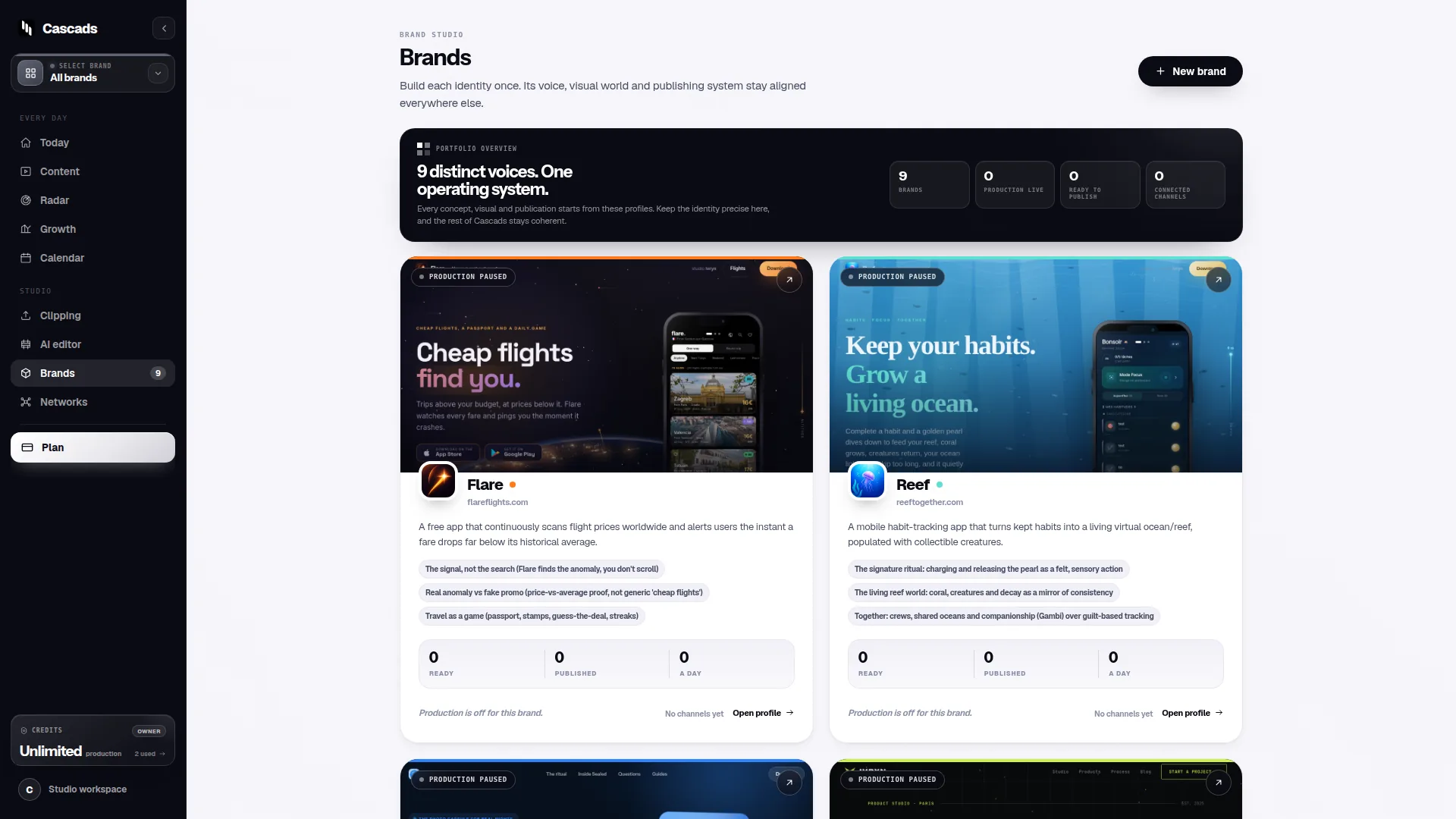
For small teams and agencies, the central challenge is often coordination across several brand voices rather than simply producing more posts. Define a reusable brand context for each client or business unit, including audience, tone, key messages, prohibited claims and review contacts. This creates a practical reference point before someone drafts text, plans a carousel or produces a vertical video.
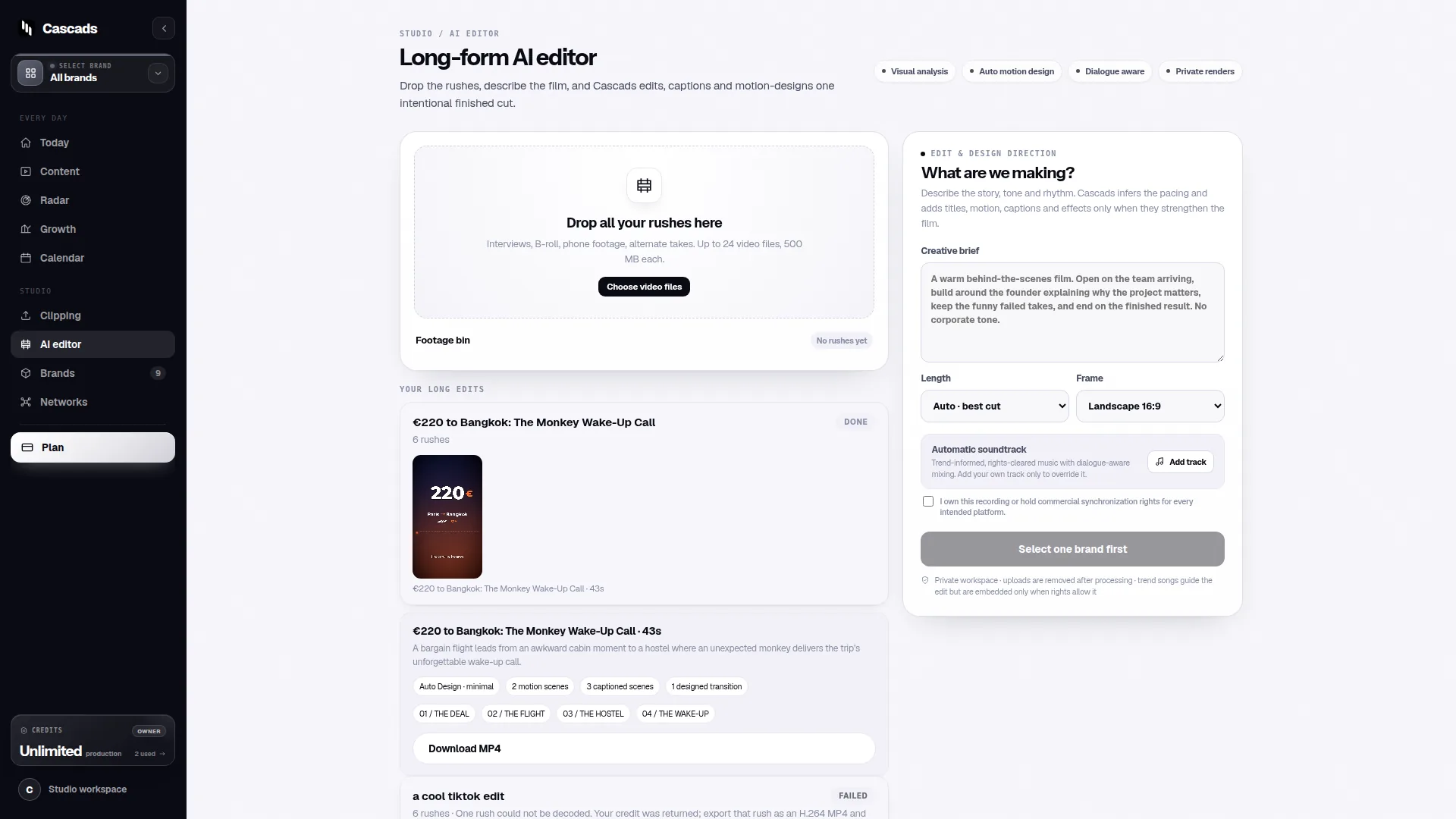
Cascads is an IVRYN product for social content production and scheduling. Its public product context is relevant here because it generates text posts, vertical videos and carousels from a reusable profile for each brand. That supports a structured workflow, but it does not replace editorial judgment or a brand owner’s approval.
- Document the purpose and owner of every social account.
- Create one reusable profile per brand, with clear tone and approval notes.
- List the content formats each network and account can realistically support.
- Assign a final human reviewer before content enters a publishing queue.
Use brand context to make production repeatable
A reusable brand context should reduce avoidable rework without turning every post into a template. The strongest version is specific enough to guide decisions and flexible enough to accommodate campaigns, timely updates and different networks. It should distinguish durable brand rules from campaign-only instructions.
For example, a business-to-business software brand may use a direct, explanatory tone on LinkedIn while retaining the same core positioning in a shorter, more visual form elsewhere. The underlying brand context remains consistent, but the execution changes with the audience’s likely attention, the available format and the intended action.
Keep the profile operational. Include approved terminology, phrases to avoid, the level of formality, product boundaries, accessibility expectations and escalation rules for sensitive topics. If a brief conflicts with the profile, resolve that conflict before generating or adapting several assets; otherwise, production speed can multiply the same mistake across channels.
- Separate permanent brand guidance from campaign briefs.
- Record required disclosures or internal approval triggers.
- Specify how the brand should handle comments, questions and corrections.
- Review the profile when positioning, products or governance changes.
Plan multi-format production around the message
Teams benefit from planning a message system before choosing outputs. Start with the claim or idea that needs to be communicated, then decide whether it is best expressed as a text post, a vertical video, a carousel or a combination. This prevents a common failure mode: making every idea fit every format because production tools make that possible.
Text posts can provide concise context or invite discussion. Vertical videos can prioritize a single visual sequence or demonstration. Carousels can break a process, comparison or checklist into scannable steps. These are production choices, not promises of reach or engagement; the appropriate choice depends on the audience, campaign objective, creative assets and platform requirements.
Generate and adapt content in batches when the shared message is stable, but leave room for format-specific editing. A carousel may need short slide-level statements and accessible descriptions, while a video needs a coherent visual story and legible on-screen text. Treat each asset as its own publishable item, even when it originates from the same brief.
- Write the core message in one or two sentences first.
- Choose formats based on clarity, available assets and channel fit.
- Adapt opening lines, visual structure and calls to action for each format.
- Check captions, on-screen text and image descriptions before review.
Build human review into the workflow
Generated marketing output remains subject to human review before publication. That limit matters most when a team is moving quickly across multiple brands: a fluent draft can still be inaccurate, off-brand, incomplete or unsuitable for the context in which it will appear.
A useful approval workflow separates checks by purpose. A content editor can assess clarity and factual support; a brand owner can assess voice and positioning; an authorized publisher can assess account, destination and scheduling details. One person may hold several roles in a small team, but the checks should still be explicit rather than assumed.
The review process should also create a clear outcome for every asset: approved, approved with changes, returned for revision, paused or not to be published. This is more useful than a vague request to “take a look,” especially for agencies that need to show clients what is awaiting approval and what has changed.
- Check factual statements, links, names and calls to action.
- Check brand tone, visual suitability and required disclosures.
- Confirm the correct account, network and publication time.
- Record the approval decision and any material edits.
Apply format-aware publishing limits before scheduling
Scheduling is not the same as guaranteed publication. Direct publishing depends on the network, media format, account permissions and external platform approval. A practical workflow checks these conditions before a deadline rather than discovering them after a campaign has already been approved.
The relevant question is not simply whether a tool connects to a network. Ask whether the intended account has the necessary permissions, whether the chosen media format is supported for direct publishing, and whether the external platform has approved or restricted the relevant capability. These conditions can vary by network and account, so a team should treat them as publishing prerequisites.
When direct publishing is unavailable, a handoff process is still needed. Assign someone to complete the final native-platform step, provide the approved asset and copy, and record when the post is live. This preserves accountability without overstating what an integration can do.
- Verify account access before committing to a direct-publishing plan.
- Confirm the required media format and any platform-specific constraints.
- Identify a fallback owner for manual publication.
- Keep a final record of the published version and destination.
Example: a decision aid for a three-brand campaign
Example: An agency is preparing a product-awareness campaign for three client brands. Each brand needs a LinkedIn text post, a vertical video and a carousel. Before production, the agency creates a short campaign brief and checks each brand’s reusable context: approved audience description, tone, review contact and claims that require additional confirmation.
The team then uses the following decision aid. For every proposed asset, answer four questions in order: Is the message supported and appropriate for this brand? Is this the clearest format for the message? Has a named person completed human review? Can this account and format be published directly under the current network, permission and approval conditions? A “no” at any stage changes the next action: revise, choose another format, request review or prepare a manual publication handoff.
This example does not predict campaign performance. Its value is operational: it helps a small team avoid treating content creation, approval and publishing as one indistinguishable task. A simple decision log also gives agencies a clearer way to discuss responsibilities with clients before launch.
- Brand fit: confirm voice, audience and claim boundaries.
- Format fit: confirm that text, video or carousel improves understanding.
- Review status: obtain an explicit human decision.
- Publishing status: verify direct publishing or assign a manual handoff.
Frequently asked questions
What are the most important social media management best practices for a small team?
Set clear brand context, plan content by message and format, require human review, and verify publishing conditions for each network and account before scheduling.
Can social media content be published automatically on every network?
No. Direct publishing depends on the network, media format, account permissions and external platform approval, so teams should confirm eligibility and prepare a manual handoff when needed.
Why is human review necessary for generated social content?
Human review helps confirm that generated marketing content is accurate, appropriate for the brand, complete and ready for the intended account and format before publication.
Sources and further reading
These resources provide the wider reference frame. Product statements on this page are limited to the public information provided by Cascads.